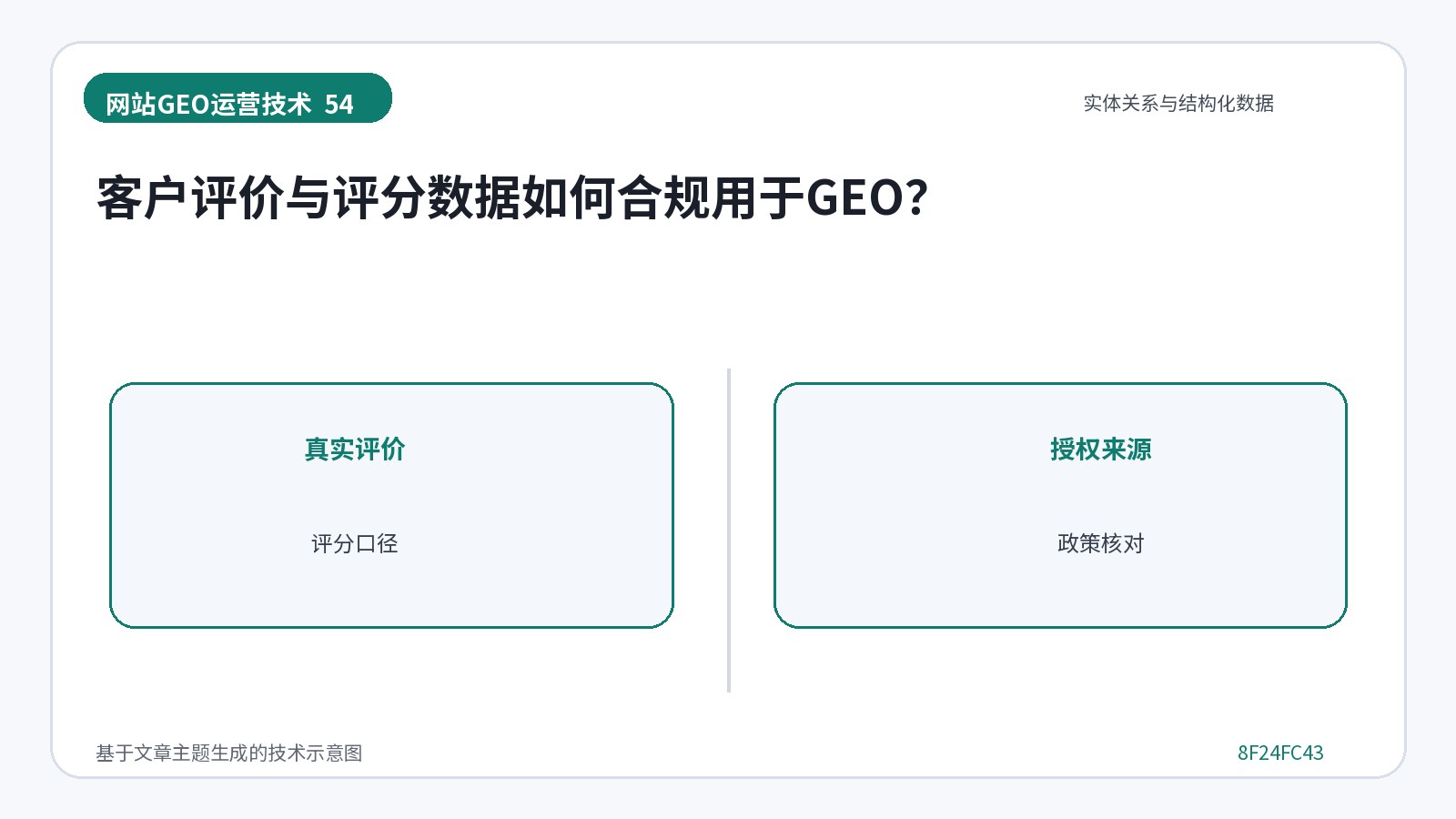
When dealing with such issues, the current page and data baseline should be preserved, followed by a major change, without which the results will not be accurately attributed. The first step is to use client evaluation and rating data to be judged in the complete process of placing the data back into the physical relationship and structured data of the GEO. The evaluation must come from the true client and retain the authorization and source. The rating, the total number and the time of update should be clear; the enterprise ' s self-writing or screening presentation should not be disguised as an independent evaluation. This means that the page must be clear to the user, allow the grabper to obtain the same information and keep the source, condition and the time of update.
The role of structured data is to identify the entities and attributes of the page and help to obtain the appropriate search display; it does not replace the text, nor does it have a Schema that specifically guarantees access to the generated answers. Different nodes should establish a true relationship by stabilizing IDs. When resources are limited, priority should be given to the parts that block capture, cause conflict of fact or misleading procurement. Visual optimization and extension questions can take place later, and cannot occupy the same priority as high-risk questions.
The taskcard contains at least the target country, the type of page, the source of the data and the completion criteria. The actions are, in turn, to preserve the original evaluation and authorization, describe the method of collection and the applicable product, and to make the mark conform to the Google evaluation policy. The content, technology and sales team uses the same field name.
The sheet should also answer whether the page is accessible, whether the facts are accurate and whether the user continues to act.
Technical actions do not break the boundaries of fact and authority. Counterfeiting a five-star evaluation or treating the views of employees as a client evaluation would create a risk of trust and policy. Non-public information should be processed through a summary, dissensitization or restricted access, rather than being disclosed for inclusion.