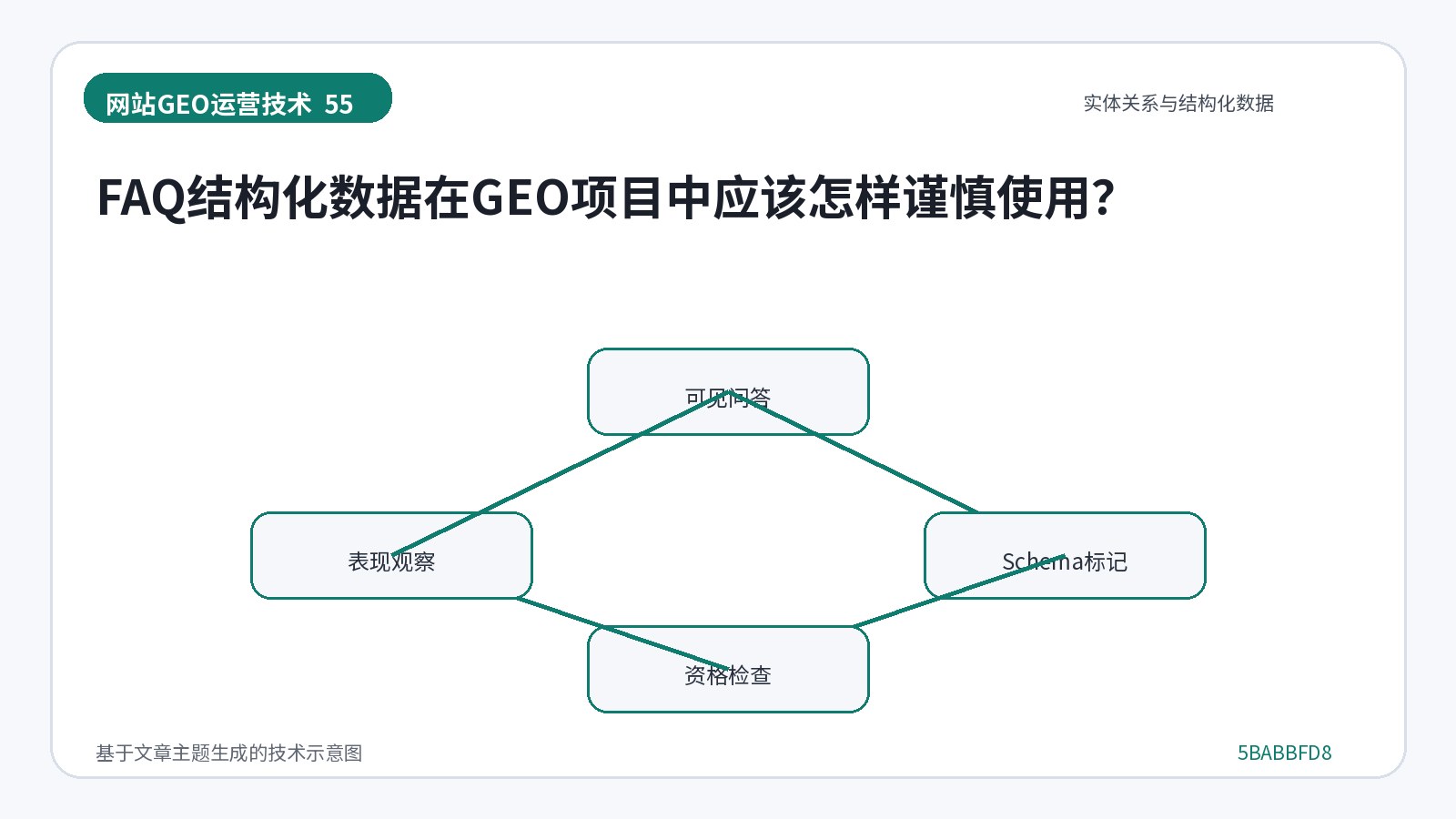
For the B2B site, the real valuable result is not more than one brand reference, but rather to give the purchaser precise conditions and access to a traceable query or decision path. How should the “FAQ structured data be used carefully in the GEO project?” First, to judge the FAQ structured data in the GEO project by carefully using the complete process of putting back “entity relations and structured data”. The FAQPage tag only applies to a set of questions and answers provided by the website on the page. Google currently displays the FAQ rich results in a limited range of terms, and does not guarantee compliance tags, much less an AI reference.
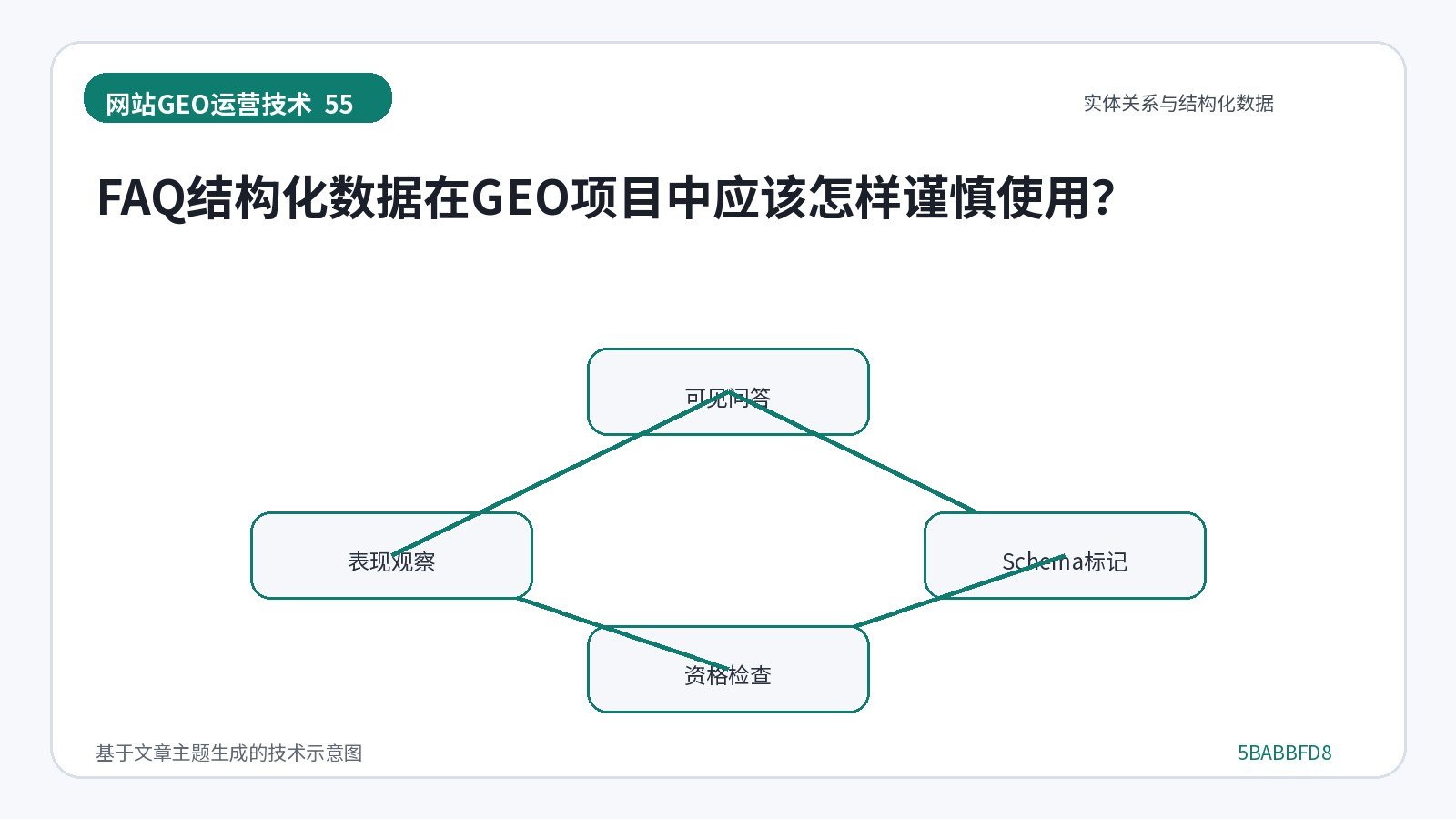
The role of structured data is to identify the entities and attributes of the page and help to obtain the appropriate search display; it cannot replace the text or the Schema that specifically guarantees access to the generated answers. Different nodes should be linked to the real relationship by stabilizing IDs.
When you land, the action is written into the CMS and the business process, and not only in the minutes of the meeting. First, you keep real and visible questions and answers, and then avoid copying the same FAQ over multiple pages, and then check the syntax and set the date for the next review by using a high result test.
Marks and text, page qualifications and search performance must be fixed.
The common return is not an error in the tool set-up, but rather a question-and-answer wrapping of marketing words and their hiding on the page, which is inconsistent with the principle of visible agreement. The solution is to anchor key judgements into the release of a checklist and to have the reviewers sign to confirm them. Any unproven conclusion should be changed to a conditional recommendation and no speculation should be written as a fact for marketing purposes.