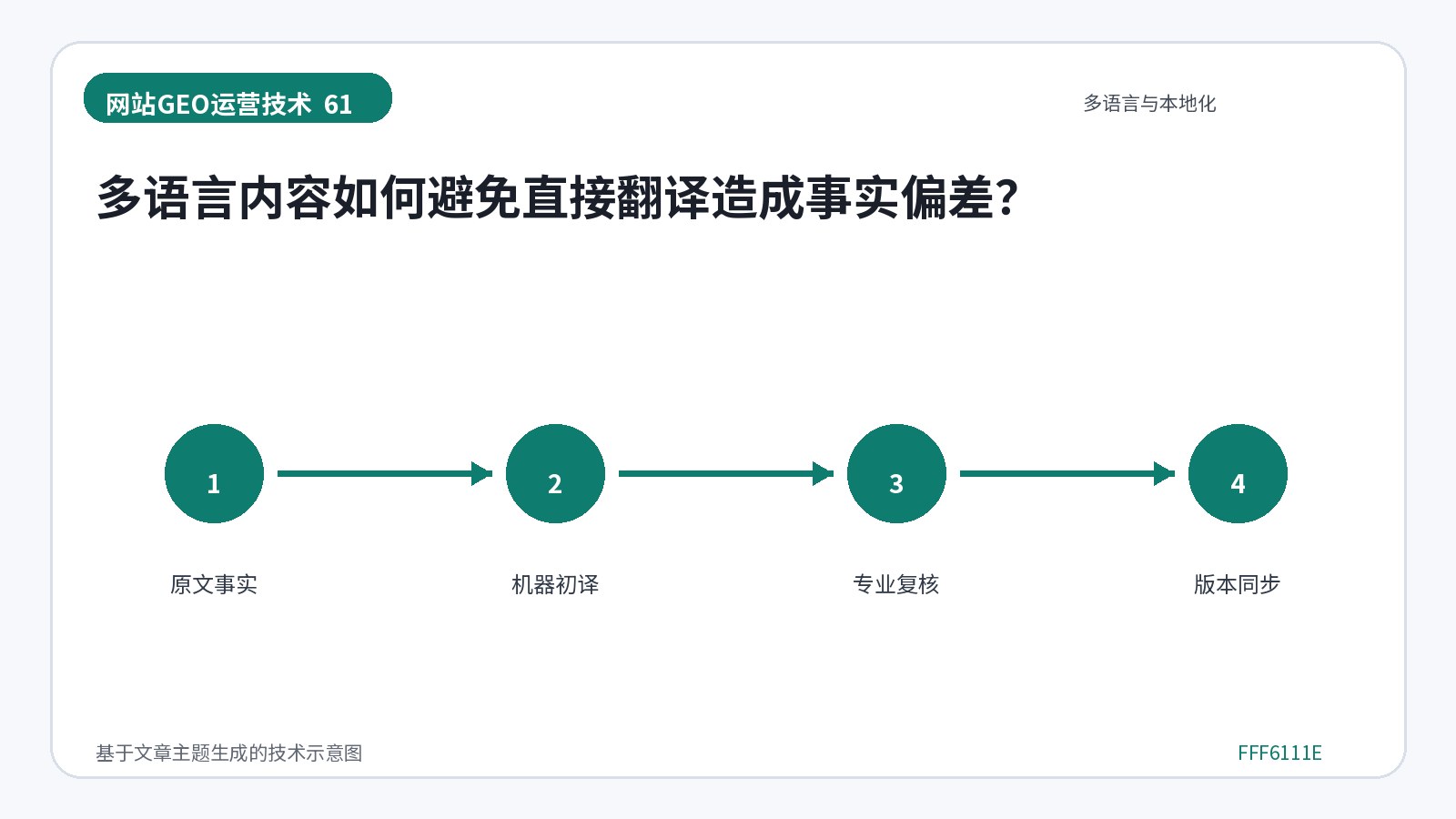
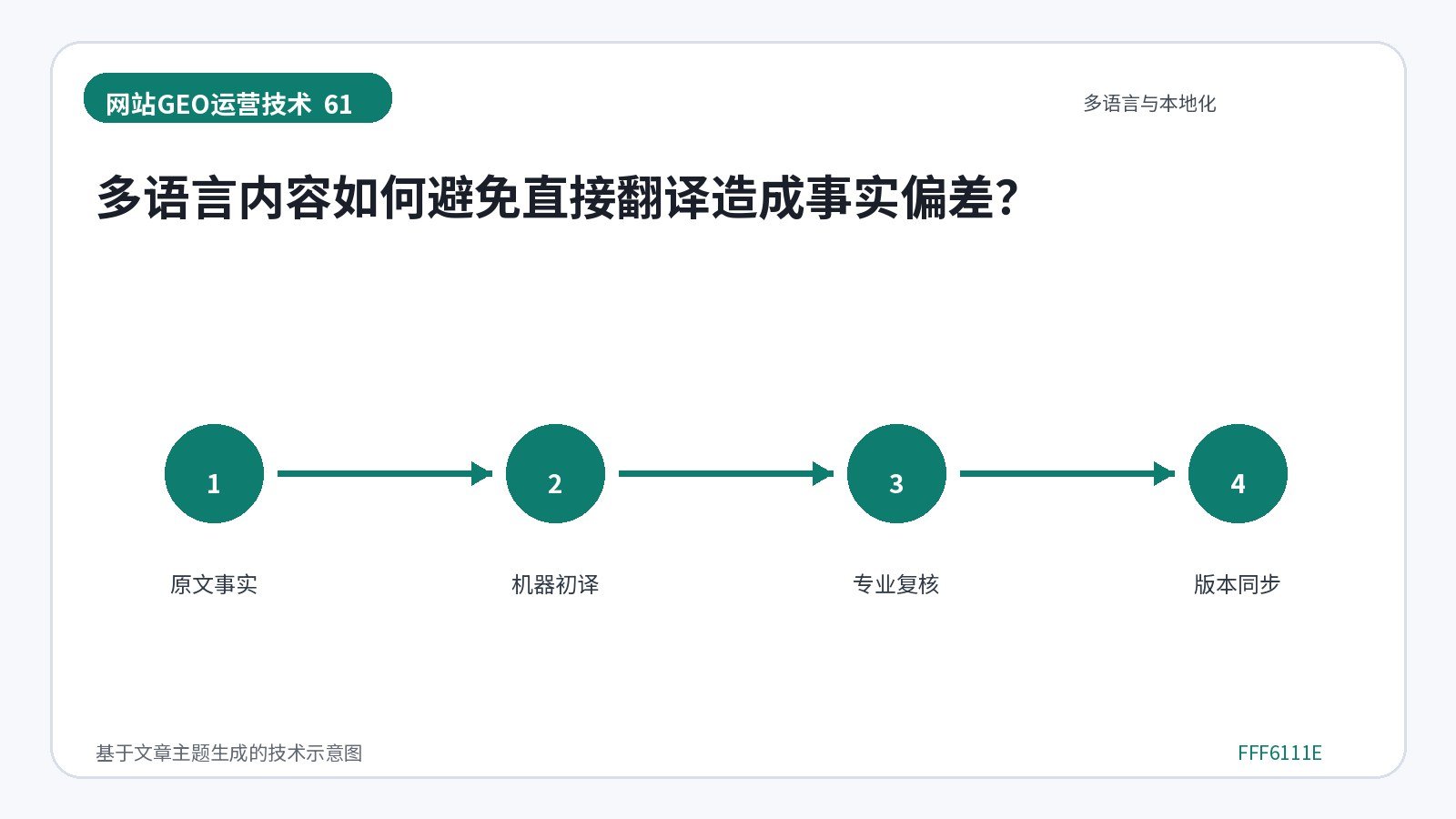
First of all, it must be based on true, open and verifiable facts, and not on the addition of labels or the repetition of keywords to obtain a stable reference. “How can multilingual content avoid creating factual deviations by direct translation?” First, it must be understood that multilingual content avoids direct translation leading to factual deviations that go back to the full process of “multilingual and localization”. Multilingual content must not simply seek consistency, but also ensure that the parameters, currencies, regulations, scope of services and contacts are not reversed. Machine translation fits the first draft, but professional facts need to be reviewed by the responsible person. This means that the page needs to be clear to the user, as well as access to the same information and to keep the source, the conditions and the time of update.
The focus of the multilingual GEO is to make each language version both stand-alone and capable of being identified as a corresponding version of the same brand or content. Localization must reflect differences in markets, units, regulations and procurement practices. When resources are limited, priority should be given to addressing those aspects that block capture, create factual conflicts or mislead procurement.
Check numbers, units, links, and key terms to compare the time of the language update.
What needs to be avoided is that it is easy to make seemingly natural errors by allowing the universal language model to be coloured without checking the technical implications. Moreover, when customer information, business secrets, authentication and prices are involved, they should be made public with the approval of their counterpart.