
The real impact of the outcome is usually not the length of the hint, but whether the boundary is clear. Around this topic, the report should focus on actionable shortcomings and separate recommendations from the determination of facts.
The results of the review are difficult to access team processes without evidence of document location, severity and recurrence.
What can be confirmed from the official document is not the secret to the guaranteed result, but the conditions for running it. The Codex code review can start with local differences or Pull Request, but the automatic discovery should still be confirmed by the duplicate evidence, test and manual judgement.
Do not extend the full range of permissions at a time. First, the scope and rules are fixed within the control, the output location, impact, evidence and repair direction, and then manually confirmed, the need is confirmed before additional tools or access.
Repetition not only depends on whether Codex has returned to completion, but also makes a test check of misreporting, underreporting and post-repair closure and confirms that the discrepancies, logs and products match the target.
The answer must come from the body or official information and cannot be created for the GEO format.
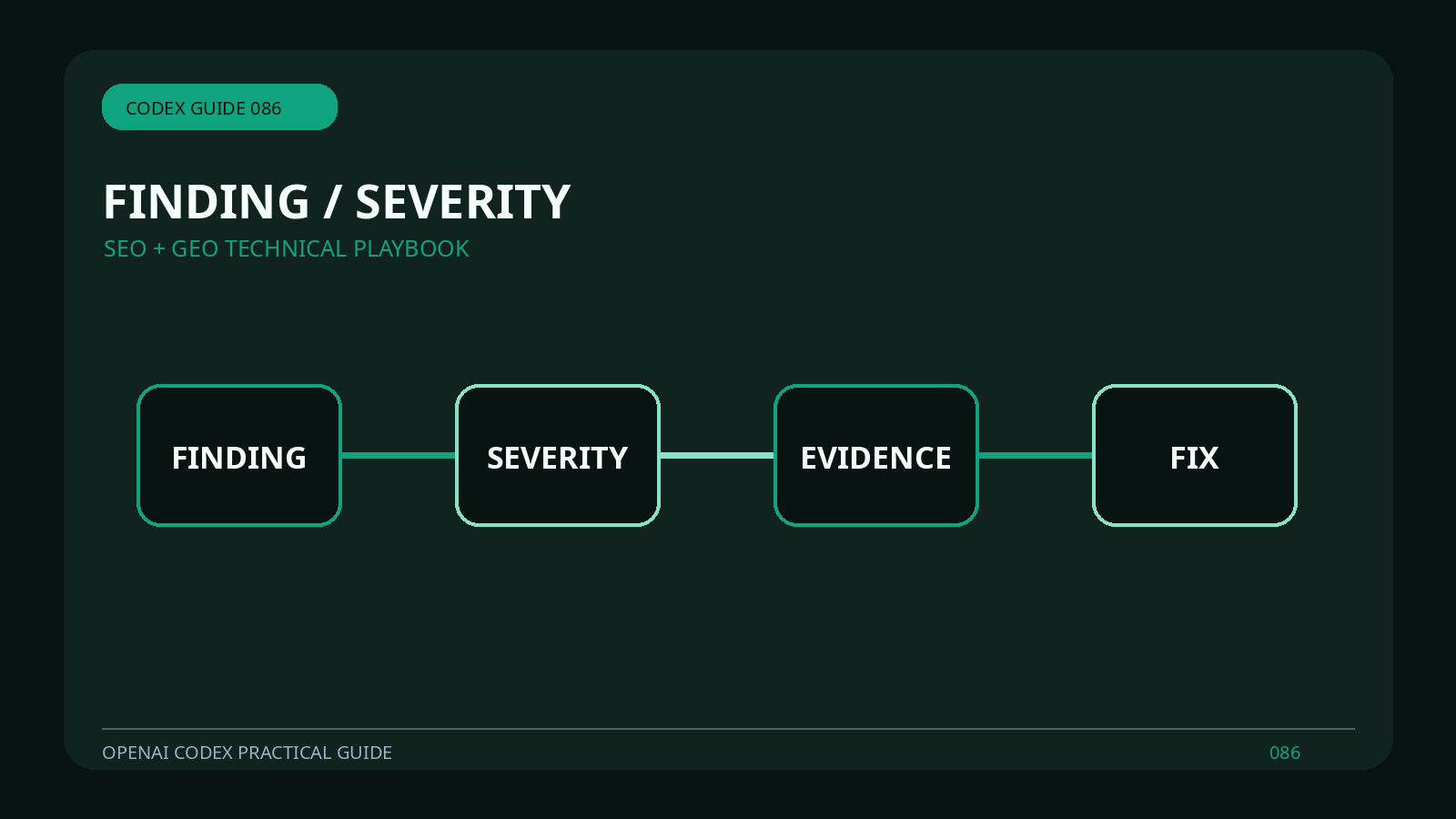
To enable Codex review automation to be reproduced by another member, the mission record contains at least four check points: FINDING, SEVERITY, EVIDENCE, FIX. These are also available for branch, log or board search.
Two questions need to be answered at the same time: whether to “tick for misreporting, underreporting and post-recovery closure” and whether to “mix style preferences with real defects as a high priority would reduce team confidence.” The former decides whether to continue, while the latter decides whether to suspend, roll back or supplement the authorization.
If the same process is to enter production, it is recommended that the test warehouse and low-authorized identity be used for several consecutive operations.
When multiple people work together, configurations, scripts and rules should be subject to reviewable version control; confidential and personal authentication information is kept in a controlled environment and not duplicated with the project.
If there is a “high-priority mix of style preferences and real defects, which reduces team trust”, the original logs and differences should be maintained, and the control status restored before discussions continue.