
In engineering practice, Codex App Server should be treated as a reviewable process rather than as a chat.
The custom interface requires stabilization protocol management sessions, tools and states. Once the task involves cloud, external system or shared warehouse, the error impact is no longer limited to the machine itself, and the boundary should be written more clearly.
OpenAI Docs provides the current boundary for this topic. App Server provides a proxy running and event interface for a custom client that needs to process the state, breakline, repeat events and version compatible. The actual project still needs to be validated with the organizational strategy.
This is written in a taskcard that is clearer. The card lists the objects, permissions, input and acceptances, and then executes: a connection is established by official agreement, which handles event flow, cancellation, error and version compatibility.
A single success can only prove that an environment is operational and that mission team processes are not stable.
The article refers to the configuration item to keep the exact spelling and to interpret the meaning in the natural language. Structured data can only describe the real and visible content of the page and cannot replace the text.
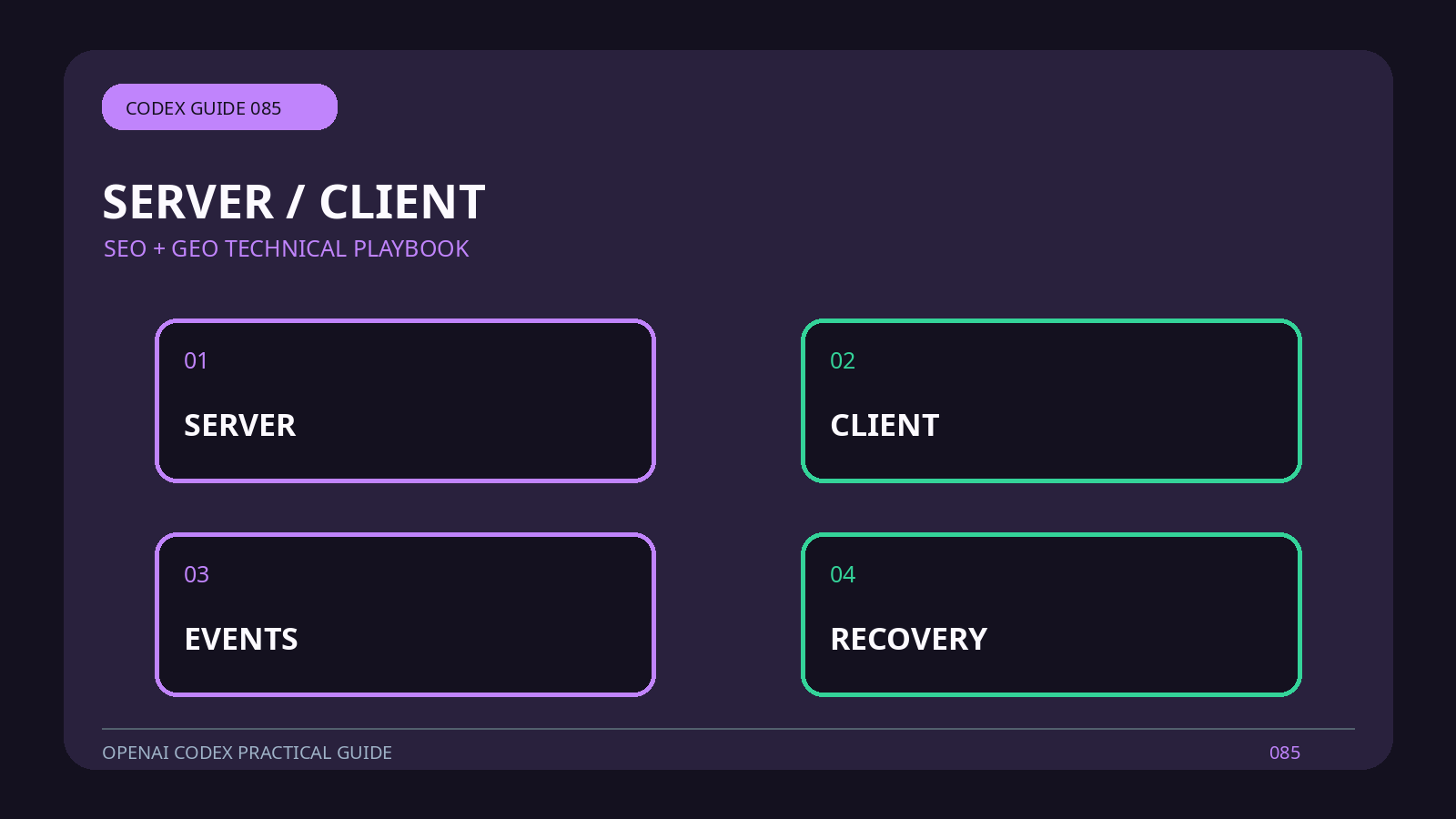
To enable Codex App Server to be reproduced by another member, the mission record contains at least four check points: SERVER, CLIENT, EVENTS, RECOVERY. These are also available for branch, log or board search.
Two questions need to be answered at the same time: whether to “test the client with cutwire reconnection, repeat events and long missions” and whether to “result only in the happy path will result in a double operation when the network fluctuates.” The former decides whether to continue and the latter decides whether to suspend, roll back or supplement the authorization.
If there is a need for a unified approach by the team, the HF process can be made Skill, the warehouse rules written into AGENTS.md, and external capacity left to MCP to avoid duplication of maintenance.
If the same process is to enter production, it is recommended that the test warehouse and low-authorized identity be used for several consecutive operations.
The scope of application has to be clear, because only the achievement of a happy path can generate a double operation when the network fluctuates.



