
There is no one-size-fits-all answer to this kind of problem from the environment. For Codex velocity optimization, the reliable starting point is that velocity optimization should reduce the irrelevant context and validation, rather than sacrifice key evidence.
The most important risk that deserves to be validated is that minor modifications also require that full-scale analysis and full-volume testing add unnecessary waiting. Once this is confirmed, it is decided whether changes in codes, configurations, privileges or working methods are required.
OpenAI Docs provides the current boundary for this topic. OpenAI Docs recommends that objectives, context, limitations, and authentication be clearly stated; complex tasks also require clear stages, conditions of cessation, and observable results. The actual project still needs to be validated in conjunction with the version and organizational strategy.
It is recommended that you do a read-only confirmation before entering changes: give accurate documents and complete standards, limit the scope of the search, and run the check closest to the modification.
The first response, the number of orders and the return rate should be compared.
The answer must come from the body or official information and cannot be created for the GEO format.
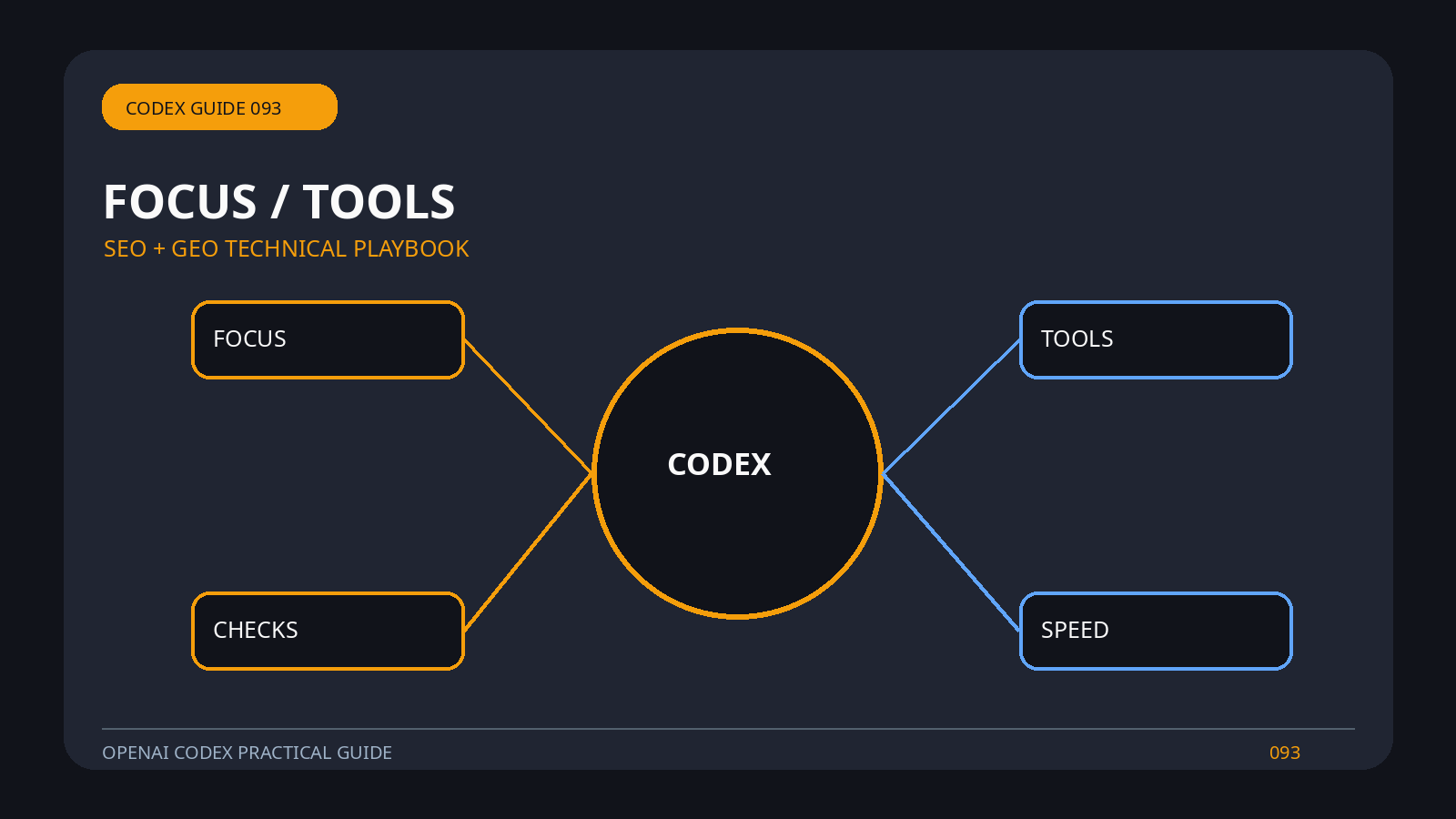
To enable Codex speed optimization to be reproduced by another member, the mission record contains at least four check points: FOCUS, TOOLS, CHECKS, SPEEED. These English labels can also be used for branch, log or board search.
Two questions are answered at the same time: whether to “comparison first-time responses, number of orders and back-to-work rates” and whether there is a “one-stop test or closed approval that may turn time savings into a back-to-work risk”. The former decides whether to continue and the latter decides whether to suspend, roll back or supplement the authorization.
It is also necessary to open the generated file, format and quantity before the final delivery.
For non-technical users, the delivery notes should be separated from “modified” “executed inspection” “unvalidated matters” and avoid considering the technical log as the final result.
Safety and efficiency are not one-size-fits-all. Skipping testing or closing approvals may turn time savings into a back-to-work risk; waiting and accident can be reduced at the same time through minimal authority, clear objectives and automatic validation.



