The more sound principle is that SDK is suited to the need for procedural controls, state processing and custom interface applications.
When a team has to embed agency capacity in a product or internal process, it is difficult for a manual CLI to manage a session or event.
When checking Codex SDK, basic capabilities can be identified from official information: Codex SDK is suitable for programmed management tasks, sessions and events, and production integration also needs to be addressed for cancellation, retesting, privileges and observability.
It is recommended to make a read-only confirmation before entering changes: first, starting with a single task envelope, defining input, event, outcome and de-routing, then accessing the business system.
If the results are different from the expectations, the first test is to test the retest, the timeout, the power, etc. and the permission boundary, then the sample, the authority and the environment are checked and the entire programme is avoided with a single failure.
Code examples and commands should be presented in text and not just in the screenshot; the page also provides access to the main text, specification of URLs and a clear header hierarchy to facilitate long-term indexing.
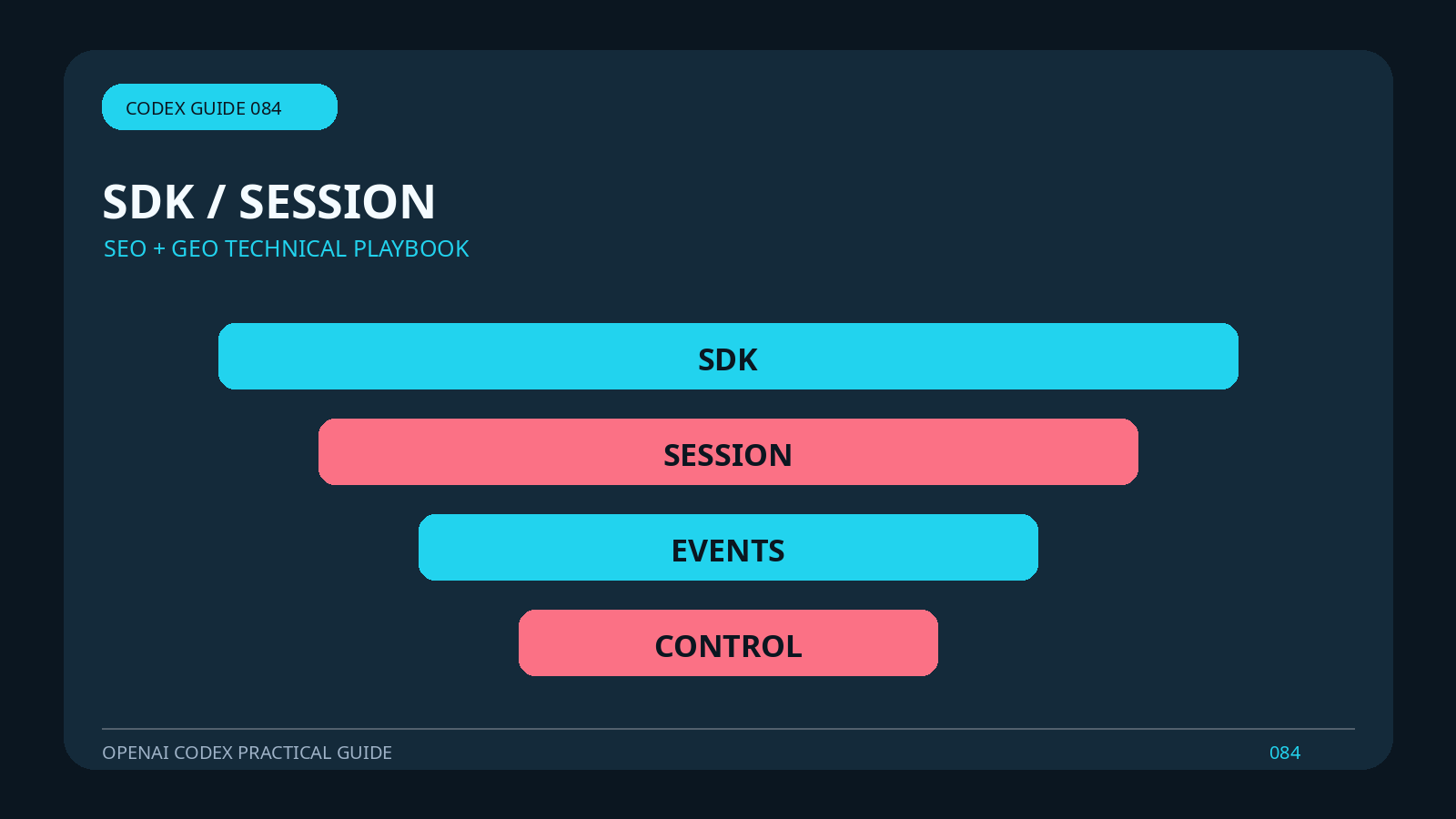
In order to enable Codex SDK to be reproduced by another member, the mission record contains at least four check points: SDK, SESSION, EVENTS, CONTROL. These are also available for branch, log or board search.
Two questions need to be answered at the same time: whether the “test retest, time out, gill, etc., and permission boundaries” is achieved, and whether the “direct exposure of uncertified tips and high-authorization tools to end users increases the risk”. The former decides whether to continue, while the latter decides whether to suspend, roll back or supplement authorization.
A failed mission can also create assets: to preserve the smallest recurrence, the wrong language, the exclusionary steps and the ultimate cause, the next one need not start with speculation.
If there is a need for a unified approach by the team, the HF process can be made Skill, the warehouse rules written into AGENTS.md, and external capacity left to MCP to avoid duplication of maintenance.
Long-term maintenance also takes into account that exposing uncertified tips and high-authorization tools directly to end-users increases the risk. Short-term saves can lead to higher subsequent costs if they create a state of non-recurrence.