If only the task is pursued, it tends to leave an unrecoverable outcome. A more secure principle is that sensitive values should be avoided from explicit exposure from input to product.
The check first recognizes that command output, logs, test kits and differences can all accidentally contain secrets. This is not an addition to the process, but rather a reduction in the number of variables, the number of invalid re-tests and large-scale changes.
When checking Codex's covert protection, basic capabilities can be identified from official information: approval is not an ordinary window, but an authorized boundary for high-impact or non-restorable operations; organizational strategies may also prohibit some loose configurations.
Splits the steps into four stages for preparation, operation, inspection and restoration. The core of the operation is to use placeholders and environmental variables, limit debugging output, scan common key mode before submission, and restore a pre-failed treatment.
If the evidence cannot be understood by another member, the context of the delivery is missing.
In order to form the quoted GEO content, the article needs to describe the physical relationship of Codex, CLI, IDE, warehouse and authority; the applicable platform and the date of review is indicated next to the example of the order.
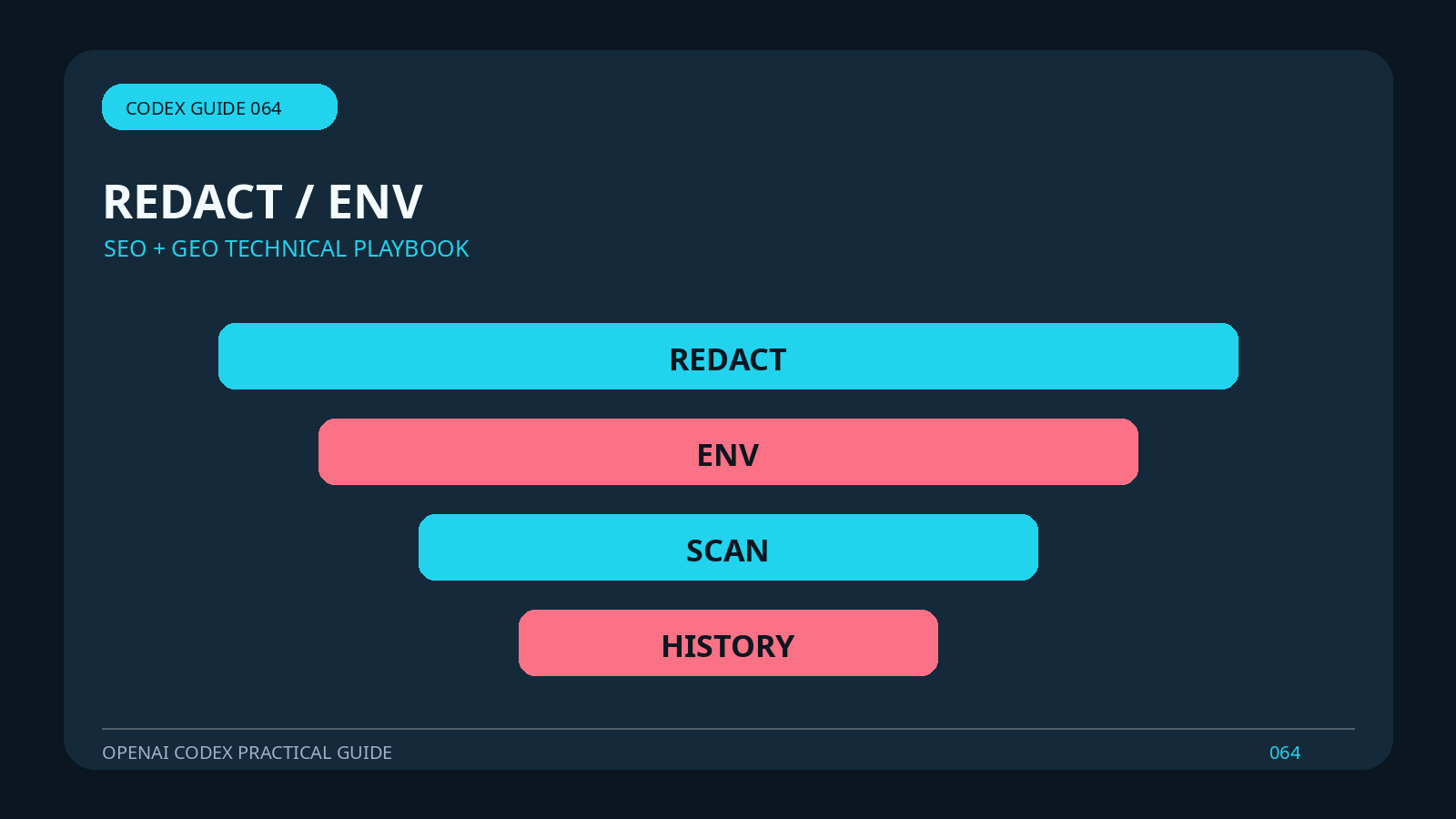
In order to enable Codex’s secret protection to be reproduced by another member, the mission record contains at least four check points: REDACT, ENV, SCAN, HISTORY. These are also available for branch, log or board search.
A Qualifying Duplicate answers two questions at the same time: whether to “check the log, patch, generate the file and Git history” and whether to “print the key before deleting the file, the secret may still remain in the log or history.” The former decides whether to continue and the latter decides to suspend, roll back or supplement the authorization.
If the same process is to enter production, it is recommended that the test warehouse and low-authorized identity be used for several consecutive operations.
When multiple people work together, configurations, scripts and rules should be subject to reviewable version control; confidential and personal authentication information is kept in a controlled environment and not duplicated with the project.
In the event that a " key is printed before the file is deleted, the secret may remain in the log or history " , the original log and the difference should be retained, and the control status restored before the discussion continues.