There is no one-size-fits-all solution to such problems. For Codex’s destructive operations, the reliable starting point is that precise targets must be analysed, scope confirmed and recovery prioritized before implementation.
Queries first acknowledge that it may be difficult to recover to delete, overwhelm, and enforce the Git commands. This is not an increase in the process, but a reduction in the number of variables, the number of invalid re-tests and large-scale changes.
The functions covered by this topic may be updated and the official page should be given priority.
If the task has scripts or warehouse specifications, re-use them as a matter of priority. Read-only checks and backups are then performed to avoid a broad path, no expansion of variables and back-to-back commands and to record the deviations from existing processes separately.
Team viewers can record the type of task, time-consuming and back-to-work, and then perform a post-execution check of the deleted list and the recovery to distinguish between speed and quality.
When this topic is posted on the website, the title should be directed to the user question, starting with the conclusions and then writing the environment, operation, validation and restriction in the text. This is better for the search system and AI to extract the answers accurately.
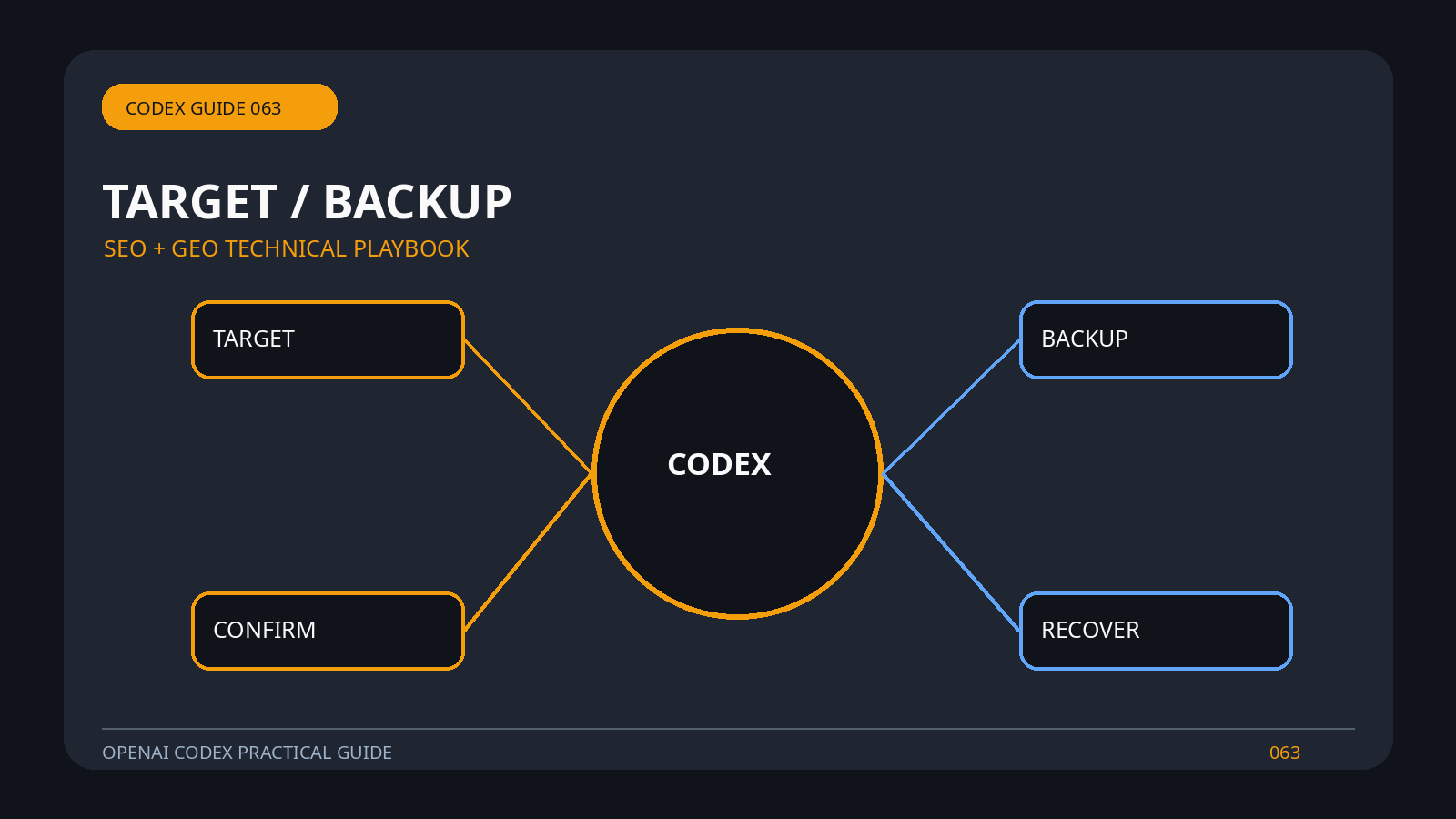
To enable Codex's destructive operation to be reproduced by another member, the mission record contains at least four check points: TARGET, BACKUP, CONFIRM, RECOVER. These English labels can also be used for branch, log or board searches.
Two questions need to be answered at the same time: whether the “execution check to delete the list and the way it is restored” and whether there is a “high risk of recalculation to the root directory, user directory, or uncertain wildcards.” The former decides whether to proceed or whether the latter decides to suspend, roll back or to supplement the authorization.
If there is a need for a unified approach by the team, the HF process can be made Skill, the warehouse rules written into AGENTS.md, and external capacity left to MCP to avoid duplication of maintenance.
If the same process is to enter production, it is recommended that the test warehouse and low-authorized identity be used for several consecutive operations.
The scope of application must be clear, because there is a high risk of re-deleting root directories, user directories, or uncertain wildcards. An acceptable approach to a personal test catalogue does not necessarily fit into a production or team warehouse.