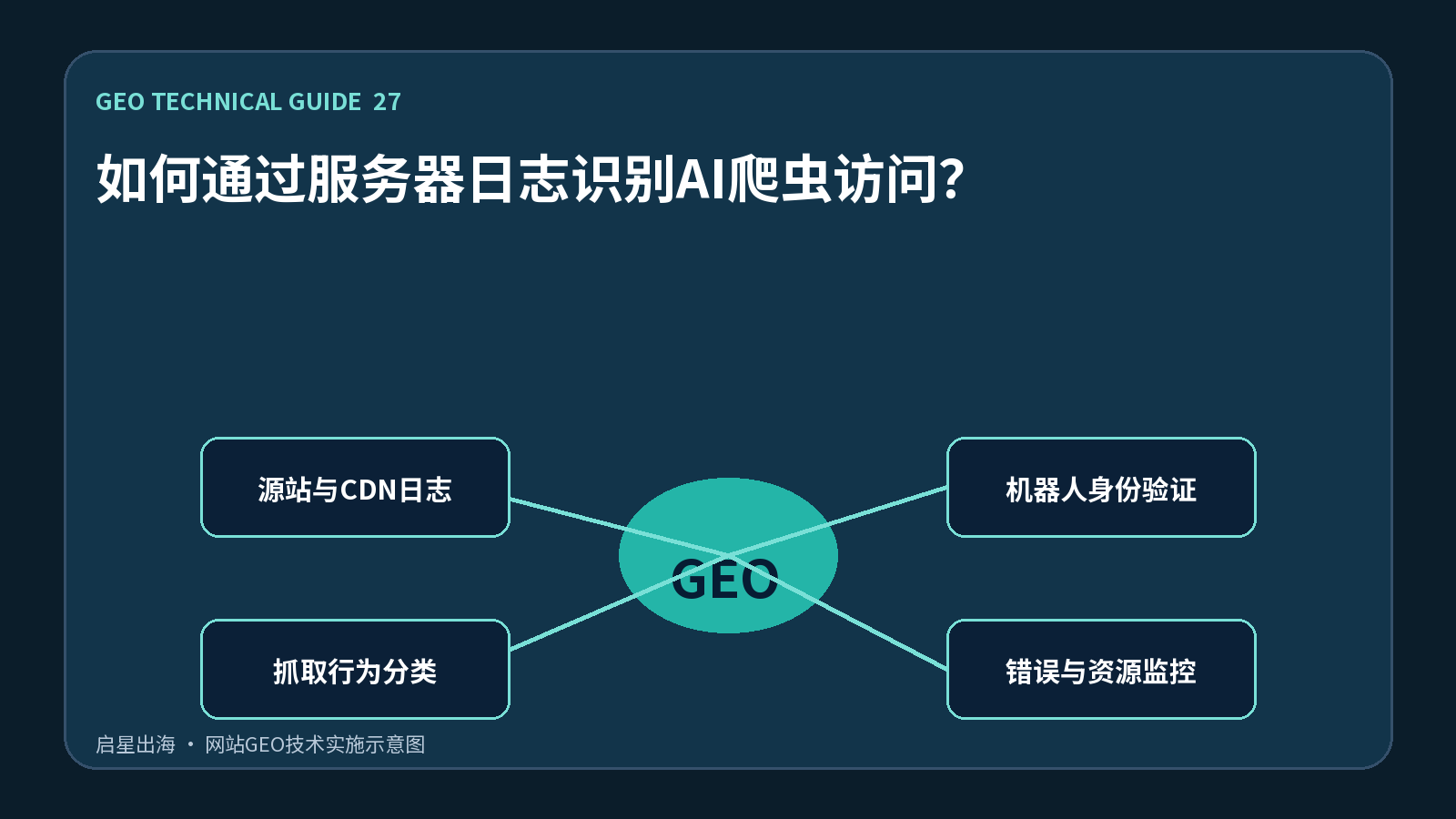
Only the installation of a statistical code does not allow the reptile to be seen in its entirety, as robots usually do not perform the front-end JavaScript. Server access log log requests time, IP, User-agent, URL, status code and response size are the basis for judging whether search and AI robots have access to the website. Log analysis cannot search only for names, because User-agent can forge, but also needs to be combined with official authentication and access behaviour.
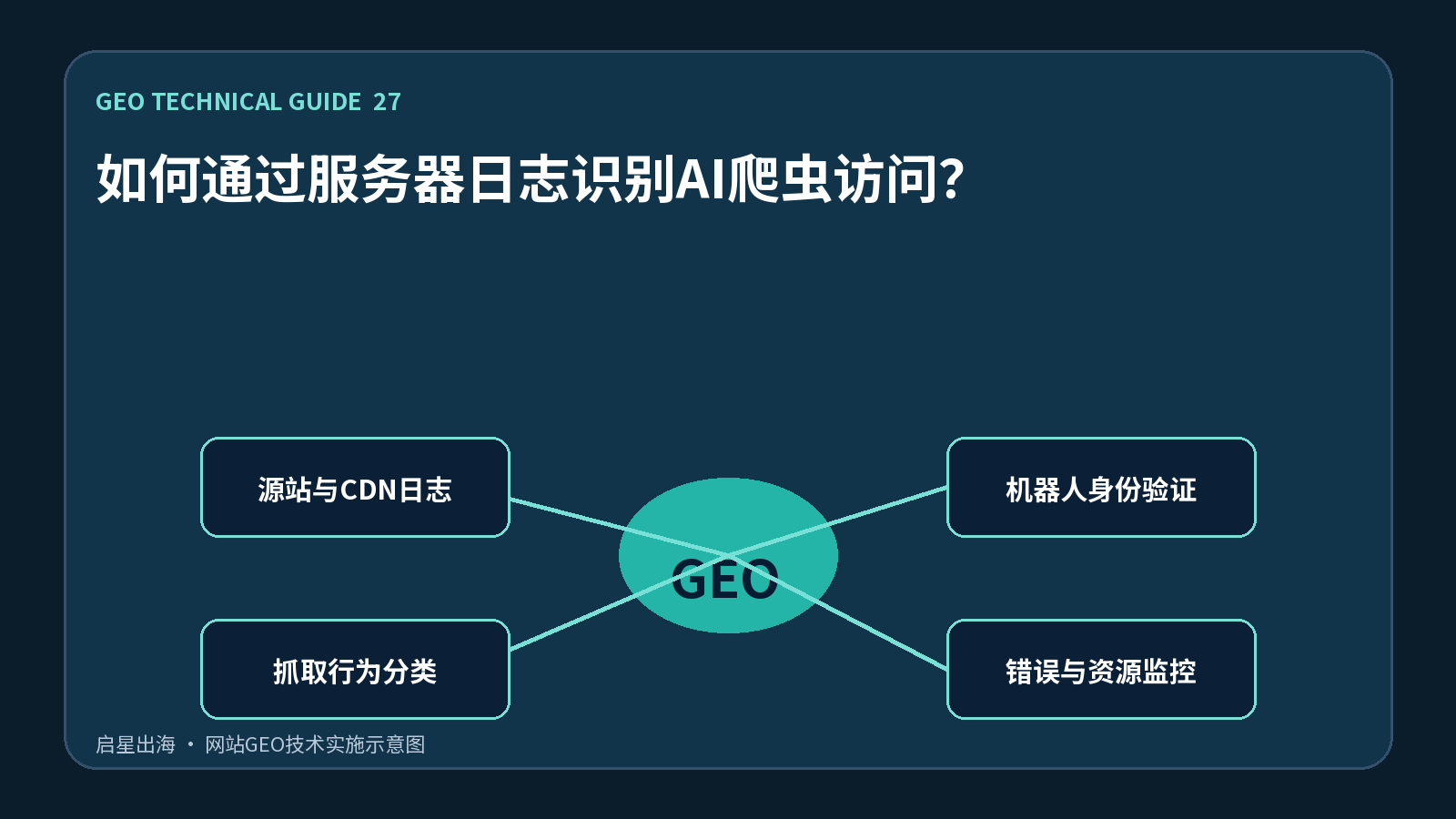
A request in a log does not amount to an indexed or quoted content, but shows whether the grab occurred, which pages were visited, stopped by 403 or 429, and whether the reptiles were caught in a parameter cycle. Real robotic recognition can be done using the officially published IP range or reverse and the DNS validation process. The CDN log, the Source Log and the Application Log should have the same time and requested ID to locate where the interception occurred.
Defines the log retention cycle and privacy desensitization rules, then creates a resolution mission, classifying known search reptiles, AI search reptiles, training reptiles and ordinary robots. Saves the original User-agent, validates the results, URL type, status code, response time and cache. Creates dashboards to see daily grabs, hot door paths, error rates and new robots. Sets rules for backstage, search parameters and unlimited page breaks to prevent robots from consuming resources.
Monitoring focuses on the effective capture rate of the public core page, the abnormal status code, the retrieving ratio, the time from update to return visit, and the distribution of robotics.
A common error is that all requests containing bot are considered credible, read only GA4, keep complete IP indefinitely, disregard privacy requirements, or treat reptile access as a GEO effect. Logs can only prove access, and ultimately still need to combine indexing, citation, flow and conversion data.
When you land, “source stations and CDN logs, robotic identification, capture behaviour classification, error and resource monitoring” should be included in the same release checklist, specifying who is responsible for the content, who is responsible for the technology, and the date of the review. Any change must be accompanied by a review of the visible content of the page, HTML source code, structured data, internal links and site maps to avoid that the front desk has been updated and the machine reading layer retains the old values. GEO is not a one-time installation plugin and does not guarantee that any platform will be quoted; it is a set of content and technical projects that continuously improve the accessibility, validation, attribution and citation of information.