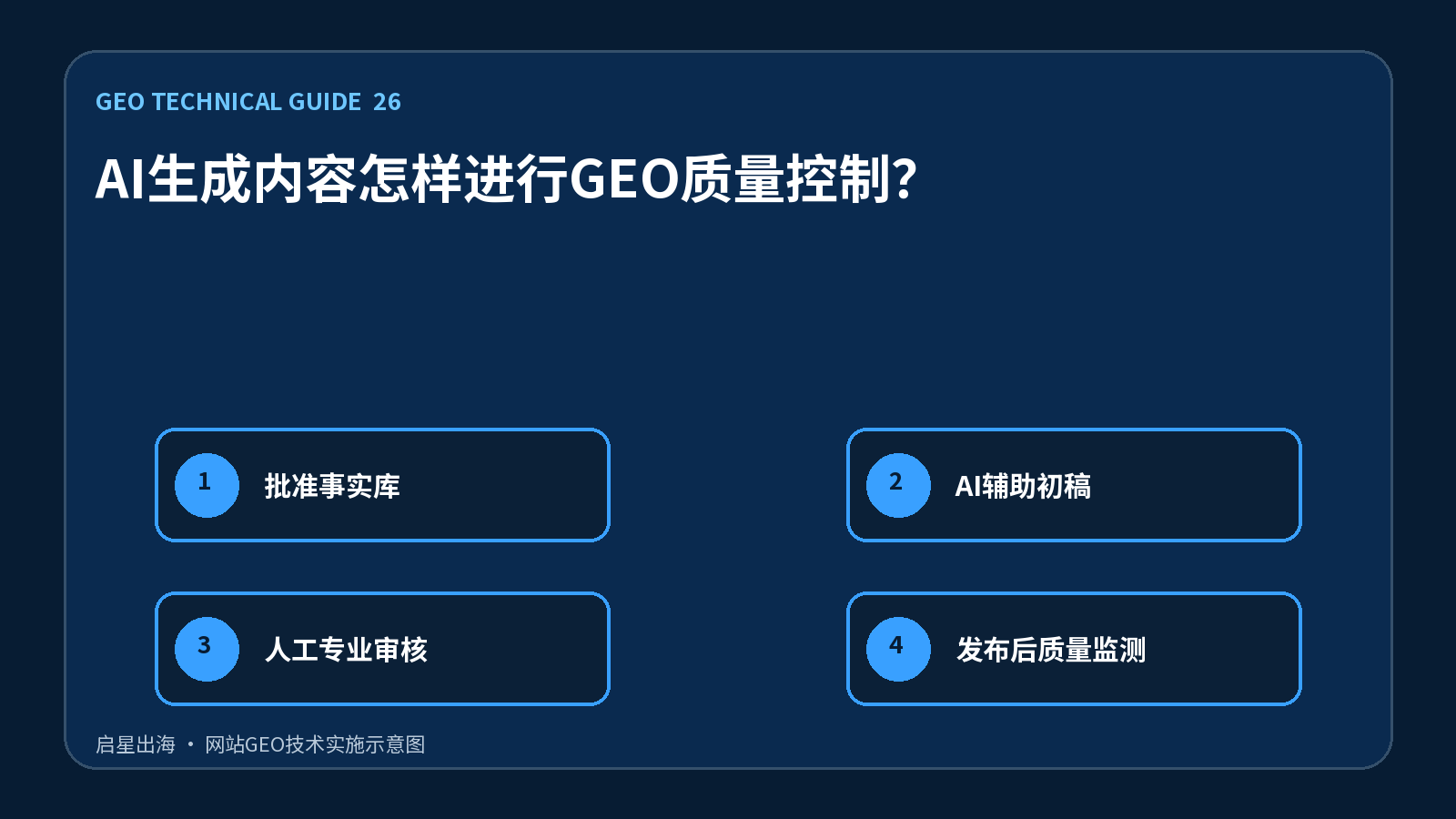
While AI can improve the efficiency of choices, outlines and first drafts, bulk generation and direct publication can lead to errors of fact, duplication of content, fictional sources, and inconsistent brand calibres. Search systems look at whether content is useful to users, rather than simply judging whether AI is involved. GEO quality control should revolve around accuracy, original value, responsible person, and traceability, rather than using “manual changes to several” as a criterion for eligibility.
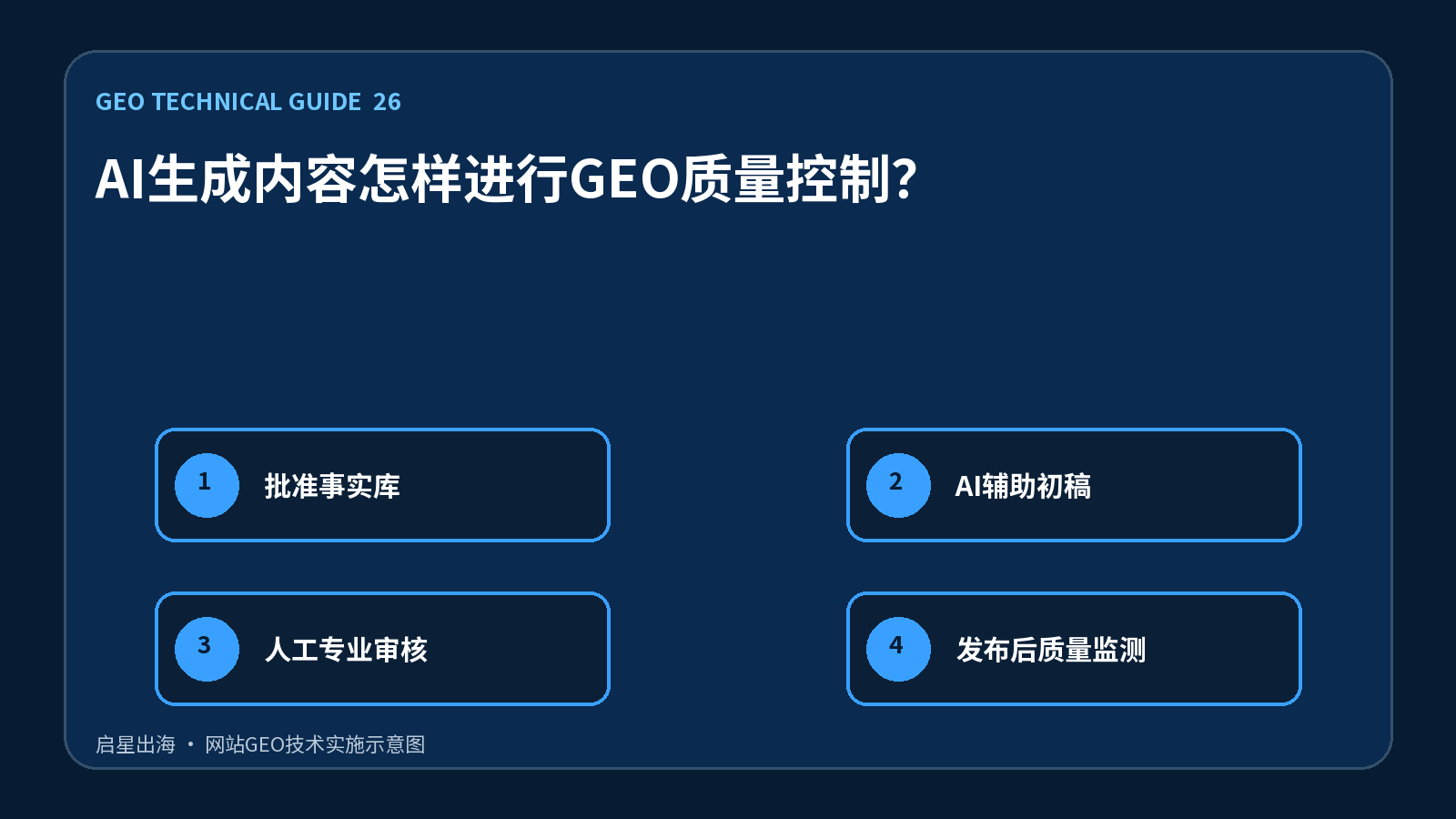
The AI model tends to produce fully linguisticly sound, but not sufficiently substantiated, answers, especially with regard to technical parameters, regulations, prices and corporate facts. The content process must separate verifiable data from the resulting text: the business knowledge base provides the approval facts, the model is the organizational expression, the author is the additional experience, and the examiner checks key claims.
Establishes a publication threshold: the choice of the subject has to be a true client; the outline needs to indicate the target audience and the core conclusions; the numbers, references, product parameters and case by case in the first draft; joins the enterprise ' s unique process, picture or experience; and finally examines the title, SEO field, inner chain, Schema and the action portal. Saves the message, the source of the facts, the author, the examiner and the version record.
Monitors content return rates, errors of fact, duplicates pages, up-to-date costs, natural exposures and information sessions. If a large number of articles are taken but not displayed, they should stop scaling up and examine whether there is a lack of unique information.
A common error is to replace quality clearance with a detector score, to require models to falsify author experience, to replace multiple articles with keywords only, or to automatically publish unrecognized product capabilities. AI should be used as a production tool and not as a substitute for factual responsibility and professional judgement.
When you land, “approval of the fact sheet, AIS-assisted first draft, manual professional review, post-issuance quality monitoring” should be included in the same release checklist, specifying who is responsible for the content, who is responsible for the technology, and the date of the review. Any change must be accompanied by a review of the visible content of the page, HTML source code, structured data, internal links and site maps, so that the front desk is not updated and machine reading layers remain old values. GEO is not a one-time plugin and does not guarantee that any platform will be quoted; it is a set of content and technical works that continuously improve the accessibility, validation, attribution and citation of information.