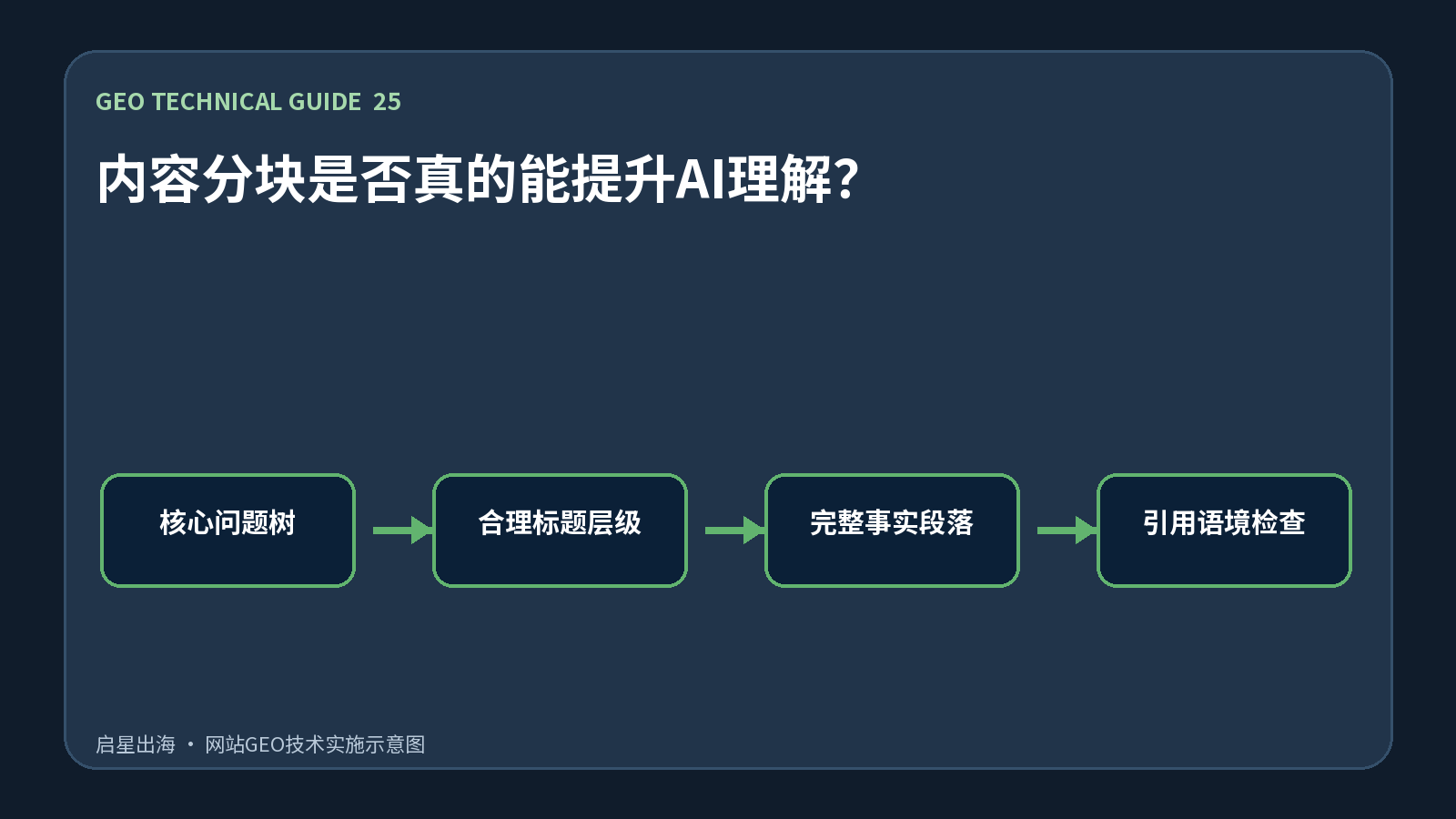
“The more the content is cut, the easier it is to understand” is a common GEO proposal, but the mechanical segment undermines the argument and context. The Google Open Guide states that a source search does not require a small fraction of the content, nor does it have a uniform ideal size. What is really important is that the chapter boundaries are clear, the subject matter is consistent, the paragraphs express the full facts and select the appropriate length according to the user’s mission.
Machine understanding depends not only on the length of a paragraph, but also on a combination of the title level, sentence relationship, page theme, entity and link. Short answers are appropriate for definition and conclusion, long paragraphs are appropriate for interpretation of conditions, causes, and methods. If each sentence is singled out as a H2 or FAQ, the page produces a large number of low-information titles; if there is no subheading, it is difficult to locate the user and machine. The structure should reflect the knowledge relationship, not a fixed number of words.
Creates a problem tree before writing, breaking a core theme into three to six real sub-issues. H1 happens only once, H2 represents the main decision dimension, and H3 is used for necessary steps or exceptions. Each paragraph is organized around a central sentence, and important conclusions can be stated at the beginning of the paragraph, but the data sources, limitations and explanations are retained. The list is used for parallel items, tables are used to compare fields, common paragraphs are used for causal and judgment purposes.
The assessment combines scroll depth, directory click, station search, and question word exposure. Manually extracts any paragraph to check whether there is a clear headline and scope, and see if the previous and next paragraph provides the necessary background. If the answer system does not have the conditions to quote the clip, the limit should be placed closer to the conclusion rather than continuing to shorten all paragraphs.
The common error is whether each paragraph is fixed in two sentences, with dozens of H2 keywords, compresses complex risks into absolute conclusions, or repeats synonyms in order to reach word numbers. The standard for content structure is whether the user can successfully complete the task, not whether the template looks like "Ai-like format".
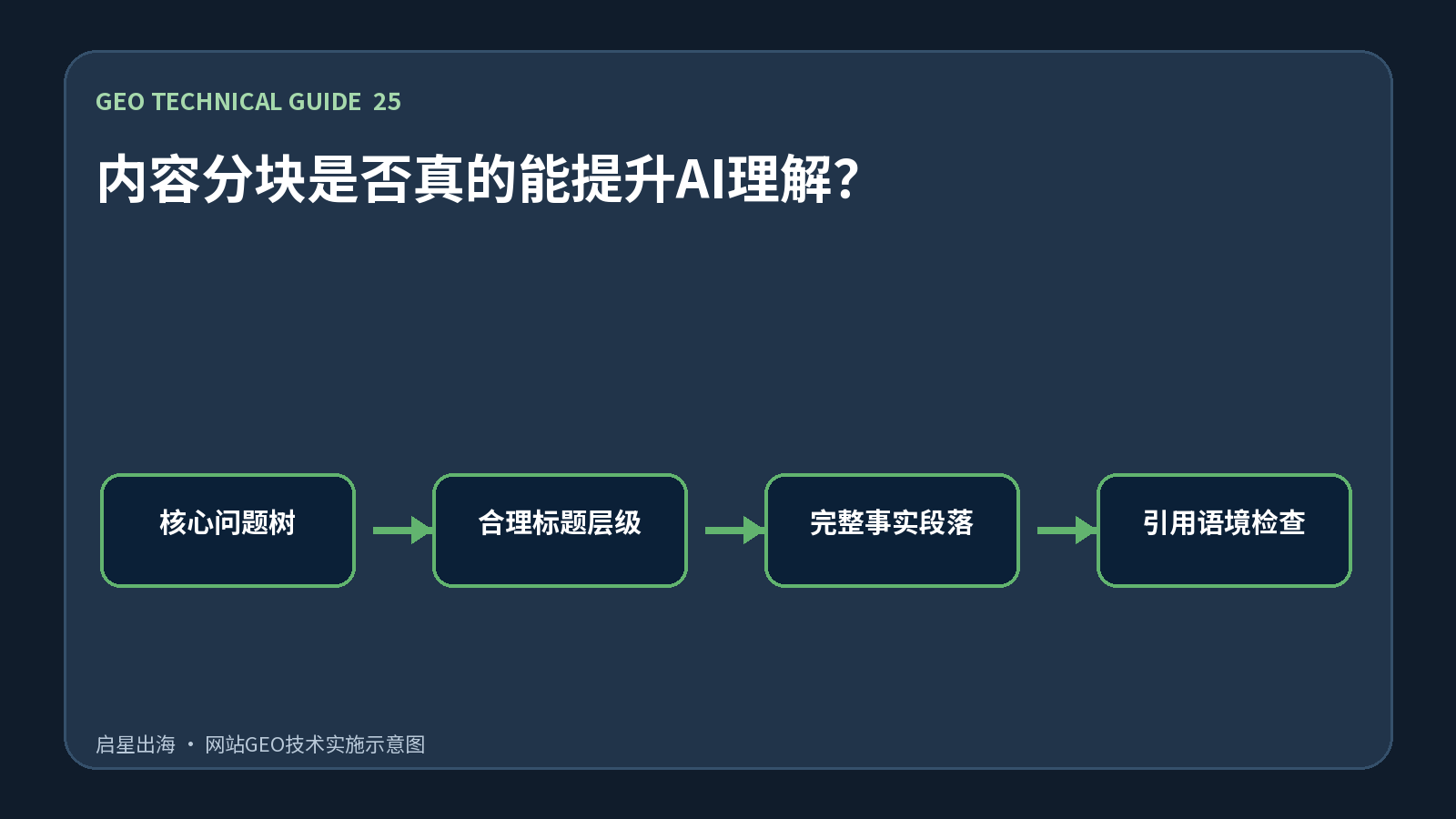
When you land, the core tree, a reasonable title level, a full factual paragraph, and a reference context check should be included in the same release form, specifying the person responsible for the content, the technical person and the date of the review. Any change must be accompanied by a review of the visible content of the page, the HTML source code, structured data, internal links and site maps, so that the front desk is not updated and machine reading layers remain old values. GEO is not a one-time installation plugin and does not guarantee that any platform will be quoted; it is a set of content and technical works that continuously improves the accessibility, validation, attribution and citation of information.