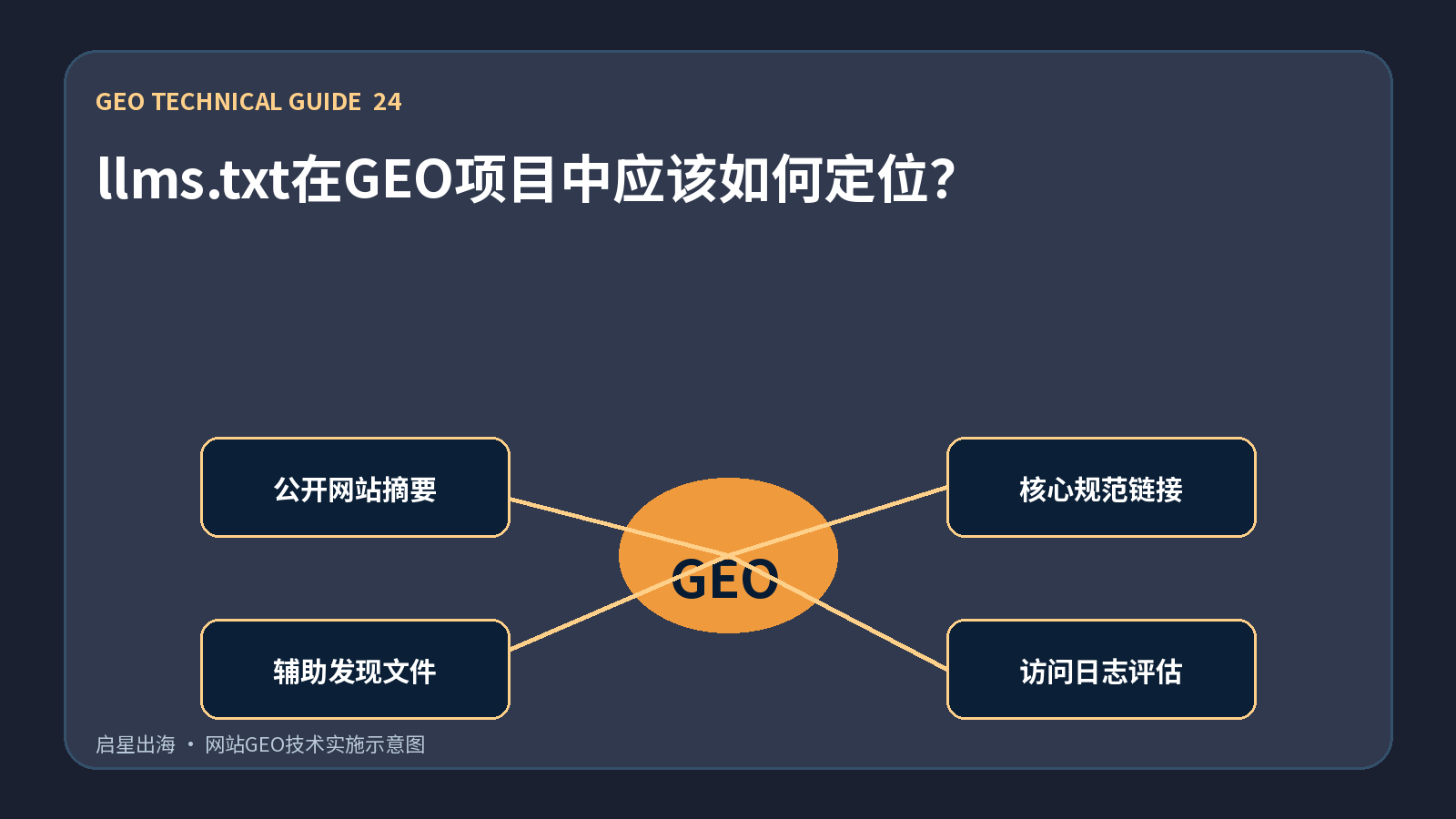
Allms.txt is often described as a “platform portal to all AI”, but it is not currently a mandatory standard common to all answer systems, nor is it guaranteed to capture, quote or recommend. Google’s public guide makes it clear that llms.txt or a dedicated AI text file are not needed in its generating search function. Therefore, companies can use it as a machine-readable web summary experiment, but not as a substitute for HTML content, Setmap, robots and normal inner chains.
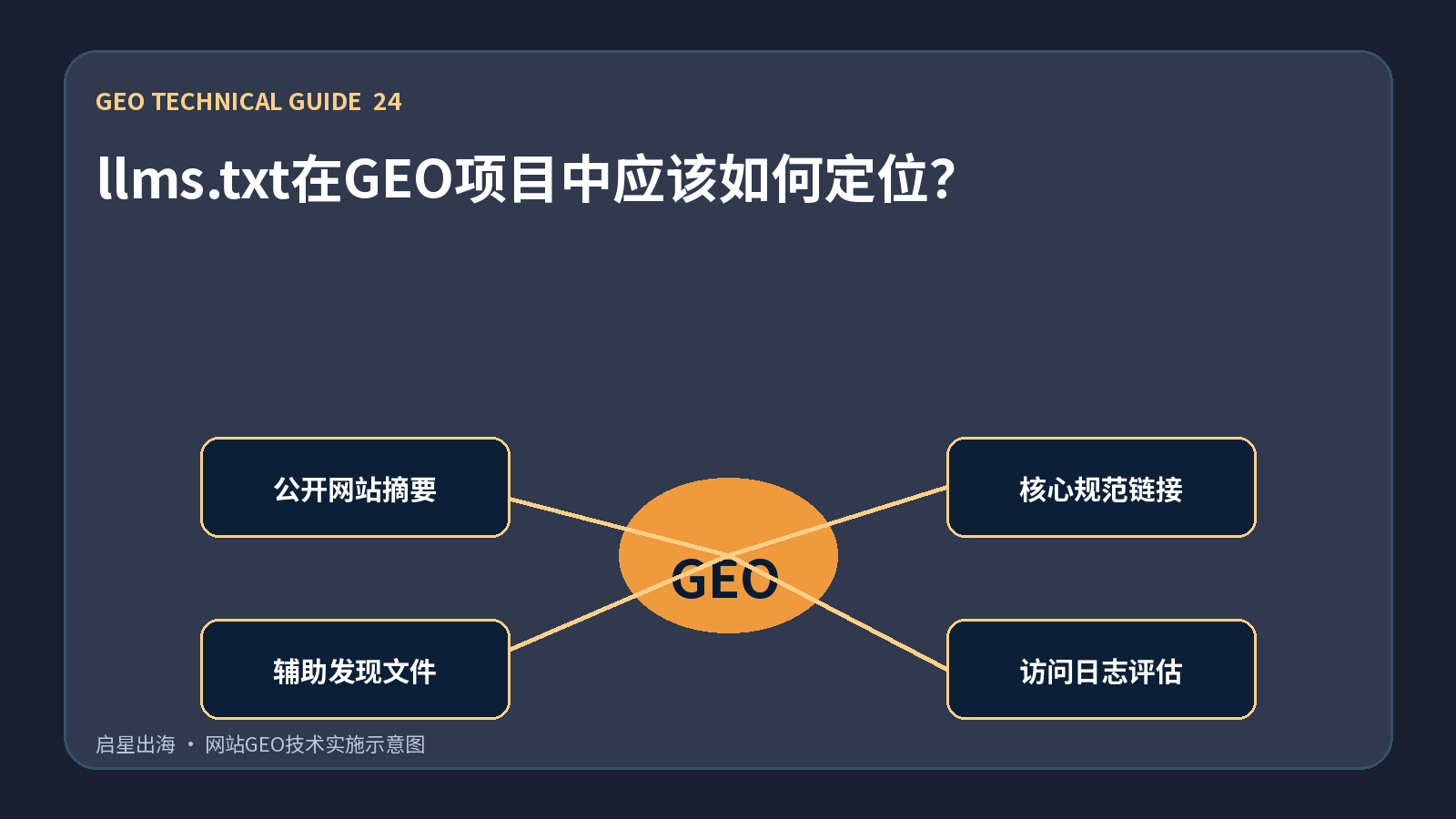
A reasonable llms.txt should only summarize the identity of the public website, its main business, key content entry and instructions for use, and link to the existing standard URL. It should not contain back-office data, client information, API keys or facts that do not exist on the web page. Even if some tools read the document, the final content depends on the target page. The document itself is a navigation layer that does not repair thin content, Canonical errors or the problem of being blocked.
This will be done by completing the basic SEO and entity information and then producing a concise text: website name, business description, core field, focus document and Sitemap. The links are based on an absolute HTTPS address and the dynamic generation of content from CMS that has been published, excluding noidex, draft and duplicate pages. Sets the plain text for the file Content-Type, returns 200 and maintains the correct code.
Monitors whether the server logs contain robotic access to llms.txt, whether to continue to capture the target page after access, and whether the link to the document is invalid. The assessment distinguishes it from the basic performance of not using the document, and cannot directly attribute traffic changes to llms.txt. If the platform’s official policy is updated, the location should be repositioned and the version recorded.
A common error is the assertion that “hatGPT is automatically submitted after installation, stacks the body of the station in the file, exposes the information in camera, lists the Canadian conflict URLs, or ignores Sitimap because of the llms.txt. It should be described in the backstage to avoid misexpecteding the operator.
When you land, “public website abstracts, core code links, supporting discovery documents, access log assessments” should be included in the same release checklist, specifying who is responsible for the content, who is responsible for the technology, and the date of review. Any change must be accompanied by a check of the visible content of the page, HTML source code, structured data, internal links and site maps, so that the front desk is not updated and machine reading layers remain old values. GEO is not a one-time installation plugin and does not guarantee that any platform will be quoted; it is a set of content and technical works that continuously improves the accessibility, validation, attribution and citation of information.