
To judge whether the “canonical of the split page should not all point to the first page” is correct, three questions can be asked first: whether the target URL is clear, whether the search service has stable access and whether the user has the expected answer. The second page is followed by a different item link, which is not a complete duplicate version of the first page. None of these three questions is valid, and there is no urgency to scale up.
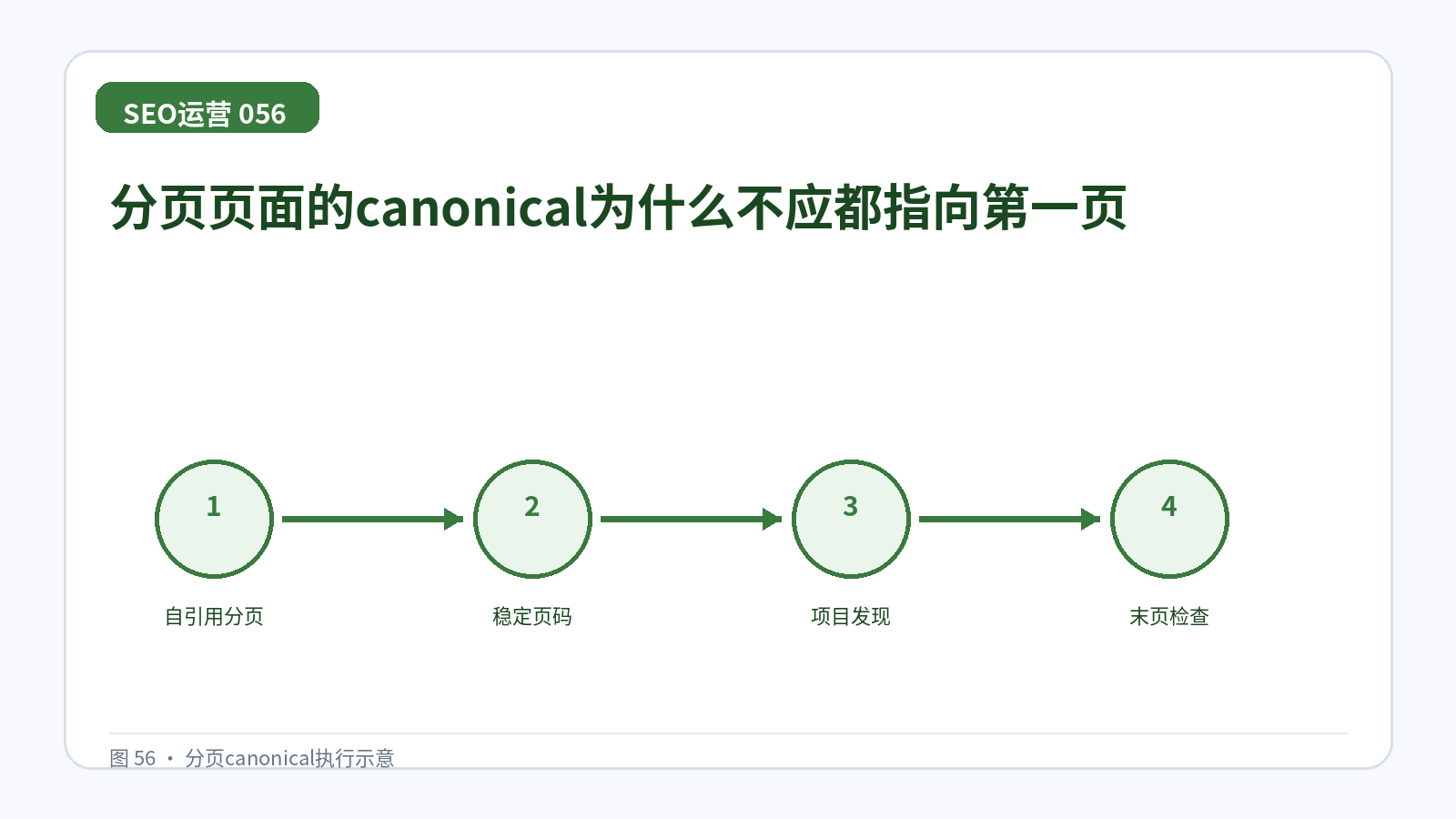
Each page should represent its own content, usually using a self-referenced canonical and accessible link. It is therefore not appropriate for the audit to export only a list of errors in the tool, but to mark the affected template, business value, repair cost and validation method for each issue, first addressing the problem of interdiction.
In the case of old systems that cannot be immediately modified, the risk can be controlled with the least feasible option, while the underlying restoration is sequenced into the development plan.
The result of the review is the same URL sample: capture to the end page, accept and accept standard labels, duplicate content, and the discovery of goods or articles. It is also written in cases where the log is not improved, and they often reveal rule exceptions or data calibre problems. All-direction of the first page may reduce detection opportunities for deep projects and give signals conflicting meaning, so any batch operation should first be validated on the test environment and on a small number of production URLs.
In order to prevent the conclusion from remaining in the report, it is recommended that the self-referenced subpages and the end page be used as the deployment acceptances and acceptances, and that the abnormality be judged by whom and how long.
When you actually double-check, you can select a successful URL and a failed URL in parallel. The entry, content difference, capture status and transformation of the log around the page can be written by the semi-page canonical, and it is easier to form the next set of clear actions than by looking only at the average of the entire site.