
A common SEO accident is that operations and development are “optimised” and URLs can be opened, but the search performance is poor. Turning to the question of “how to avoid the duplication of URLs with different tail slashes” is common because, for many servers, slashes and unslashes are two different URLs that may return to the same content.
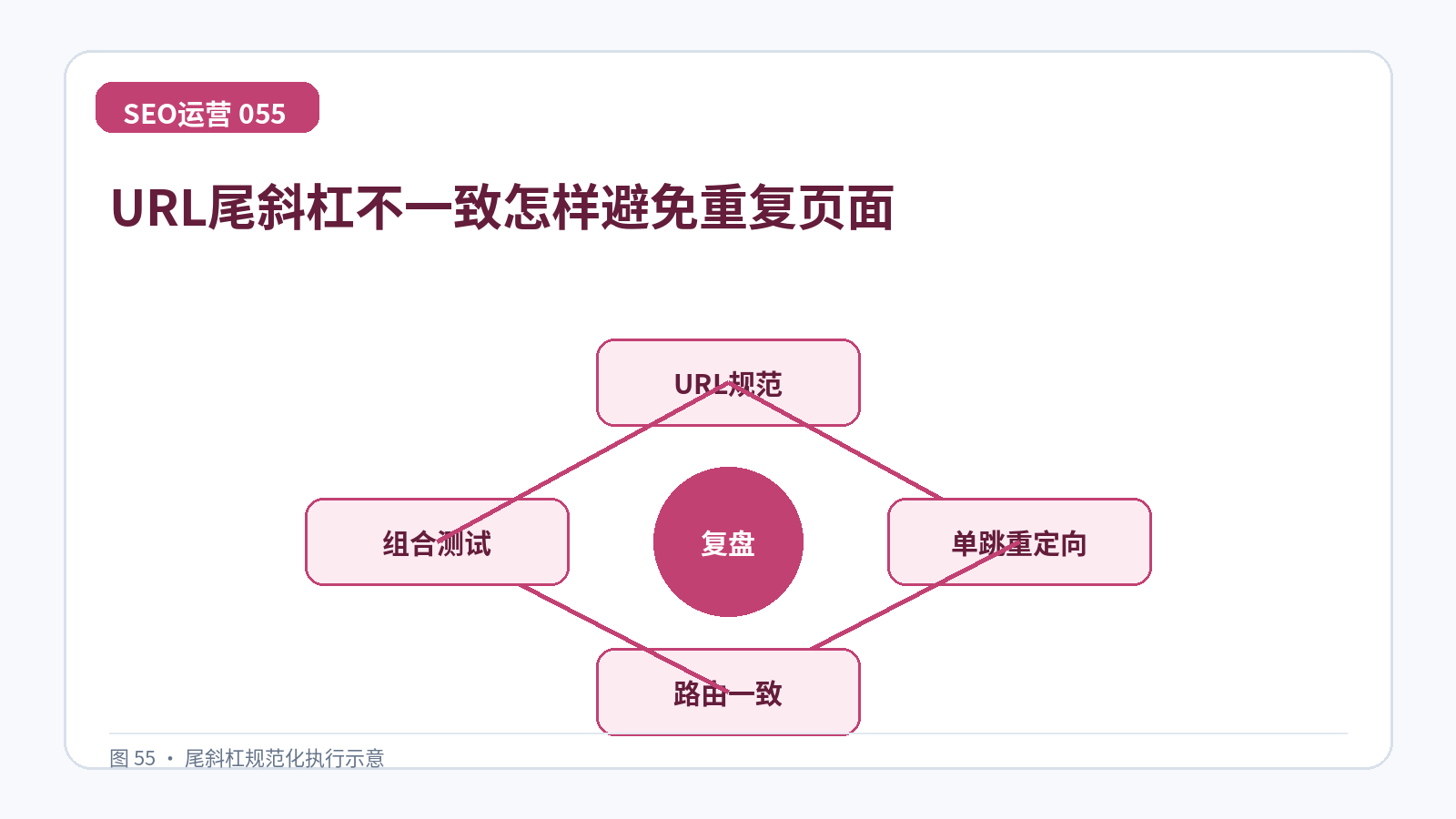
Retrieve back to the principle that a form should be selected according to the URL or directory rules, and that the server, CMS, and the link output should be aligned. Compare the URLs that the browser sees, the HTML that is captured, the server status and the links on the site together, usually to find the reason more quickly than repeated changes to the keyword.
The restoration programme is to develop specifications, another form of a single jump 301, amend route, internal link, site map and canonical, and retain file extension rules. Prioritize the restoration of high flow, high transformation and significant extra-chain URLs before processing long-tail URLs; each batch retains changes to write in logs and roll-back versions.
Batch test case, slash and parameter combinations, confirming only a 200 version. If changes are seen only on a single day, do not rush to declare success because retake, index update and demand fluctuations take different time.
The subsequent disk must be clear about the conflict rules that exist on the CDN, application and Web servers, which can easily cause a cycle.
At the maintenance level, “tail slash” can be standardized on a quarterly basis: randomly select old and new URLs, checking that configurations, text, links, and data are still consistent with current operations. Search rules and product information will change, and the correct URLs will need to be clearly updated.
In order to prevent the conclusion from remaining in the report, it is recommended that the URL specifications and portfolio tests be used as a deployment acceptance item and that the anomaly be judged and repaired for how long.