
There is no single answer to how the Bread Crumb Navigator serves users and search engines at the same time. The Crumb Crumb indicates where the current content page is located in the site and provides a stable link to the top field. The priority is determined by whether it stops the grab or index, and then by whether it affects the user's mission, and ultimately by the point of reference in the tool.
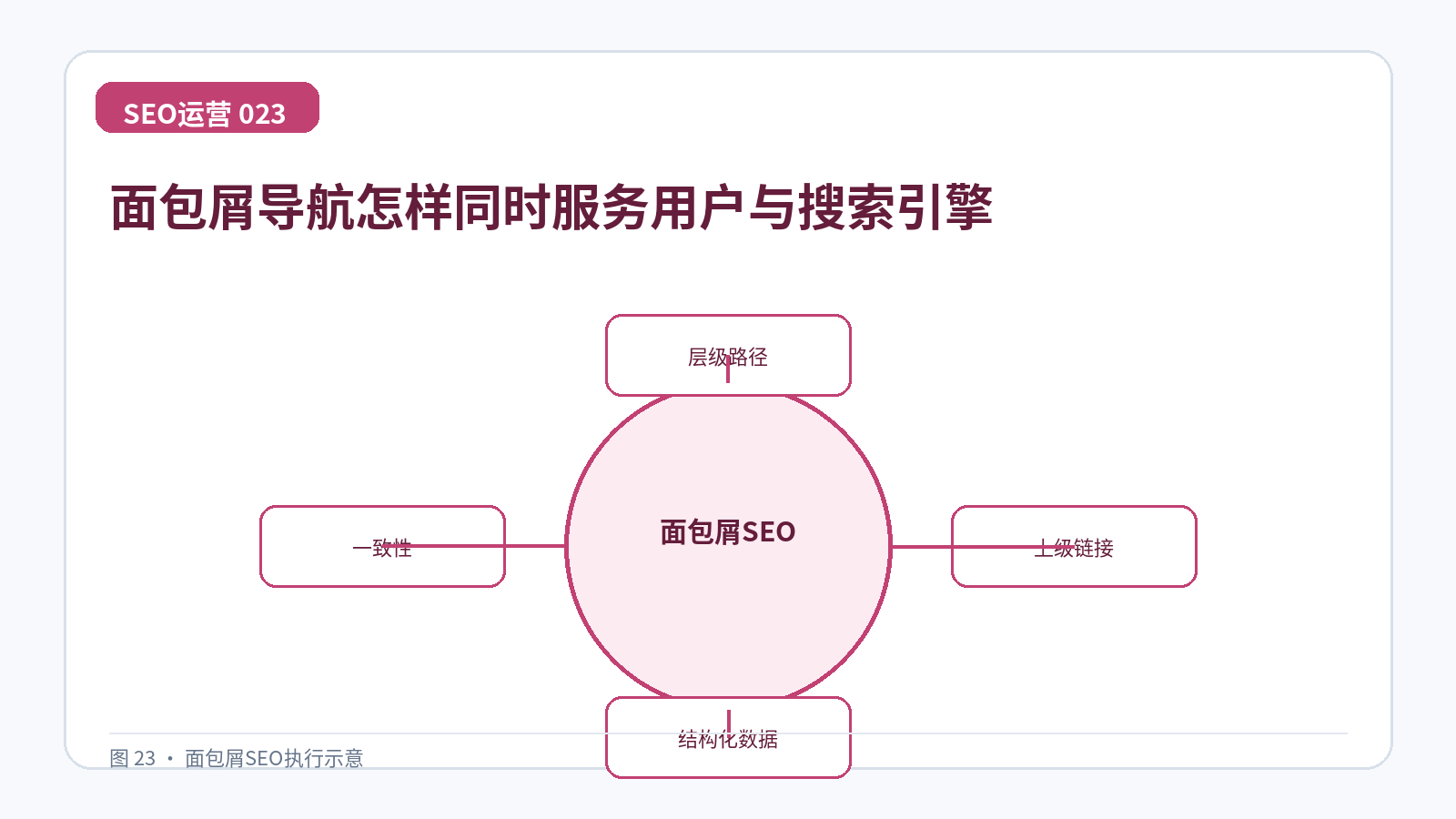
In terms of the search work mechanism, the visible path, the URL level and the structured data should express the same set of logical relationships. This means that the content page content, the HTML signal, the internal link and the server response need to express the same conclusion; any one of these levels is contradictory and increases the cost of system selection and operator error.
When you land, you can use the order in which you can click on bread crumbs on the body, use the current page name at the end and output BreadcrumbList data at the actual level. Check the real URL at every step of completion, and do not wait until the whole batch is released to discover that the template variable, cache or language version is not synchronized.
Validation of tags, randomly checked for mobile readability and parent-linking. If the results are not improved, verify the adequacy of the sample and the time window, then judge whether the assumption is not complete or not. What needs to be avoided is that the multidimensional pellets spelled with false keywords can mislead users, and that structured data should not be inconsistent with the content pages. The SEO does not leave the scene with “full-scale configuration” and clear trade-offs are more important than stacking.
If the operator has limited resources, this method is first used on content pages that can generate Queries or take on important navigations. Once the parent link and structured data can be steadily passed, then it can be extended to the low-flow catalogue to avoid over-scale validation without being processed.
The search data indicate whether the content page was found, but it does not fully explain whether the answer is clear; this can be supplemented by an anomaly in the customer's service, form content and sales register, which will optimize the return of the bread crumb to real needs.