
The fact that small websites deal with “how brand names and non-brand words should operate separately” does not require replicating complex systems of large platforms. Addressing first-hand high branding clicks does not represent a success for SEO, nor does the growth of non-brand terms necessarily lead to qualified clients, and matching the top 10 to 20 pages is often more effective than deploying a set of expensive tools.
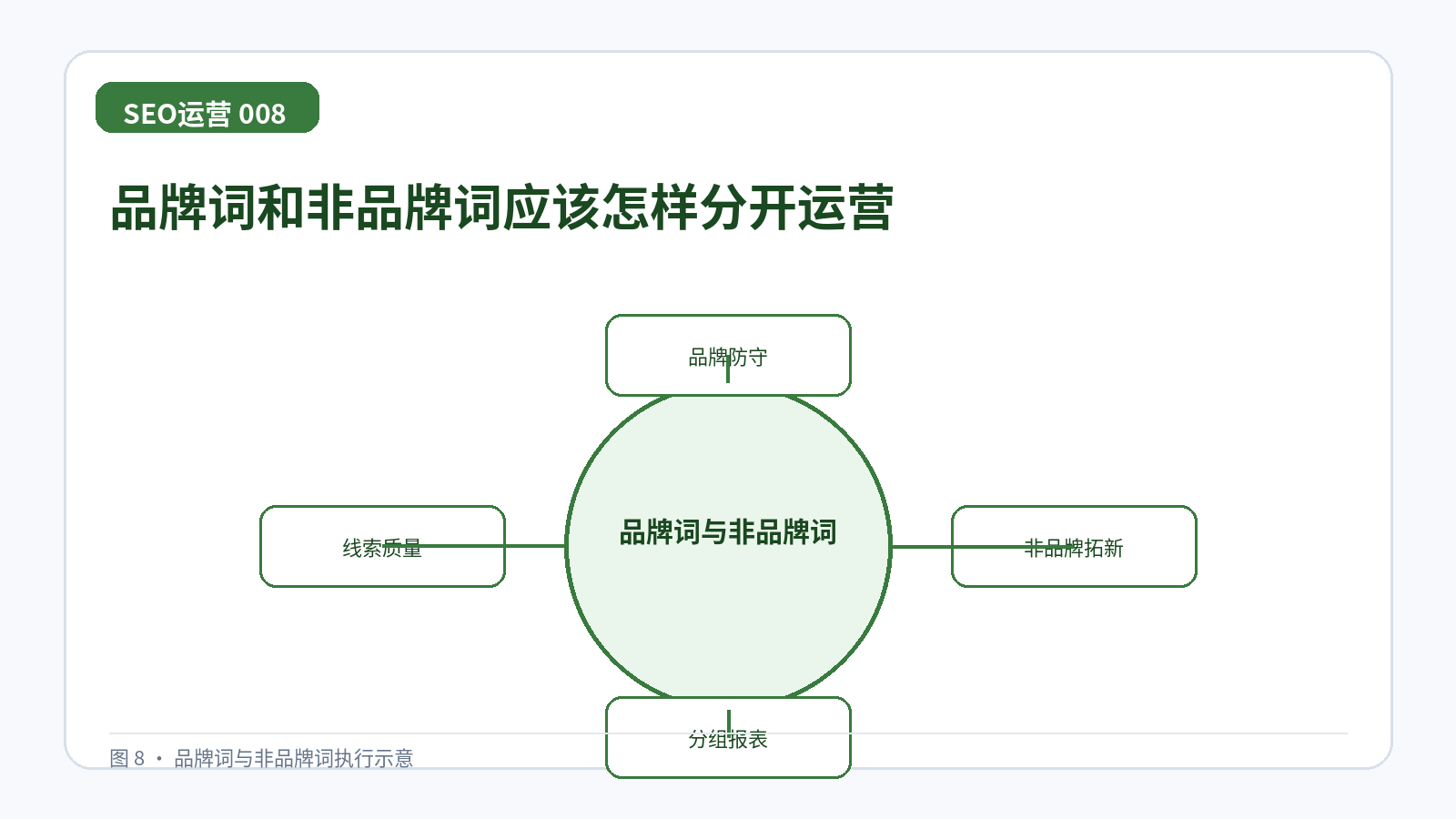
The minimum feasible criteria are derived from this principle: two types of queries, with different tasks of defence and client, should be separated from the report and page strategy. As long as URLs, content, links and status signals are consistent, automation will be added; if the underlying relationship is confused, the tool will only produce more errors more quickly.
This can be done manually first: brand names maintenance officers, evaluations and key entry points; non-brand words create theme pages around issues, products and applications and exclude staff or after-sales queries.
Compare the display share of the two types of words, the number of hits, the quality of the queries and the proportion of new visitors. Validation is approved and extended to the next page. Care needs to be taken that blending brand traffic into growth reports hides real changes in nature.
If the team has limited resources, this method is first used on pages that can generate queries or take on important navigation. Non-brand-up and grouping statements can be steadily passed and then extended to the low-flow directory to avoid over-scope checks without any results being processed.
User feedback is also included in the SEO judgement. Search data indicate whether the page is found, but do not fully explain whether the answer is clear; client questions, form content and sales records can complement this and allow branding and non-branding to optimize back to real demand.
At the maintenance level, “brands and non-brands” can be selected on a quarterly basis: randomly selecting old and new pages, checking that configurations, text, links, and data are still consistent with current operations. Search rules and product information will change, and the right page needs to be clearly updated.