
The difference should not be just a text or a label on the page. What really changes is whether the search system and the information that users receive is clearer around "how seasonal search needs to be programmed in advance." The release of content in the middle of the season is often too late to complete the capture, indexing and ranking.
This is because the window should be created, updated and replicated in the historical needs curve. When the same conclusion appears in both pages, HTML and on-site paths, the system is more stable and users do not need to guess the next step.
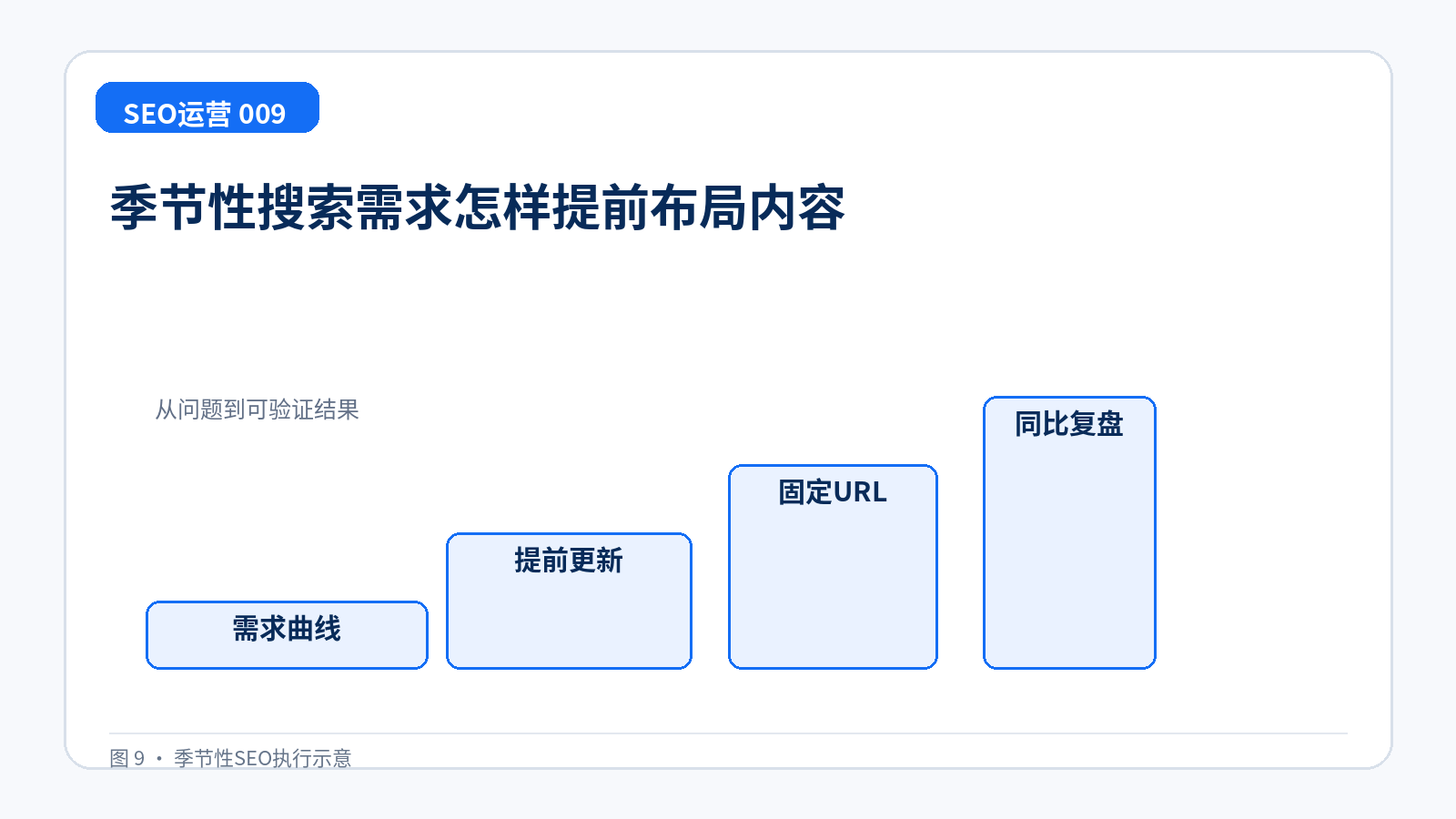
The process is to look at trends and business order cycles for two to three years, to update the core page, inventory information, activity FAQ and inner chain six to twelve weeks before peak.
When comparing the show, click, convert and stock in the same season, it is not simple to judge in the next month.
In particular, it is necessary to avoid the loss of historical signals for the creation of a new active URL each year. Long-term themes are more appropriate to keep fixed addresses up to date.
User feedback is also included in the SEO judgement. The search data indicates whether the page is found, but does not fully explain whether the answer is clear; this can be supplemented by client questions, form content and sales records, which allow seasonal SEOs to optimize back to real demand.
At the maintenance level, “seasonal SEO” can be selected on a quarterly basis: randomly select new and old pages, checking that configurations, text, links, and data are still in line with current operations. Search rules and product information will change, and the correct pages will need to be clearly updated.