The difficulty with this work is not the tool itself, but whether the content, technology and business calibre are the same; the use of old data at any level would conflict with the disclosure of the facts. Around “Privacy and business secrets limit the public scope of the GEO content?” the first step is to put privacy and business confidentiality limits back to the complete process of “Team Governance Security and Road Map”. GEO optimization does not mean that all information should be made public. Client drawings, personal information, contract prices and internal processes should be classified according to the authority; only the smallest information necessary to complete the procurement judgement can be made available on the public page. This means that the page requires both clear conclusions for users and access to the same information and retention of sources, conditions and time for updates.
When resources are limited, priority should be given to addressing those aspects that impede capture, create a conflict of fact or mislead procurement. Visual optimization and extension can take place later, and cannot take on the same priority as high-risk issues.
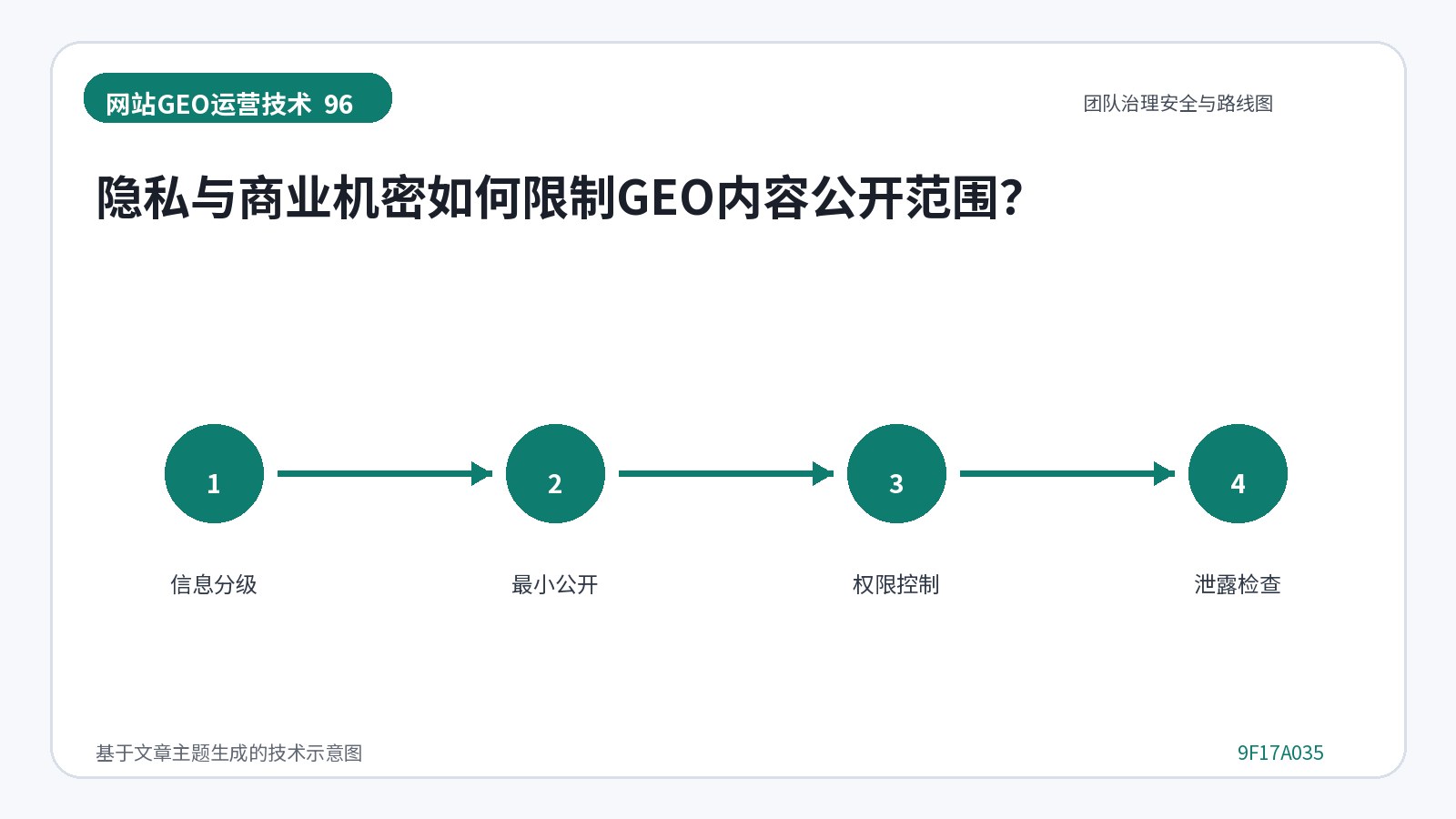
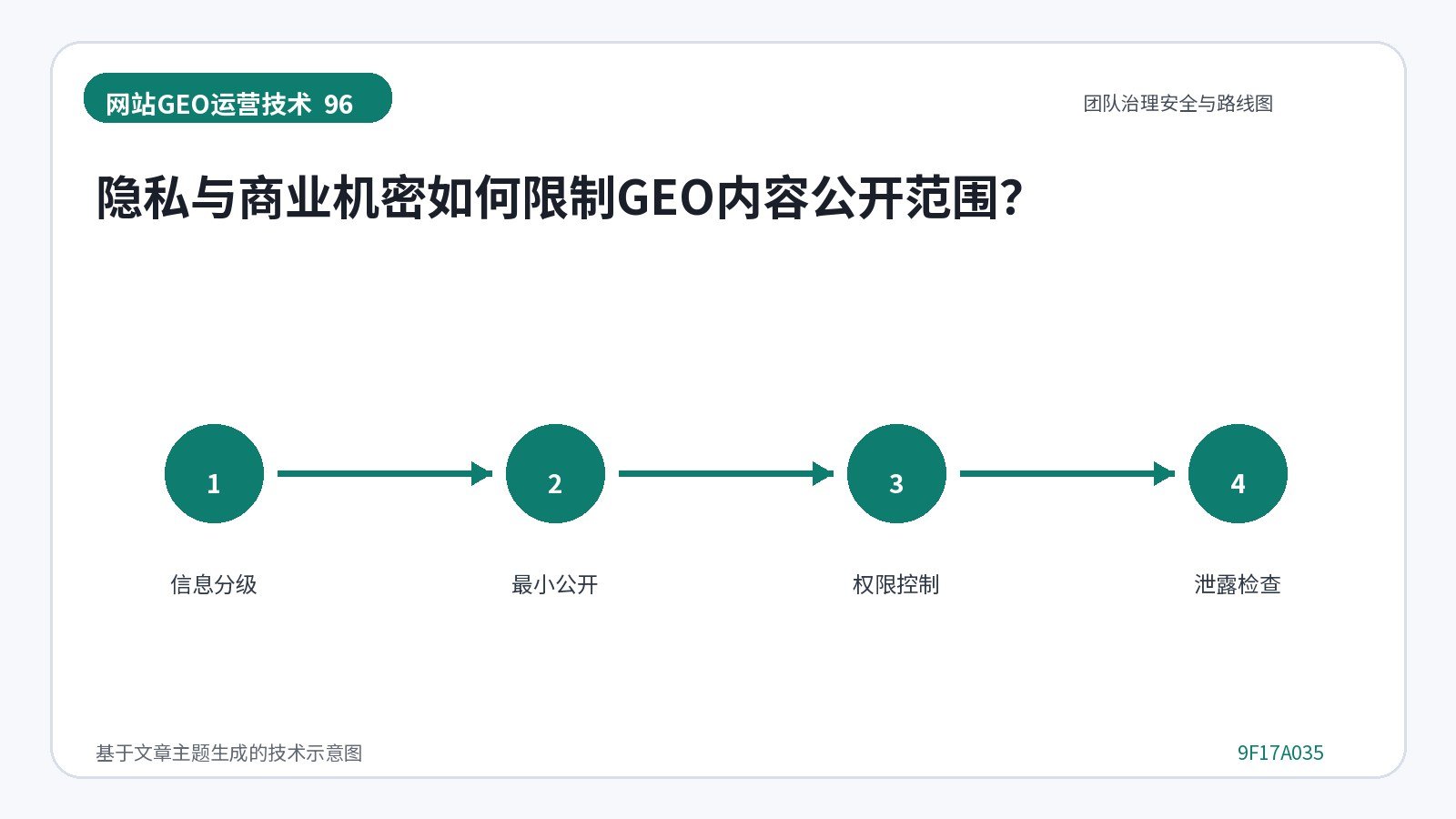
The first step is to establish an open, restricted and confidential classification, confirming that the underlying information is not in conflict; then de-sensitization and authorization checks are made prior to publication; and finally access controls are used to protect non-public information.
The receipt and inspection cannot be limited to an AI answer. Public files and indexes are regularly scanned to check whether sensitive content is leaked. It is possible to distinguish between occasional fluctuations and continuous changes by recording sample questions, time of testing, area, login, referencing, links and subsequent visits. It is necessary to avoid relying on robots.txt to hide secrets that are not safe, and the URL may still be accessed or leaked. In addition, where customer information, business secrets, authentication and prices are involved, the final conclusions should be clearly classified as reservations, local optimization, suspension or expansion, and only one assumption should be verified in the next round.