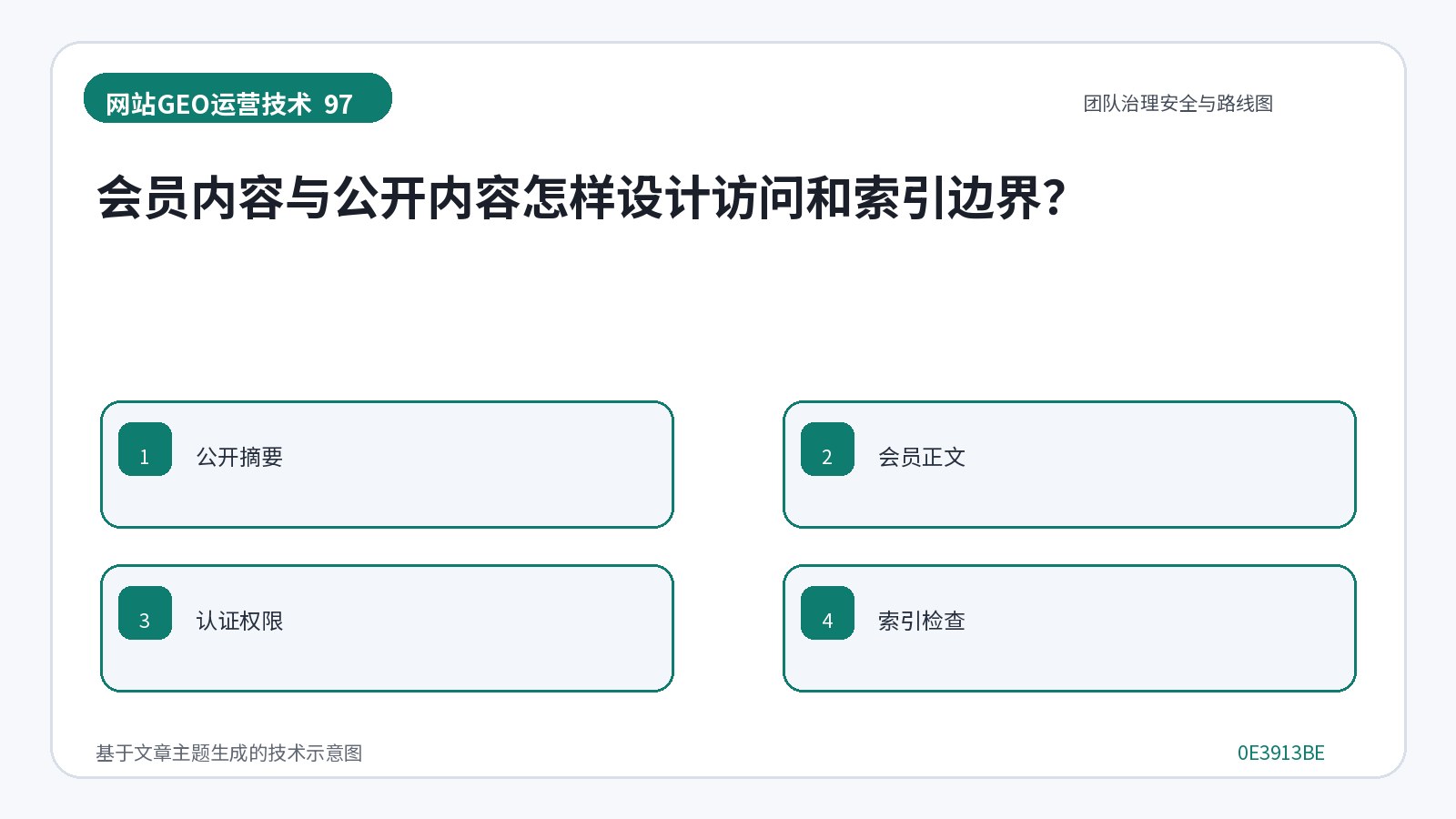
The topic should be seen as a chain of information: who confirms the source data, how the page is displayed, how the machine reads, what the user does next, and how the team reviews. Around “how does the membership and the public content design access and indexing border?” The first step is to put the members' content and the public content design access and indexing border back to the complete process of “team governance security and road map”. The public content is used to identify and build trust, and the members' content provides in-depth information that requires identity or contract access.
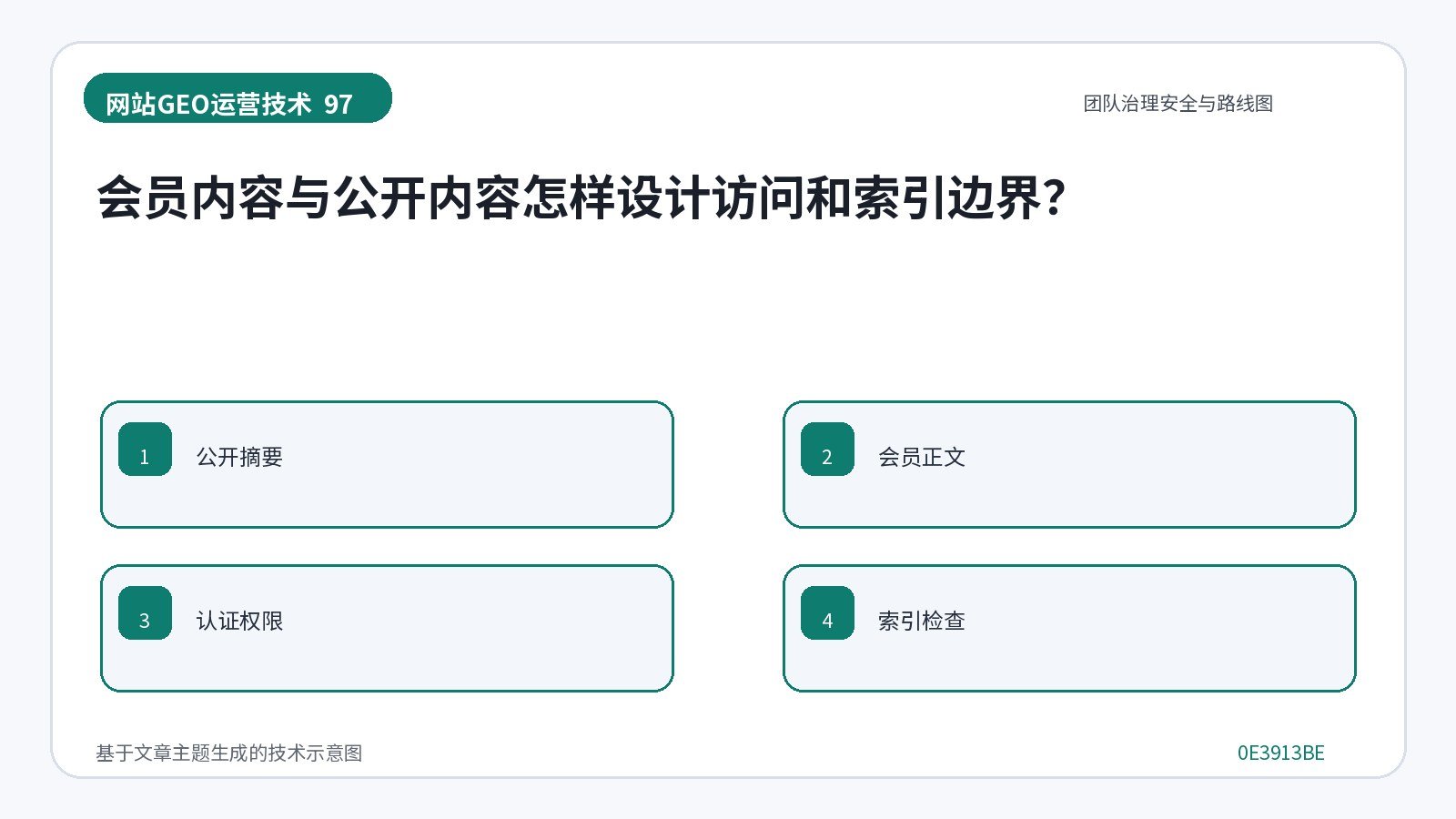
It is recommended that anyone who finds old data should be able to locate a single source of fact. The preparation phase should be completed in three paragraphs. The preparation phase should be completed with the definition of a public summary and membership value, the up-line phase with the implementation of a certification and indexing strategy for restricted pages, and the review phase with the implementation of a test-de-entry real visit.
Checks if the search results contain restricted content clips and audits access logs.
The most likely deviation from this topic is that the button is hidden only at the front end, but the document URL is open and cannot really protect the content. Therefore, the conditions of exclusion, the rules of cessation and the rollback must be stated in advance. The date of review cannot be written only as “periodic” and the person responsible should be identified in conjunction with the life of the evidence, changes in the product and the platform update.