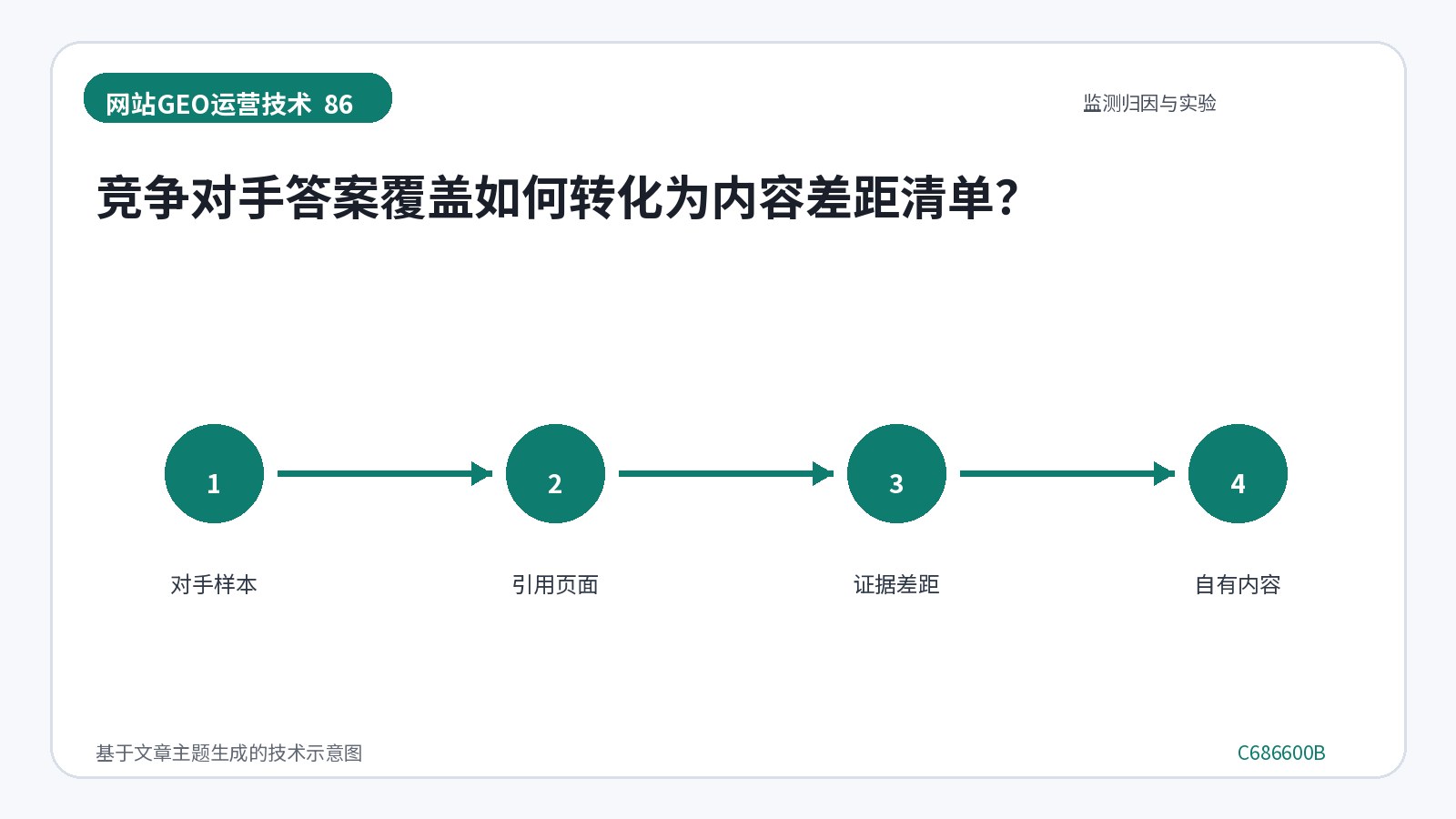
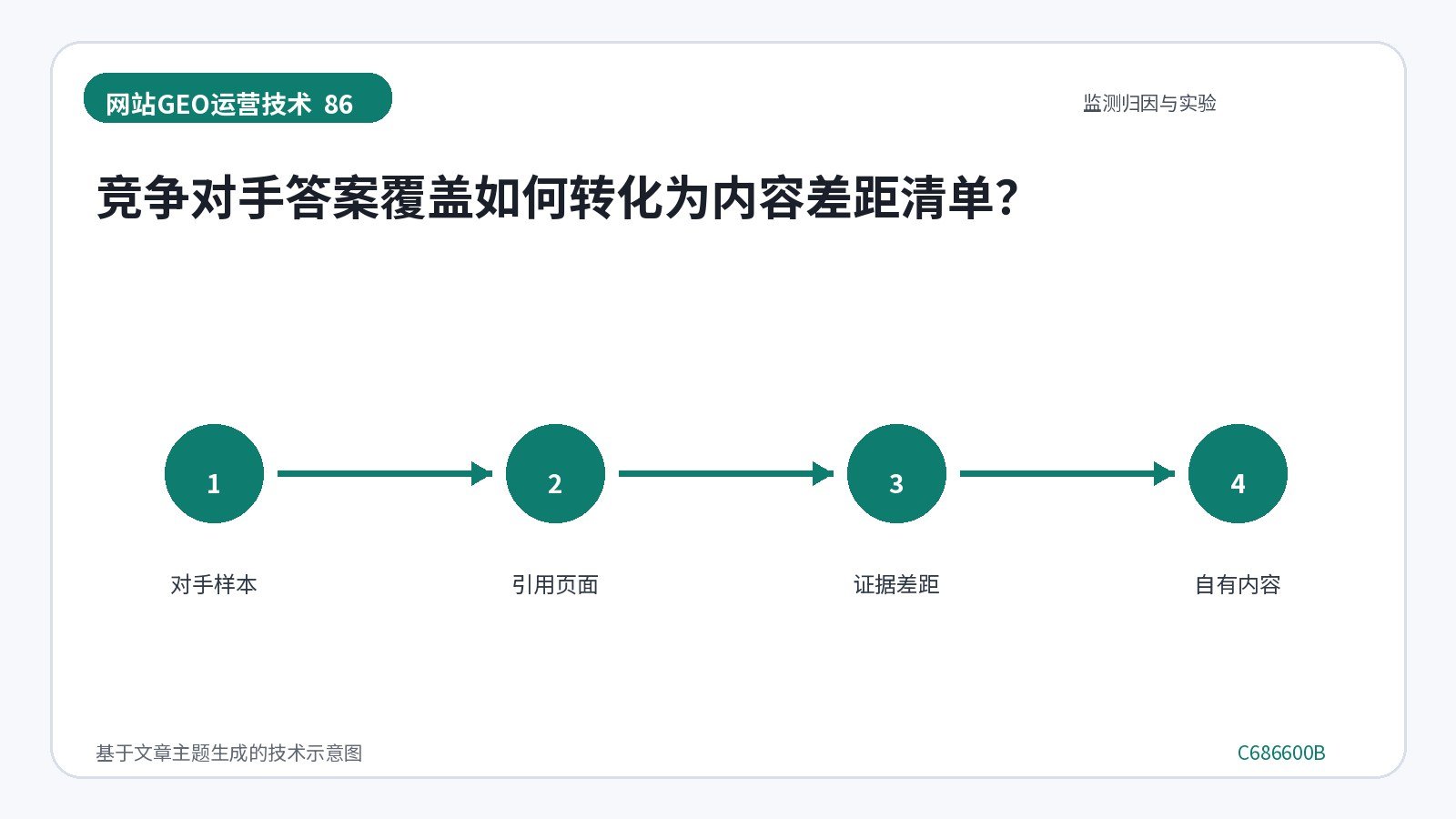
The difficulty with this work is not the tool itself, but whether the content, technology and business calibre are the same; the use of old data at any level would conflict with the open facts. Around “How does the competition's answer cover translate into a content gap list?” The first step is to turn the competition's answer cover into a content gap list by putting it back to the whole process of “monitoring attribution and experimentation.” The competition's answer-over analysis should find out the type of page, facts and evidence that they have been quoted, and then determine whether the enterprise does not really have the corresponding content.
GEO does not single out a single indicator of success. Acquiring and indexing are at the technical level, brand appearance and reference accuracy are at the answer level, source access and a valid query are at the business level, and the three levels should be recorded separately and reconnected. If the same fact appears on the web page, PDF and structured data, a primary data source should be specified.
When implementing it, the choice is made between the market and the product's counterpart, confirming that the basic information is not in conflict; then documenting the problem, the reference page and the type of evidence; and finally creating a list of gaps of business value.
The receipt and inspection cannot only look at an AI answer. Once published, the improvement is verified by a fixed question and a search data.
What needs to be avoided is that all competing topics should be classified as gaps, leaving the content unpositioned. In addition, customer information, business secrets, certification and prices should be made public after approval by the responsible official.