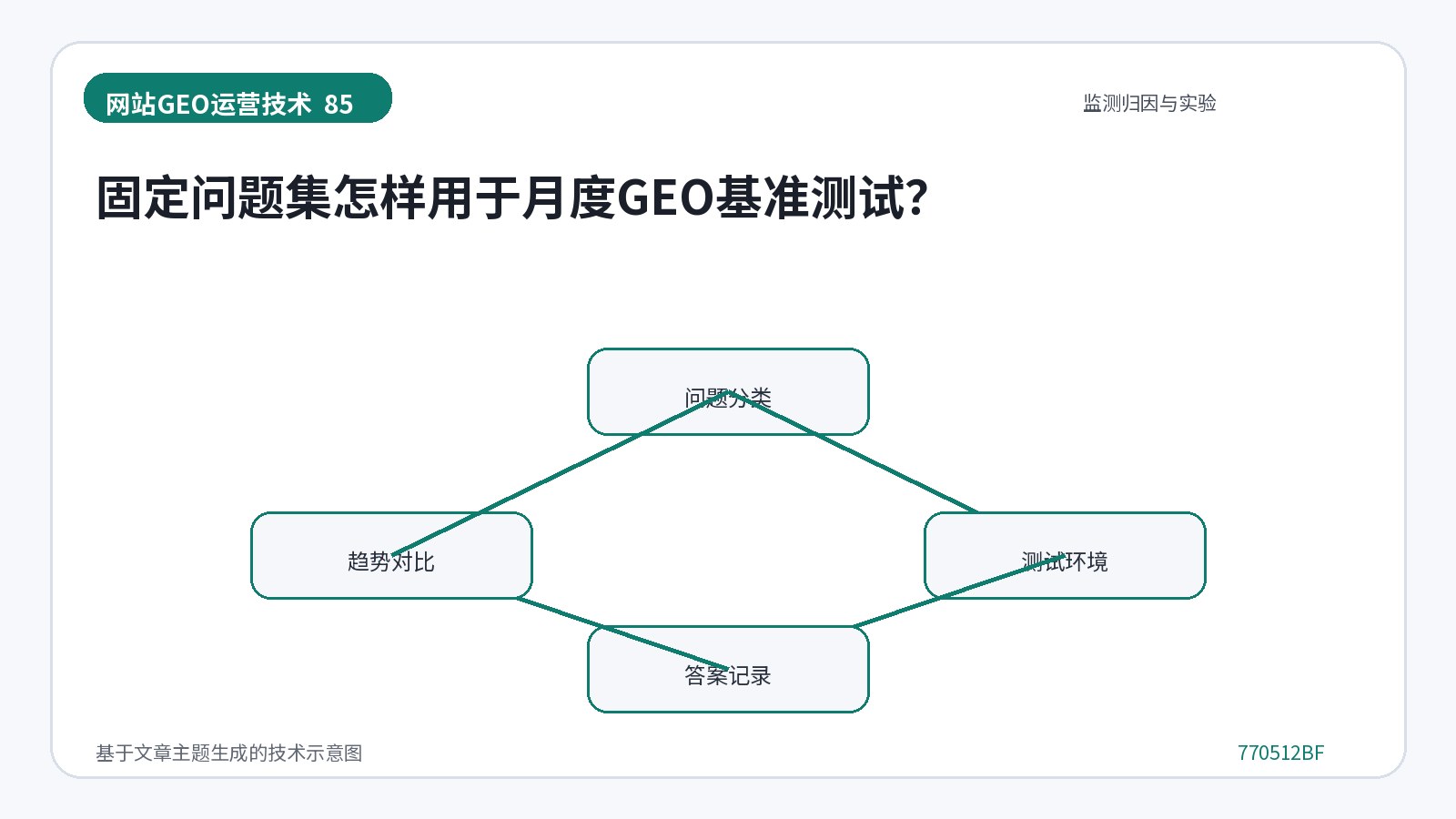
For the B2B site, the truly valuable result is not more than one brand reference, but rather to give the purchaser precise conditions and access to a traceable query or decision path. Around “How can a fixed set of questions be used for monthly GEO benchmarking?”, the first step is to use the fixed set of questions for monthly GEO benchmarking back to the full process of monitoring attribution and experimentation. The fixed set of questions needs to cover brands, products, comparisons, applications and procurement issues, and to maintain a stable core issue. New issues can be created, but not all samples can be replaced every month. This means that the page requires both clear conclusions for users and identical information for the grabper, as well as the retention of sources, conditions and timing of updates.
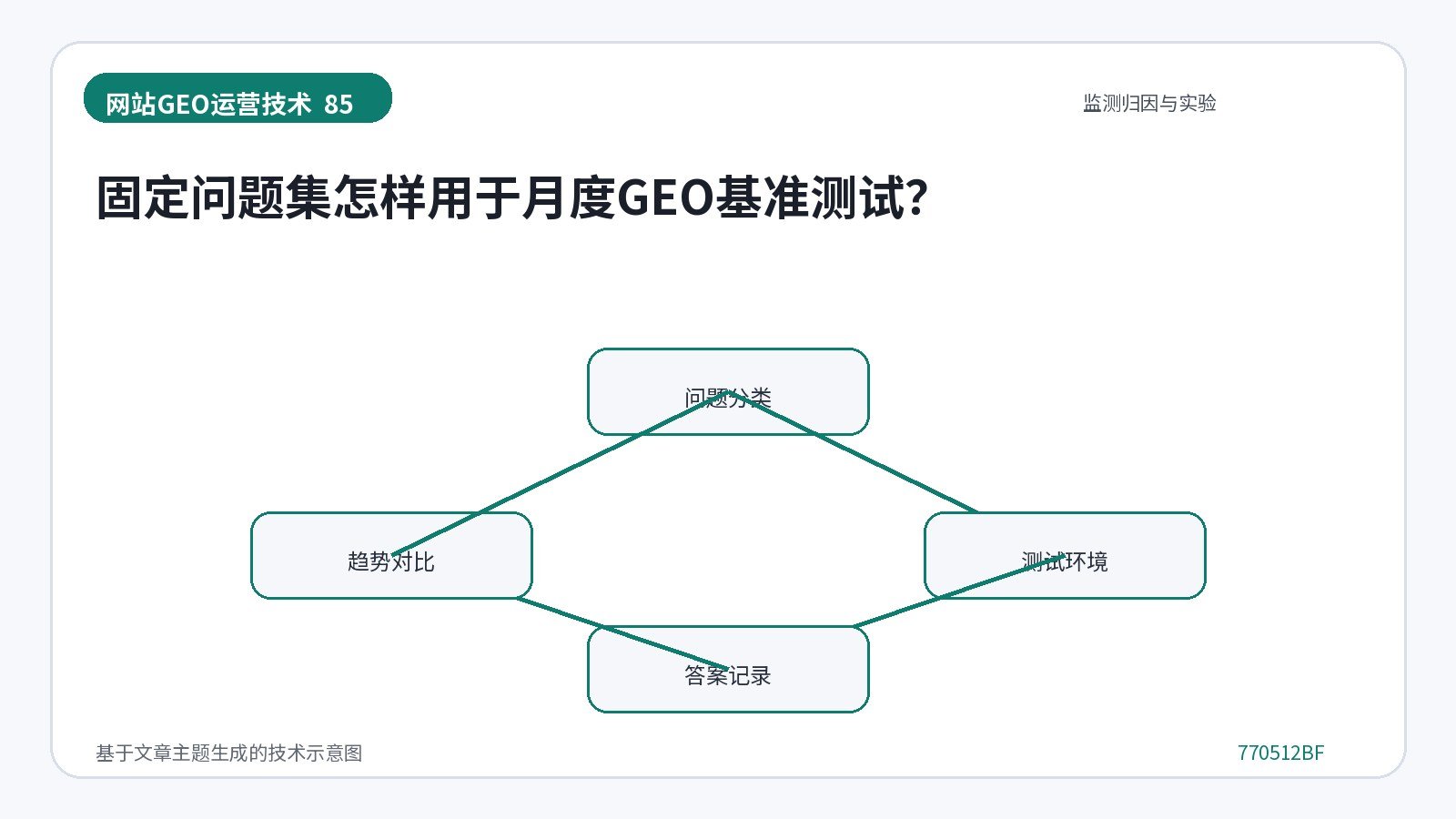
GEO does not have a single indicator of success. The capture and indexing is at the technical level, the brand appearance and reference accuracy is at the answer level, the source access and the valid query are at the business level, and the three levels should be recorded separately and linked. The first two types of questions are available on the page: whether the system has the correct content and whether the user has the complete condition. The former relies on capture and structural checks, and the latter is confirmed by reading paths, table fields and sales feedback.
The observation calibration must be fixed. Compare continuous changes in the same problem and record major updates to the platform.
A common return is not an error in tool set-up, but only a test of brand full name, overestimating real discovery capability. The solution is to anchor critical judgement into the release of a checklist and to have the reviewers sign to confirm it. Any unproven conclusion should be changed to a conditional recommendation, and no speculation should be written into fact for marketing purposes.