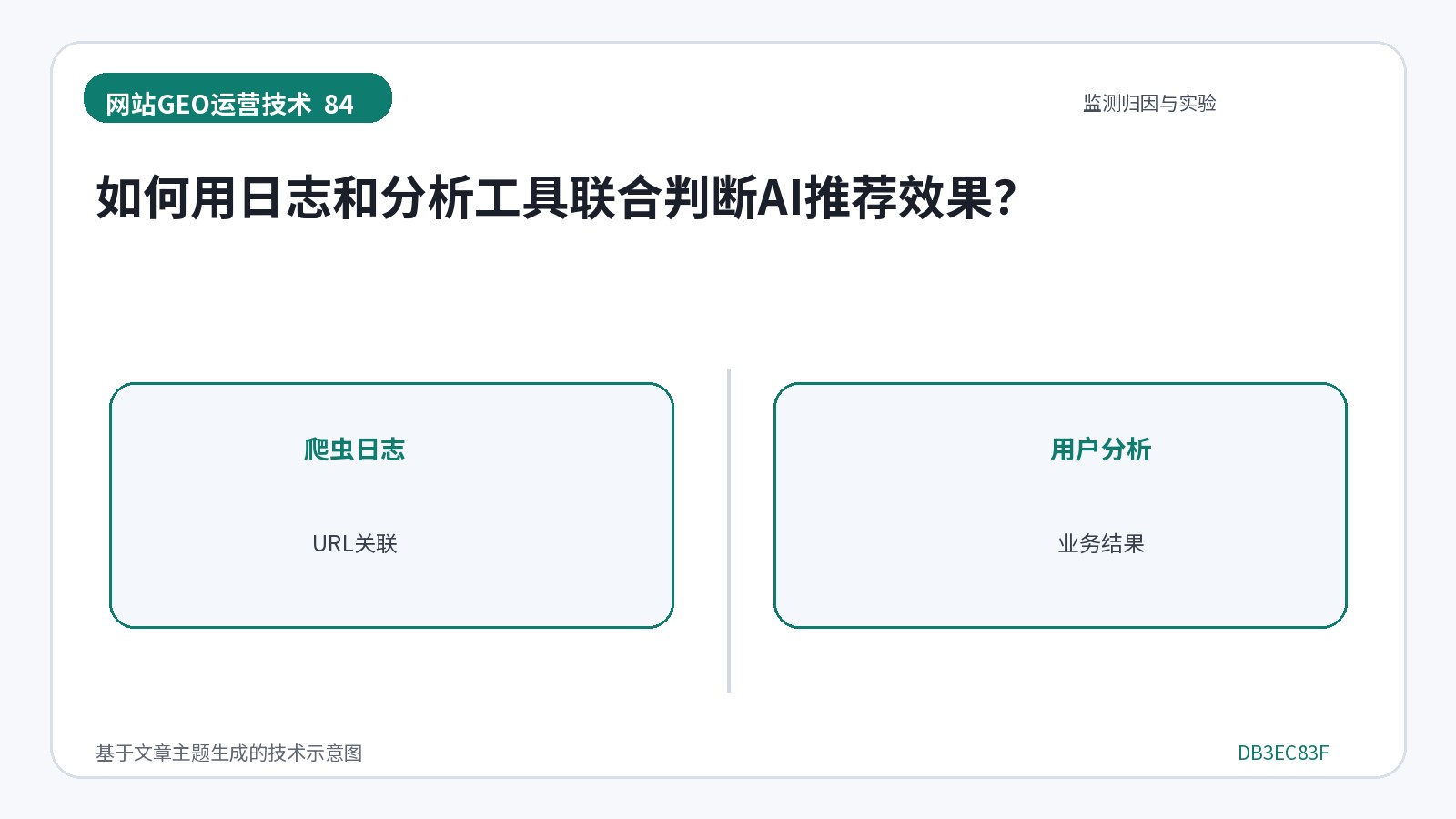
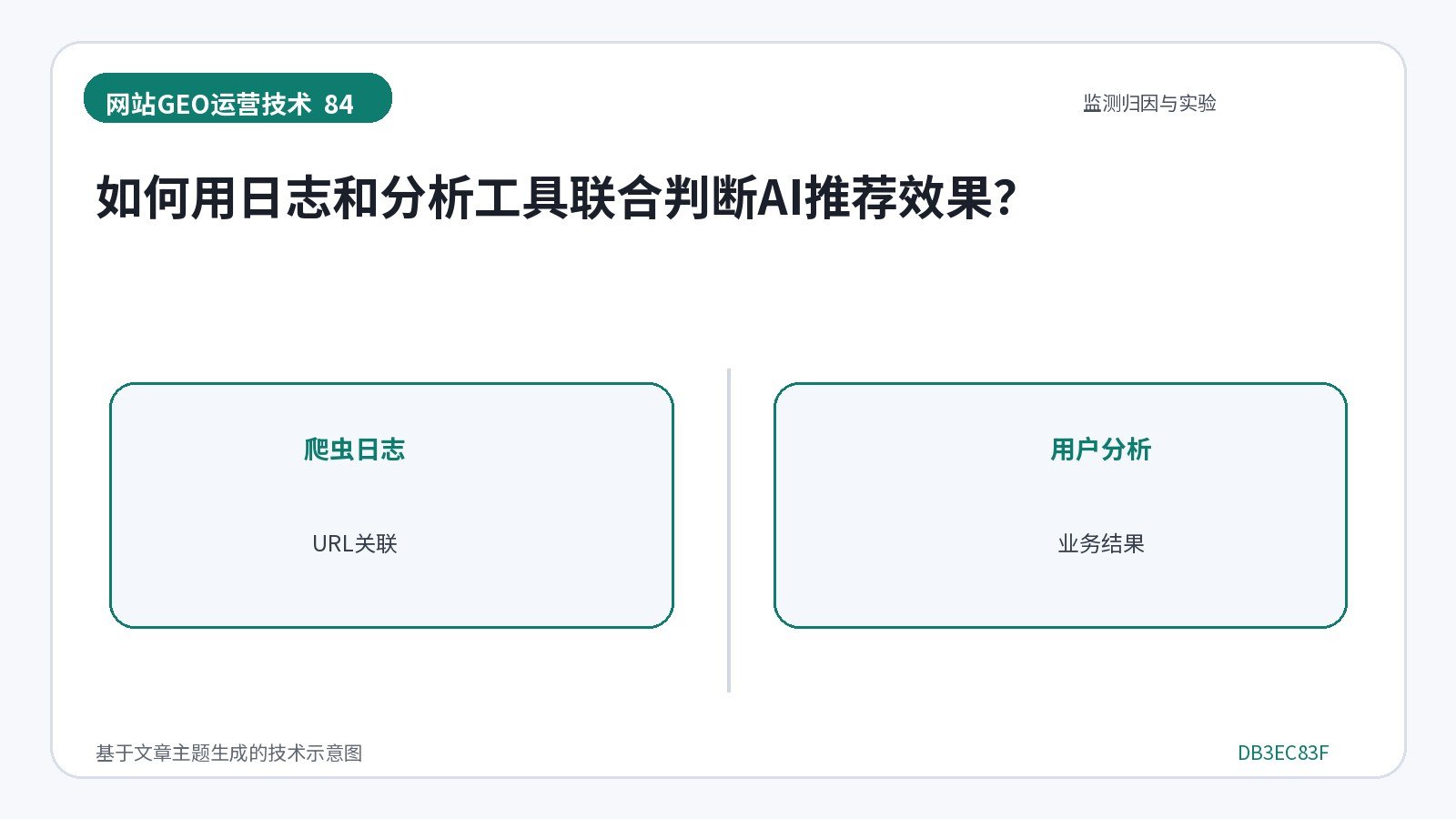
When dealing with such issues, the current page and data baseline should be preserved, followed by a major change, without which the results will not be accurately attributed. A joint determination of AI's recommended effects by means of logs and analytical tools?” First, the joint determination of AI's recommended effects by means of logs and analytical tools should be put back into the full process of monitoring attribution and experiments. Logs answer whether reptiles access, analytical tools answer users access, and different objects. Joint use can distinguish pages from uncaptured, unindexed, quoted unclicked. This means that the page needs to draw clear conclusions for users and capturers to obtain the same information and to keep sources, conditions and updates.
GEO does not have a single indicator of success. Acquiring and indexing is at the technical level, brand appearance and reference accuracy is at the answer level, source access and a valid query are at the business level, and three levels should be recorded separately and re-linked. A successful delivery should allow the new member to re-emerge: he can find input, see to modify the record, perform an inspection and understand why it continues or stops.
The taskcard contains at least the target country, the type of page, the data source and the completion criteria. The actions are, in turn, the harmonization of URLs and time calibres, the aggregation of robots and user requests, and the linking of anomalies to the release and adaptation of records, with content, technology and sales teams using the same field name.
The sheet should also answer whether the page can be accessed, the facts are accurate and the user continues to act. It can be checked by the following evidence: whether a page-by-page grab, index, quote, access and query link is created. Any anomaly must be returned to the corresponding URL and version. The technical action cannot break the facts and permission boundaries. Treat robotic requests as a human flow, which would seriously distort the conversion rate. Information that cannot be made public should be processed through a summary, dissensitization or restricted access, rather than being disclosed for inclusion.