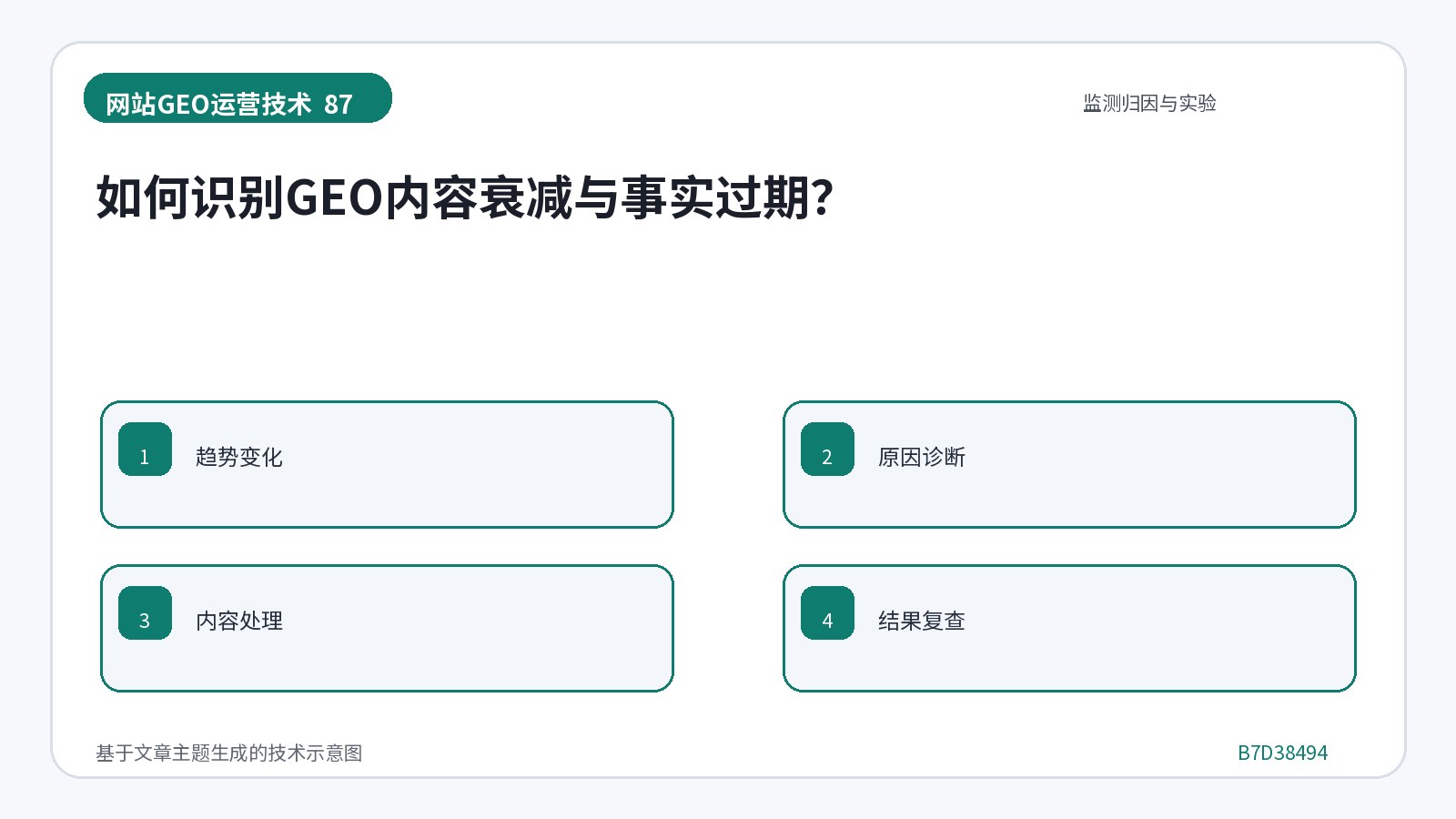
The topic should be seen as a chain of information: who confirms the source data, how the page is displayed, how the machine reads, what the user does next, and how the team reviews it. Around “How do you recognize the decay of the GEO content and the fact that the facts have expired?”, the first step is to return to the full process of identifying the degradation of the GEO content and the fact that the facts have expired. The decline in content may come from changes in demand, from competitive renewals, from technical issues or from events that have expired. The reason should be determined, then the update, consolidation, re-direction or retention should be chosen. This means that the page must be clear to the user and allow the grabper to obtain the same information and keep the source, condition and timing of the update.
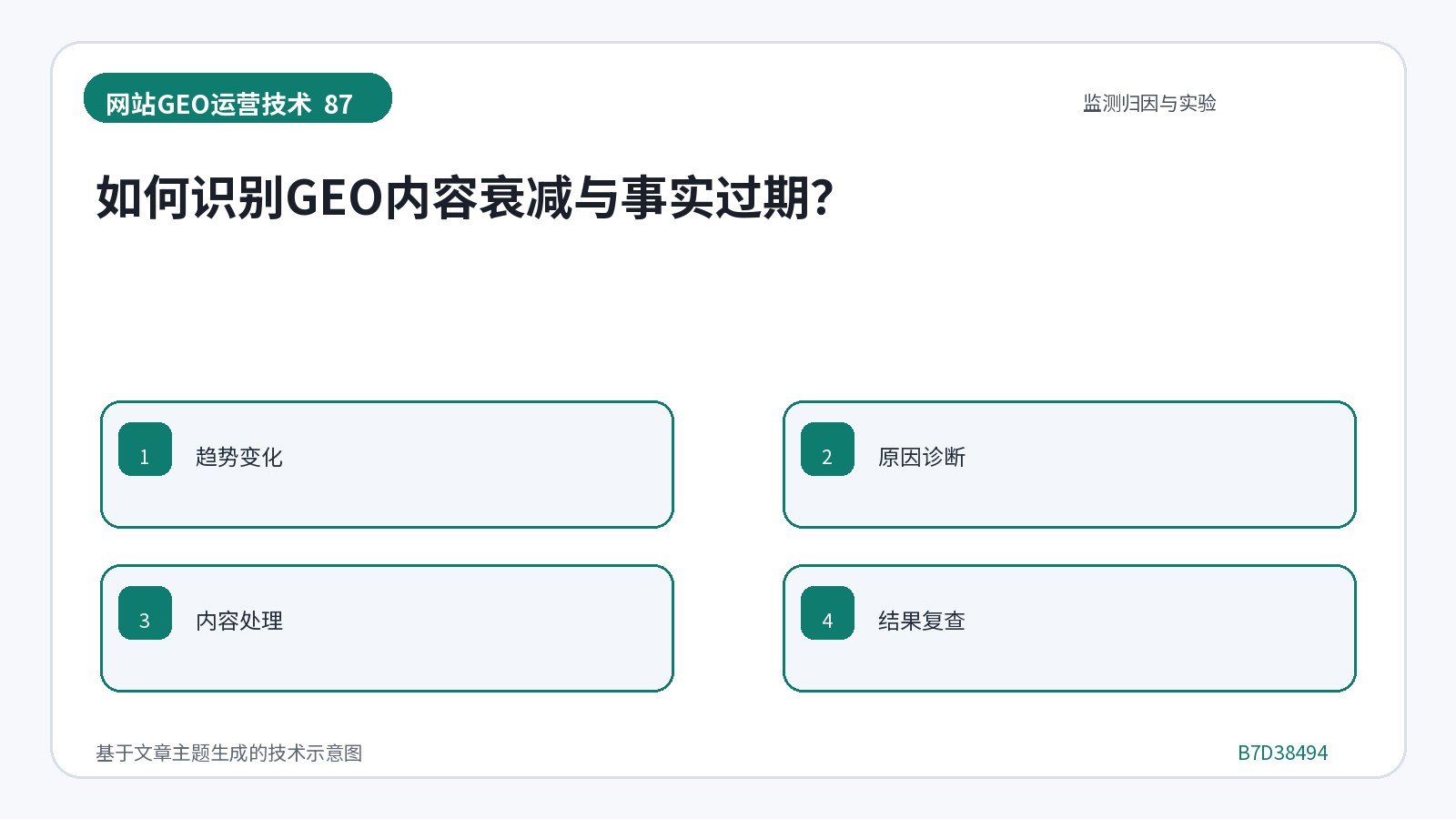
GEO does not have a single indicator of success. The capture and indexing is at the technical level, the brand appearance and reference accuracy are at the answer level, the source access and the valid query are at the business level, and the three levels should be recorded separately and then linked. For example, an existing B2B page retains the old version and adjusts only “check parameters, sources and dates” and keeps the rest unchanged.
It is recommended that the work be broken down into three paragraphs for preparation, on-line and review. The preparatory phase completes the comparative search, capture and transformation trends, the online phase implements the reconciliation parameters, sources and dates, and the review phase implements the purpose and results of updating records.
Use the same-cycle data and eliminate website failures and seasonal effects. If there is an increase in the number of people, but there is an error in citation or a deterioration in the quality of the clue, it should be considered as not passing, rather than using the total exposure to cover up the problem.
The most likely deviation from this topic is the rewrite of the whole text as a result of a drop in traffic alone, which may destroy the part that is still valid. Therefore, the conditions of exclusion, the rules of cessation and the rollback should be stated in advance.