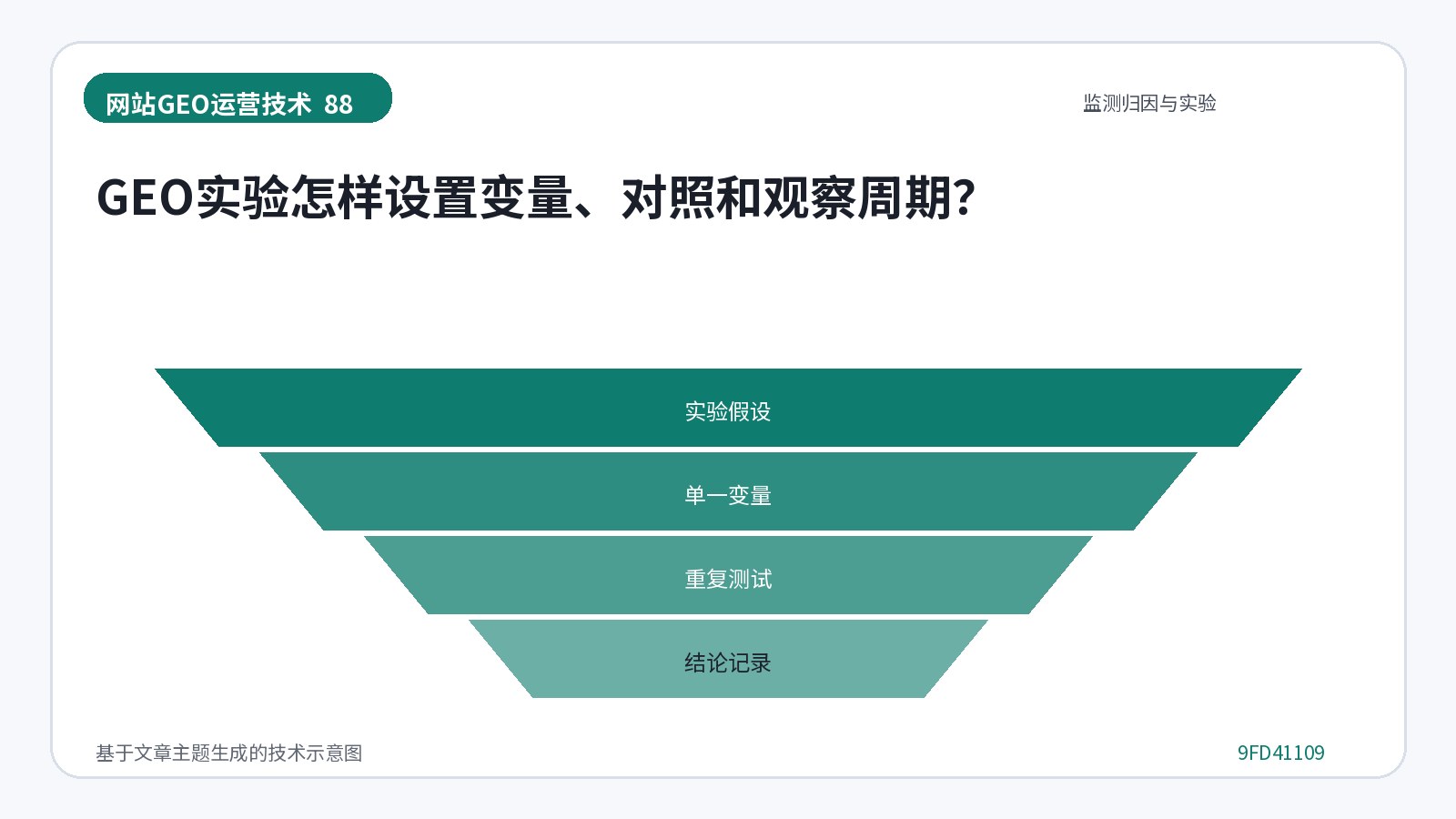
Instead of a one-time extension of a large number of pages, a representative page should first be used to validate the results of the logs, indexes, references and queries, and then decide whether or not to copy them. The "GEO experiment sets the variables, contrasts, and observes the cycle?" First, the GEO experiment sets the variables, contrasts, and sees the cycle back to the full process of monitoring attribution and experiments. The GEO experiment should change only one of the main factors, preserve the page or historical baseline and define success indicators in advance. The AI answer is random, and a single test cannot be conclusive. This means that the page requires both clear conclusions for users and identical information for grabers, as well as a source, condition and update time.
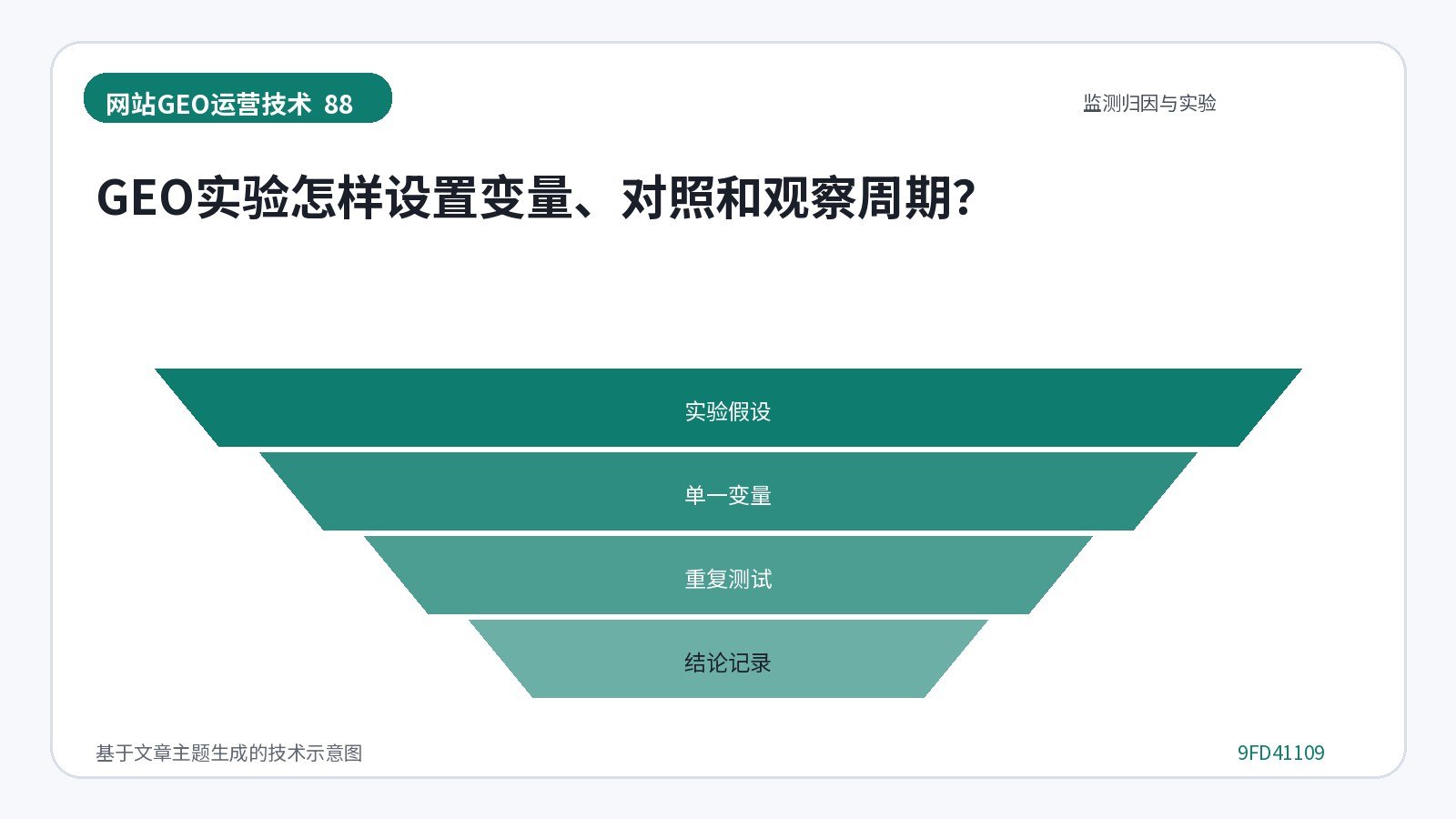
GEO does not have a single indicator of success. Capture and indexing is at the technical level, brand appearance and reference accuracy is at the answer level, source access and a valid query are at the business level, and three levels should be recorded separately and re-linked. The team can use the four columns “Question-Page-Evidence-Results” to record.
A high-value page can be selected to pilot: the baseline will be saved after the assumptions and samples have been defined, the old version will be preserved and a single variable will be implemented, a full cycle will be observed, and an interactive checklist will be tested over a full cycle.
It is recommended that changes be made. The three tiers of technical, answer and operational indicators are also observed and external events are recorded. First round confirms the correct implementation of technology, second round of continuous trends, and the full distribution cycle is followed by an assessment of the impact on the Queries and offers.