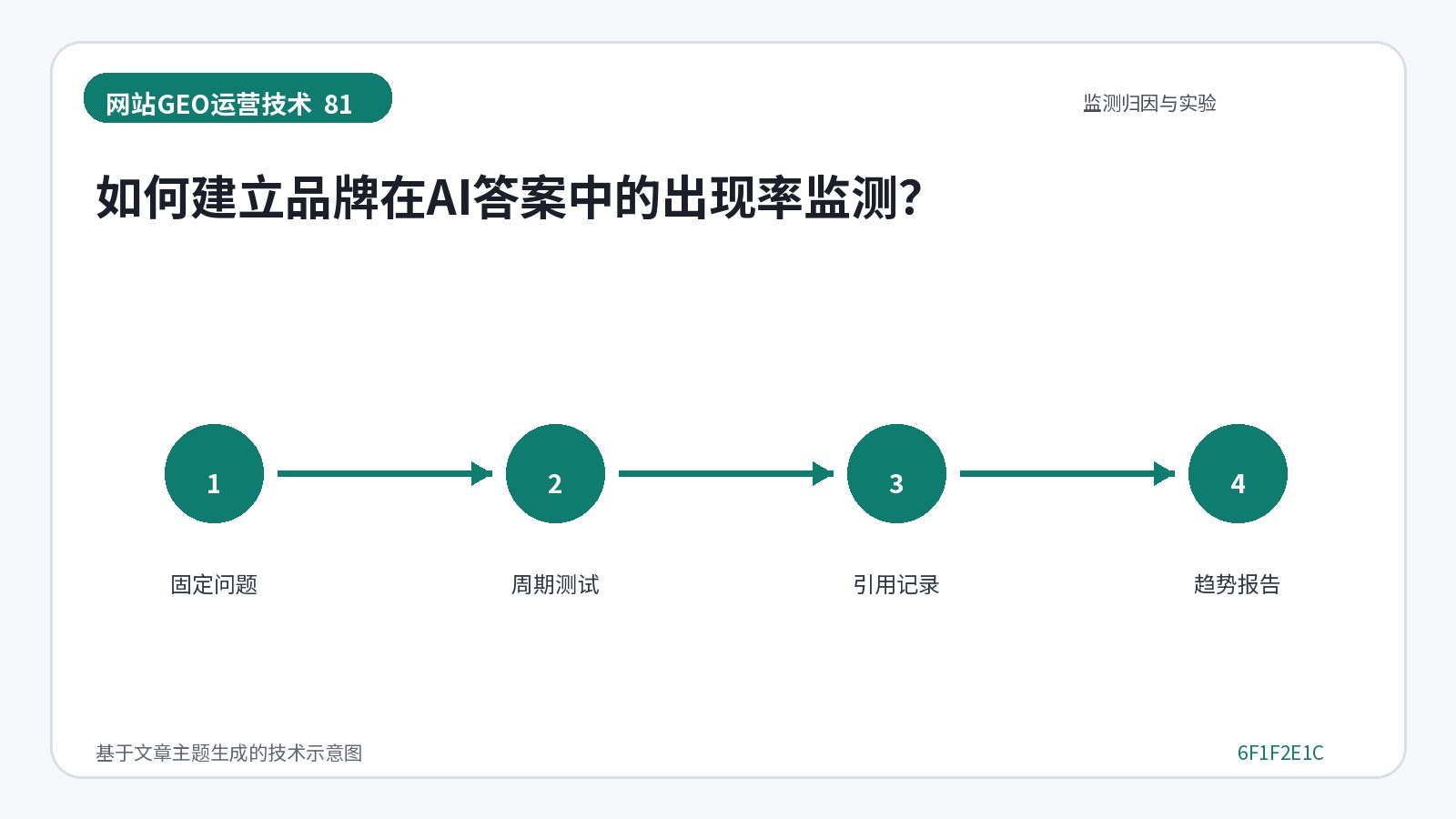
First, the conclusion is that the work must be based on real, open and verifiable facts, and not on additional labels or repetitions of keywords to obtain stable quotations. The focus is on “How does the emergence of brand names in the AI answer be monitored?” The first is to put the presence of branding in the AI answer monitoring back into the full process of “monitoring attribution and experimentation.” Branding must be based on fixed questions, fixed areas, fixed time and record-keeping. Different users, languages and sessions may have different answers, so the indicators should be a trend rather than an absolute ranking. This means that the page must be clear to the user, as well as for the grabper to obtain the same information and keep the source, condition and update time.
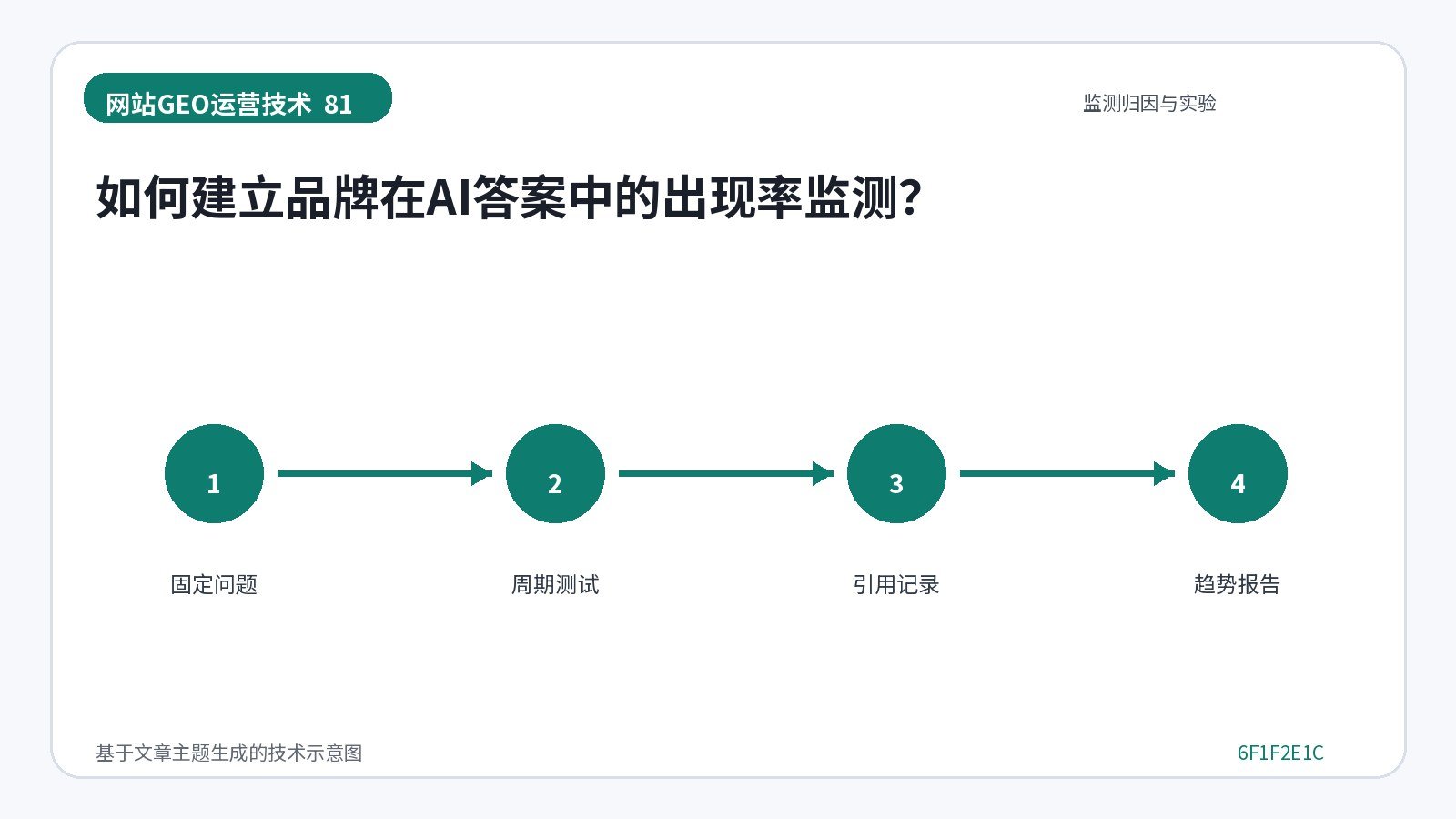
None of the GEOs has a single indicator of success. The capture and indexing is at the technical level, the brand appearance and reference accuracy is at the answer level, the source access and the valid query are at the business level, and the three levels should be recorded separately and re-linked. The team can record it in four columns: “Question-Page-Evidence-Results.” The problem with this topic is the presence of the brand in the AI answer, the task of explaining it on the page, the evidence from the controlled information, and the result is judged by reference to accuracy and the client's next step.
The receipt and inspection cannot be viewed only once. The statistical brands appear, correctly quoted, mischaracterized and source-linked.
What needs to be avoided is that the selection of a pro-bono cut-off chart can result in serious sample deviations. In addition, when customer information, business secrets, certification and prices are involved, they should be made public with the approval of the counterpart.