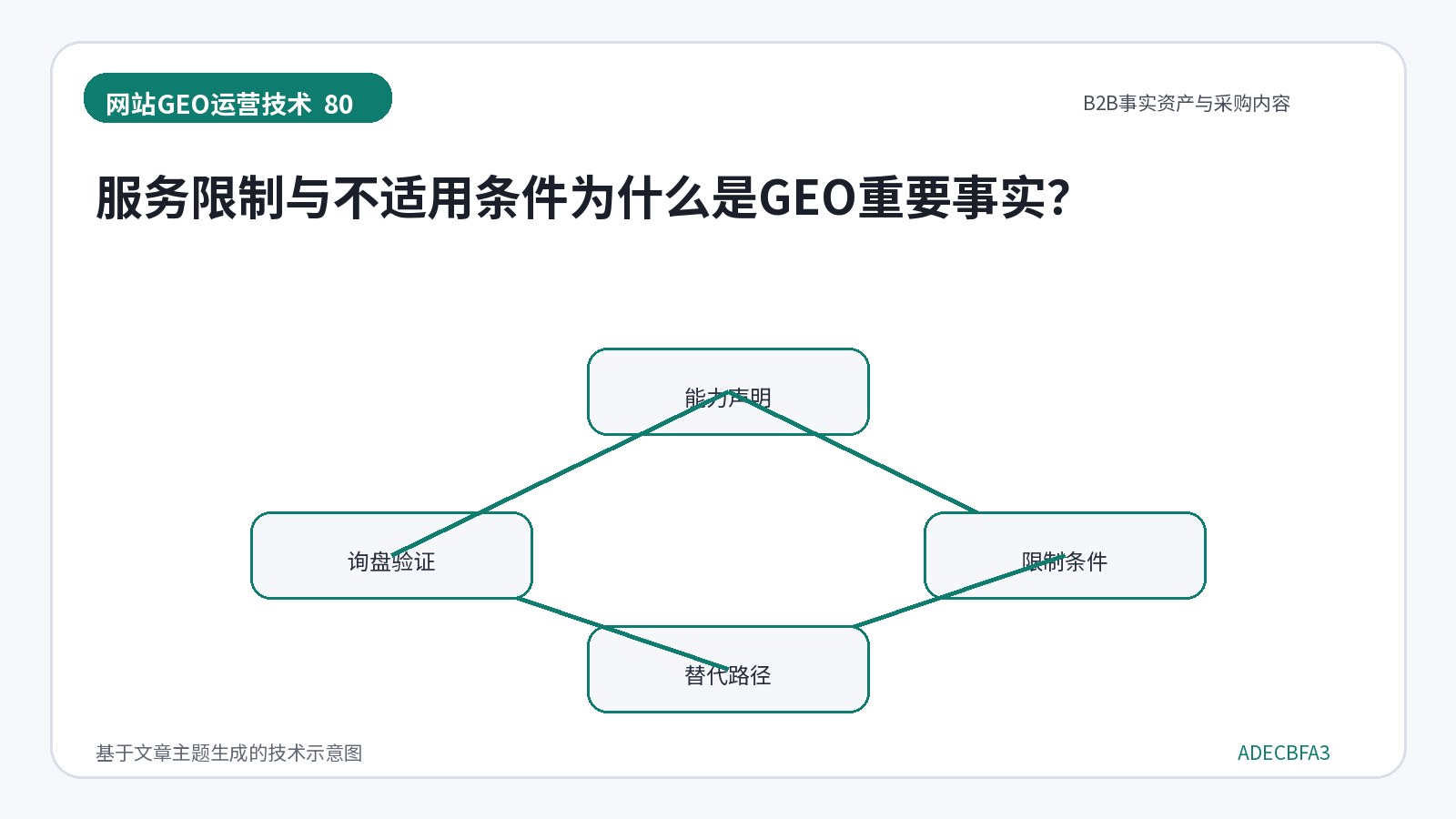
The focus of this paper is not on pursuing a cut-off chart of the answers, but on creating a technical process that can be repeated and continuously updated. Around “Why is the GEO important fact that service restrictions and conditions are not applicable?”, the first step is to put service restrictions and exclusions back to the full process of “B2B de facto asset and procurement content.” The limit helps the answer system avoid over-prescriptiveness and reduces invalid queries. The page should make it clear that it is unprocessable, unserviceable, or requires additional confirmation. This means that the page needs to be clear to the user, but also to allow the grabper to obtain the same information, and to keep the source, condition and time for updating.
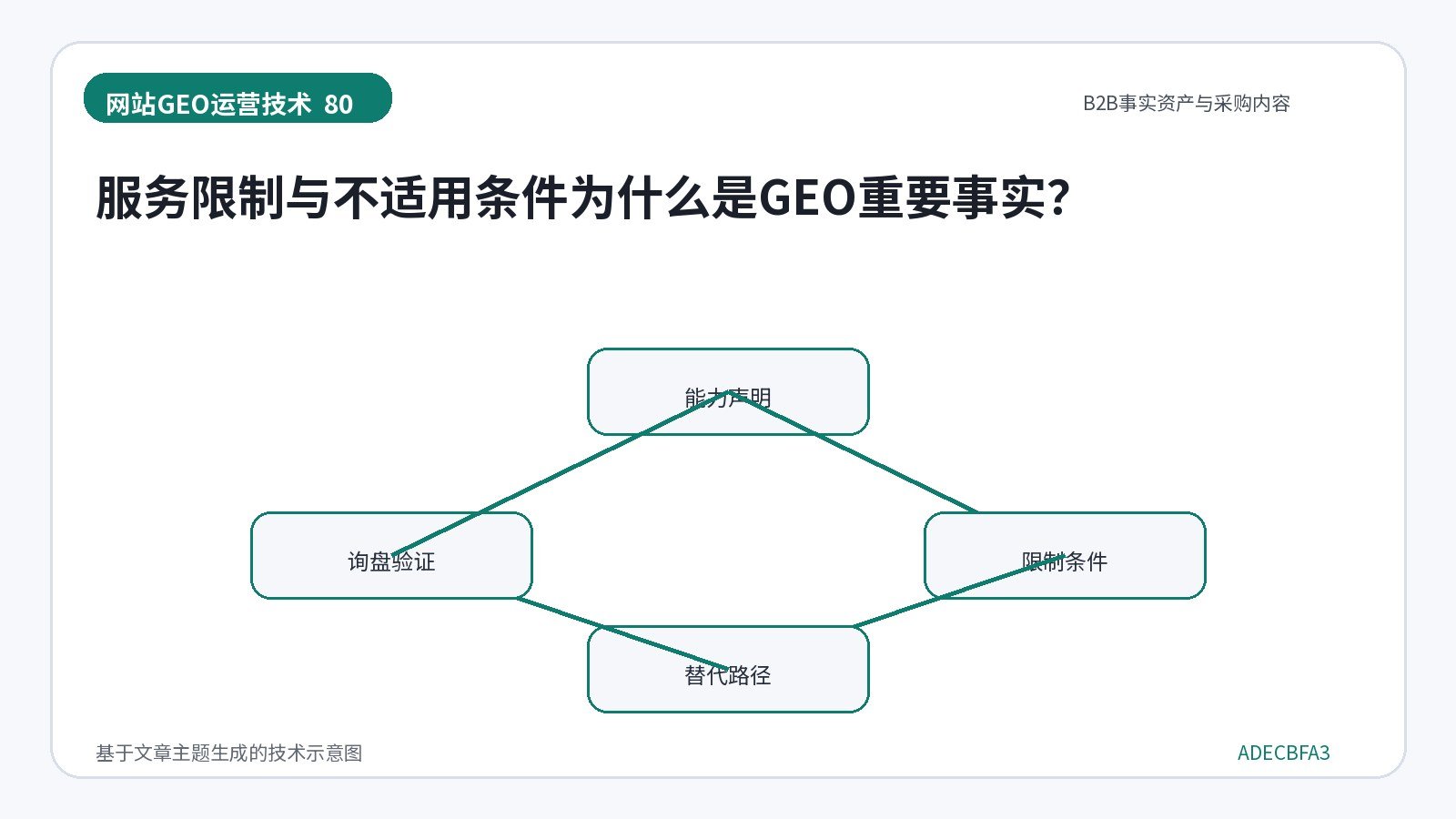
B2B pages assume the role of a source of procurement facts. Specifications, accuracy, MOQ, capacity, delivery, certification, testing and case studies must identify the objects, conditions, dates, and evidence to avoid the marketing slogan being systematically treated as an unconditional fact. For example, an existing B2B page should be kept in its old version, with only “restriction close to the capacity in question” and the rest maintained.
The action is written in the CMS and operations process, not only in the minutes of the meeting. First, the withdrawal limit from the refund and sale of the record is limited, then the limit is placed near the capacity, then validated by giving an alternative or confirming the entry and setting the date for the next review.
The observation calibration must be fixed. See if the reason for the invalid query is reduced and check whether the conditions are retained for the reference. The sample is insufficient to record the direction, and should not be based on a single-day or one-time response. A common return to work is not an error in the tool setting, but merely an upper limit in the ability to communicate, which increases the wrong match. The solution is to anchor the key judgement into the release of the checklist and to have the examiner sign a confirmation. Any unproven conclusion should be changed to a conditional recommendation, and no speculation should be written as a fact for marketing purposes.