The difficulty with this work is not the tool itself, but whether the content, technology and business calibre are the same; the use of old data at any level would give rise to a conflict of open facts. What should be done about “hreflang and Canonical conflicts?” First, it is necessary to screen for hreflang and Canonical conflicts back to the full process of “multilingual and localization.” hreflang links only to language or regional versions of the same content, each version of which needs to be quoted and returned; Canonical should normally point to this language rule page, not to English. This means that both the page needs to draw clear conclusions to the user and allow the graber to obtain the same information and to keep the source, condition and update time.
The focus of the multilingual GEO is to make each language version both stand-alone and capable of being identified as a corresponding version of the same brand or content. Localization must reflect differences in markets, units, regulations and procurement practices. Using an existing B2B page, for example, the old version should be retained, with only “checking the two-way hreflang and the state code” adjusted to keep the rest unchanged.
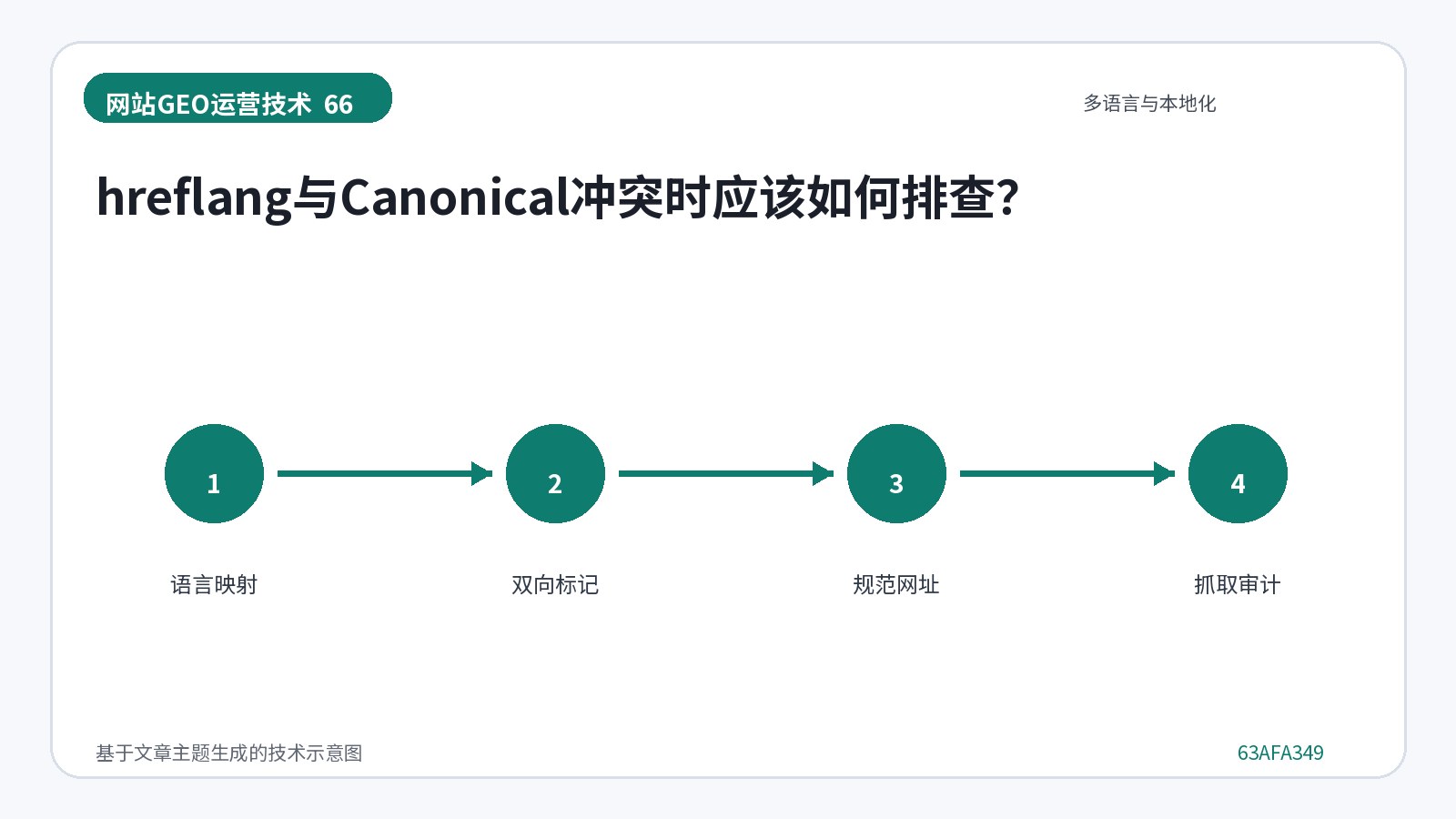
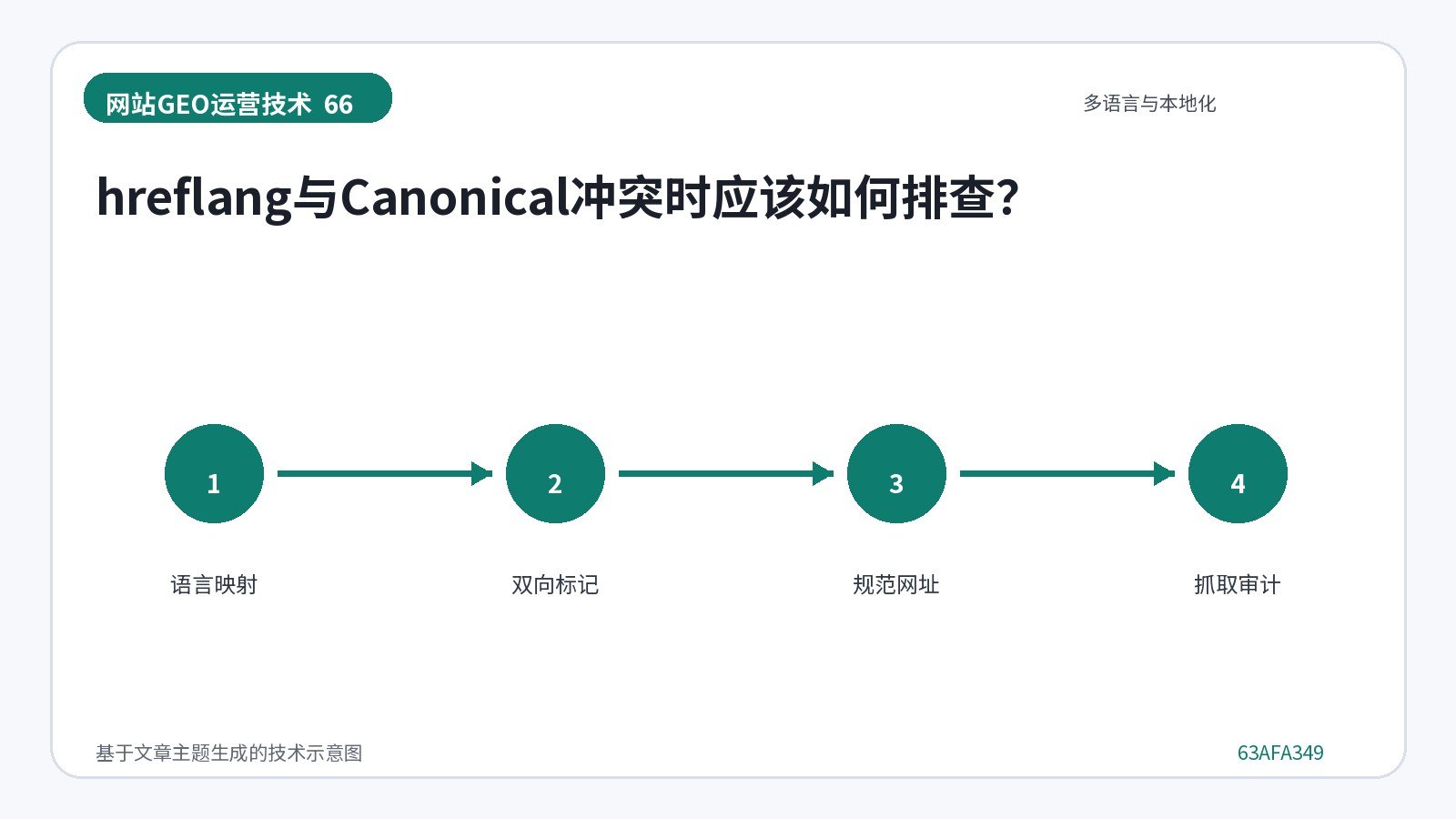
When you are doing this, create an URL-language map to confirm that there is no conflict in basic information; then check for a two-way hreflang with the state code; and finally you have Canonical, Sitemap and internal links.
The receipt and inspection cannot be read only once. Use the grab tool to check for missing returns, error codes and non-standard targets.
What needs to be avoided is that hreflang points to pages that can be merged by Canonical, and the signal is difficult to take effect. In addition, when customer information, business secrets, authentication and prices are involved, they should be made public with the approval of the counterpart.