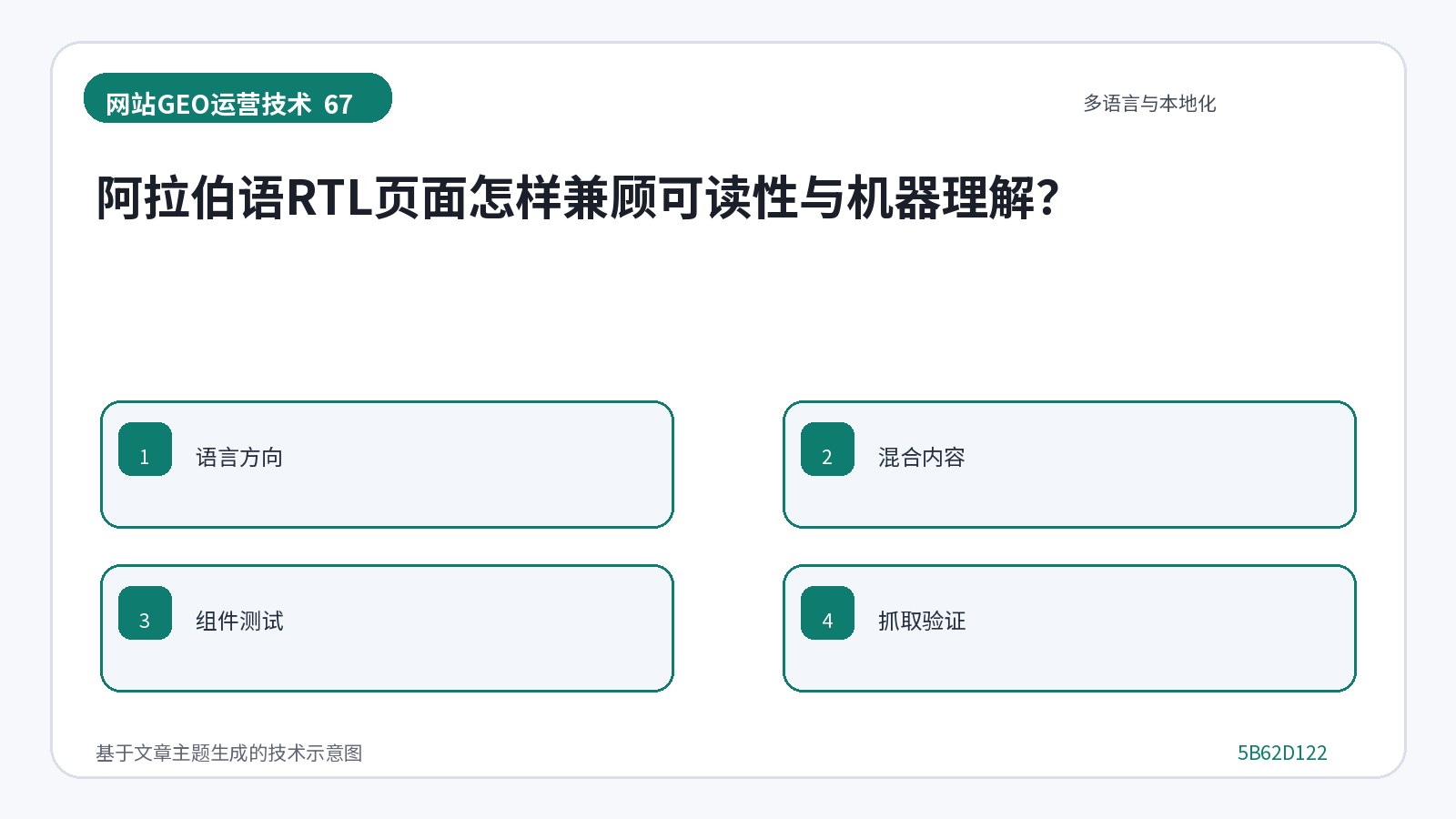
The subject should be considered as a chain of information: who confirms the source data, how the page is displayed, how the machine reads, what the user does next, and how the team reviews it. How does the Arabic RTL page balance readability with machine understanding?” First, the Arabic RTL page needs to balance readability with machine understanding back into the full process of “multilingual and localization”. The RTL page not only changes the direction of the text, but also examines the display of navigation, forms, forms, numbers, mailboxes and hybrid languages. The HTML lang and dir properties should be set correctly, and the text still need to be readable at the service level. This means that the page needs to give the user a clear conclusion, as well as to allow the grabper to obtain the same information and keep the source, condition and time for updating.
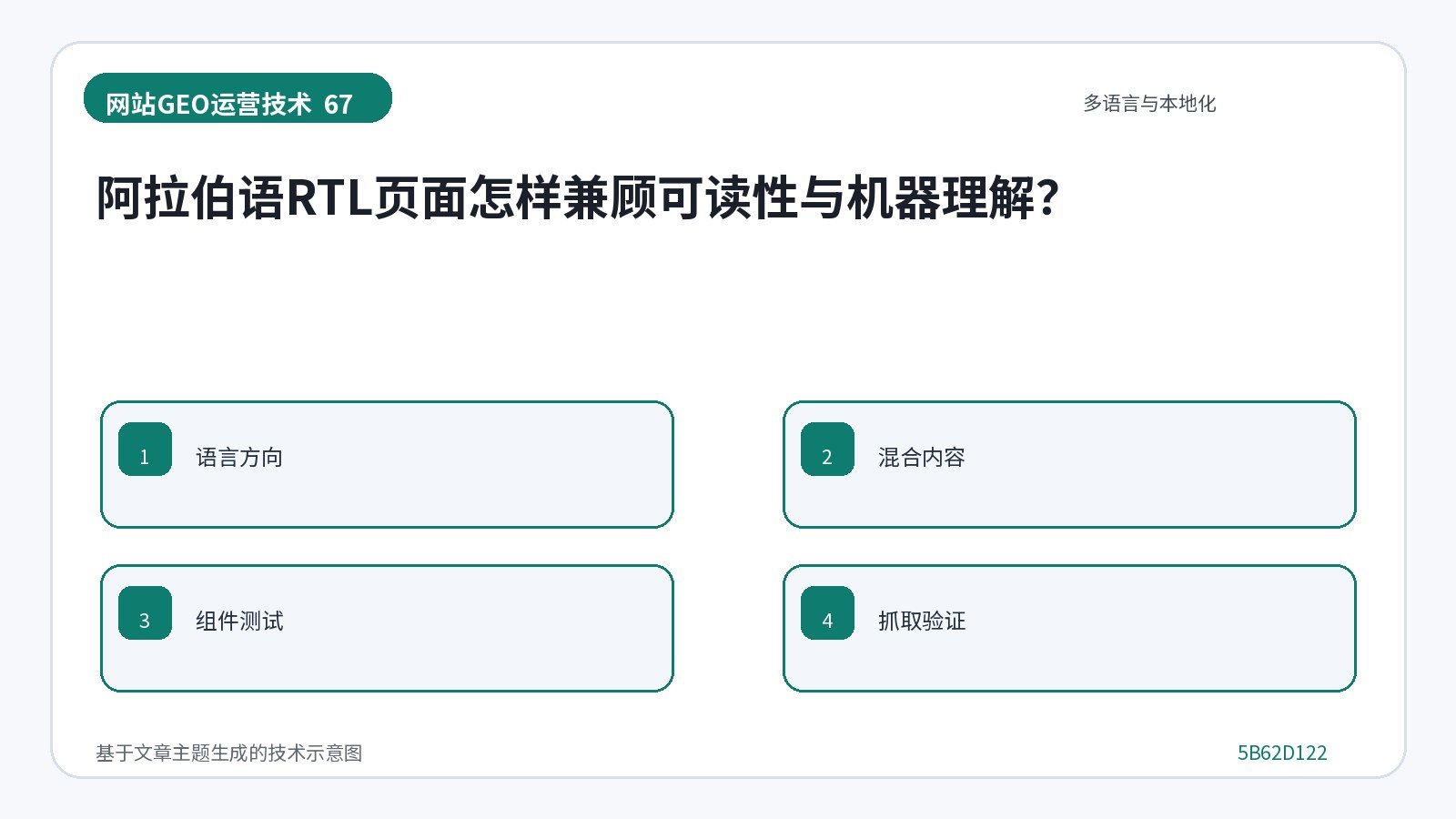
The focus of the multilingual GEO is to make each language version both stand-alone and capable of being identified as a corresponding version of the same brand or content. Localization must reflect differences in markets, units, regulations and procurement practices. The team can create records using the four columns “Issues-page-evidence-results.” The corresponding issue is the Arabic RTL page, which balances readability with machine understanding, and the page has the task of explaining, and the evidence comes from controlled information, and the result is judged by the reference to accuracy and the client's next step.
It is recommended that the work be broken down into three sections: preparation, online, and review. The preparation phase completes the testing of the real RTL template, the online phase carries out the checking of mixed numbers and brand names, and the review phase implements the review interface and content by the mother tongue.
Check layout, form completion, and capture HTML on the desktop and mobile side. If the number increases, but the reference condition is wrong or the lead quality is down, it should be considered passable, rather than using the overall exposure to hide the problem.
The most likely deviation on this topic is that the CSS page is turned over as a whole, which causes errors in the order of icons, numbers and components. Therefore, the conditions of exclusion, the stop rule and the roll-back should be stated in advance. The date of review should not simply be “periodic” and the person responsible should be given in the context of the validity of the evidence, changes in products and the platform update.