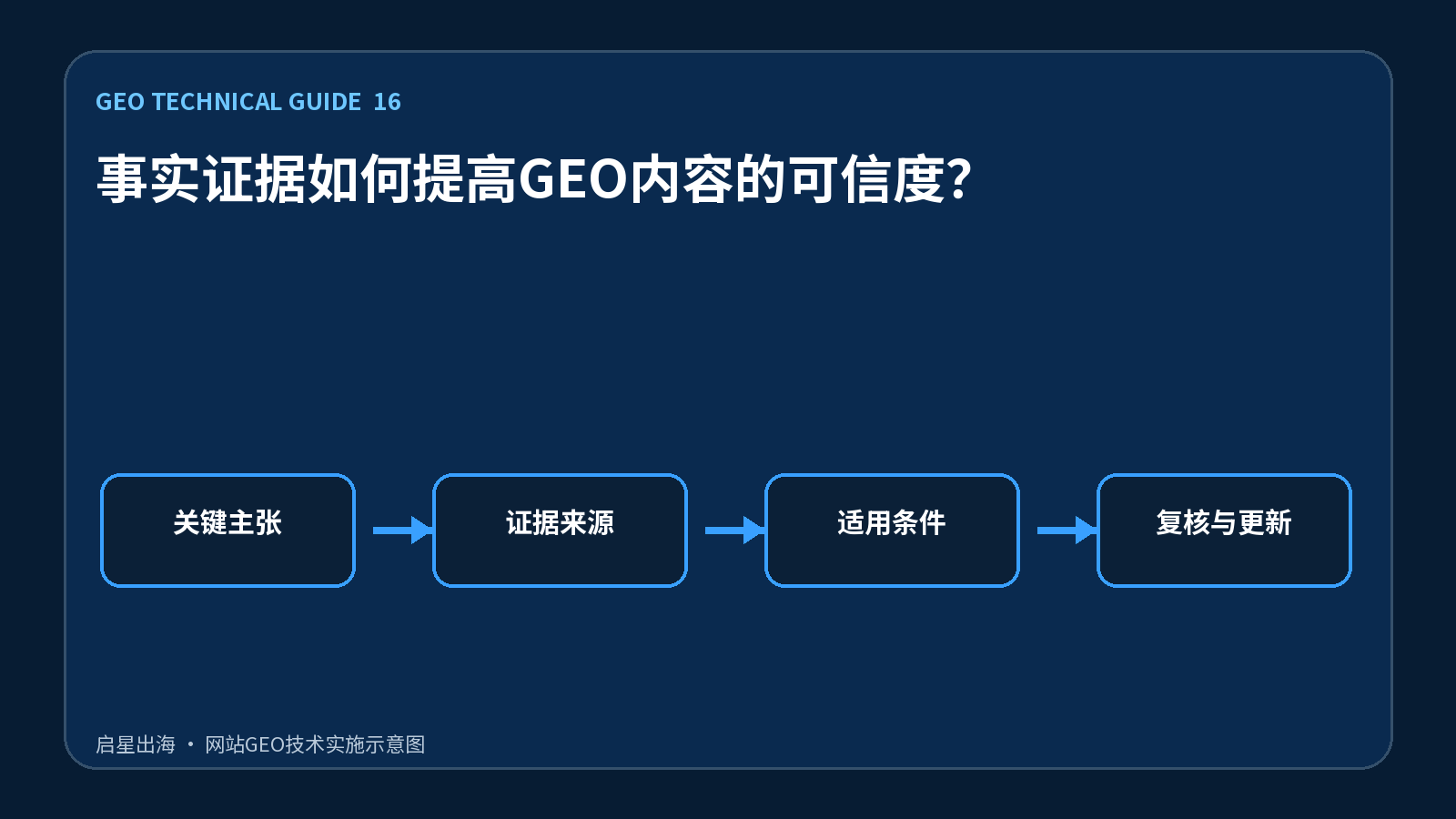
When comparing multiple sources, the answer system needs to judge which statements can be verified. The enterprise website is difficult to use as a reliable fact if it has only slogans such as “industry leader, high quality, and experienced”, without equipment, standards, processes, samples, and time frames.
Evidence can be divided into first-party facts, third-party certification and process certification. The first-party facts include equipment lists, technical parameters, delivery records and description of methods; third-party certification includes certification bodies, open standards, cases of customer authorization and industry data; and process certification includes sample test reports, project steps, version records and responsible persons.
A content evidence sheet is created to record the original source, the person responsible, the date of publication, the scope of application and the review cycle for each key claim. The page is prepared in the same paragraph as the unit, the method and conditions of measurement, and does not spell the results of the different projects as a universal commitment. The case should indicate the starting point, actions, results and limitations, with a picture showing the time and time.
These include the percentage of unsourced numbers, the number of expired facts, the inefficiency of the external chain, the authorization status of cases and the time of final review of the page. The content is updated not only by correcting the text, but also by checking SEO descriptions, Schema and downloading documents.
The common error is to write internal estimates into industry statistics, to quote secondary copies and not to find the original source, to use the client Logo to suggest unauthorized cooperation, or to write the results of a single case as a guarantee. The more concrete the evidence, the clearer the responsibility; the unverifiable elements should be deleted or labelled as empirical recommendations.
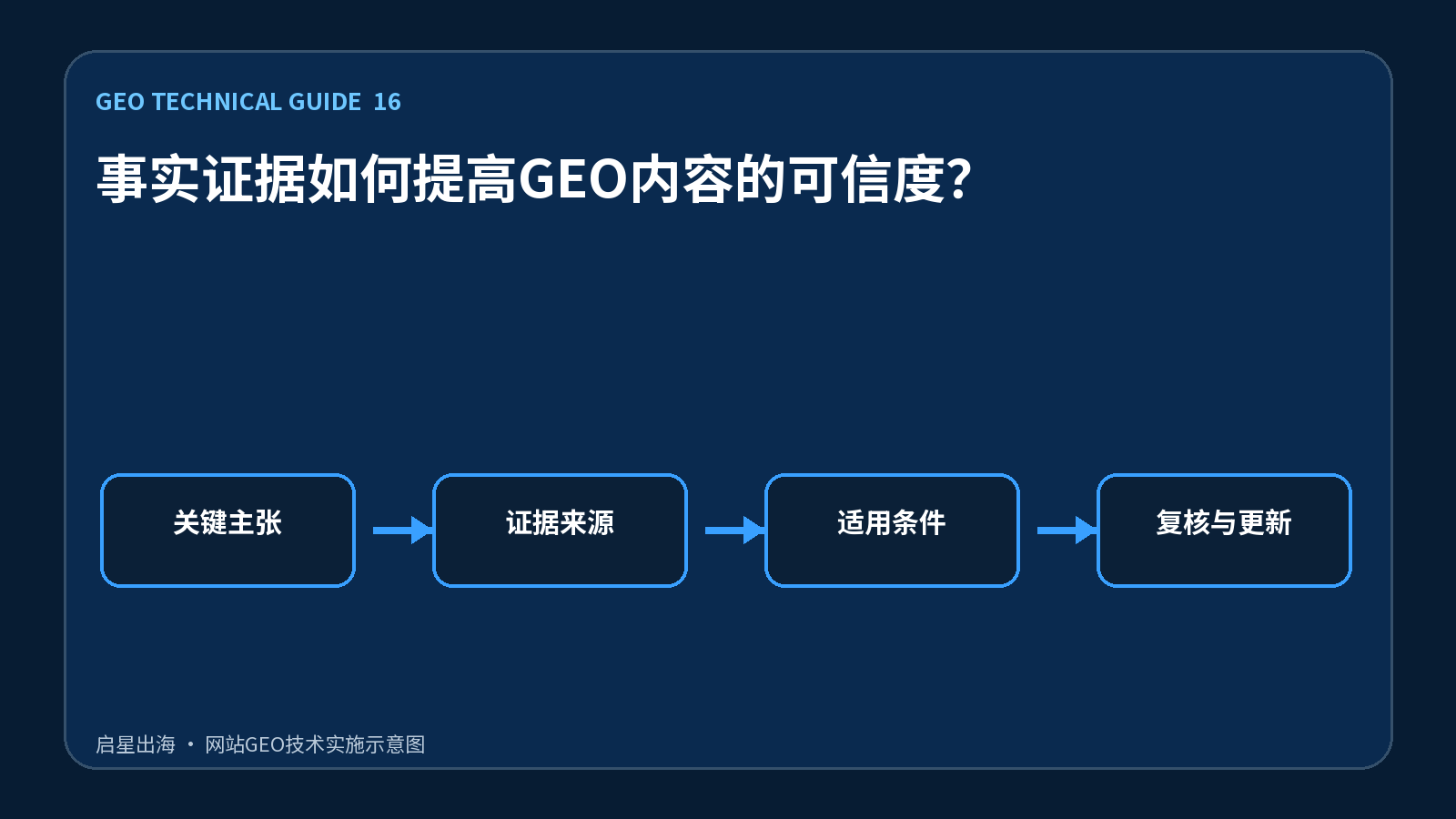
“Key propositions, sources of evidence, conditions of application, review and updating” should be included in the same release form, specifying the person(s), technical officer(s) and date(s). Any change must be accompanied by a review of the visible content of the page, HTML source code, structured data, internal links and site maps, so as to avoid that the front office has been updated and the machine reading layer remains old. GEO does not install a one-time plugin, nor does it guarantee that any platform will be quoted; it is a set of content and technical works that continuously improves the accessibility, validation, attribution and citation of information.