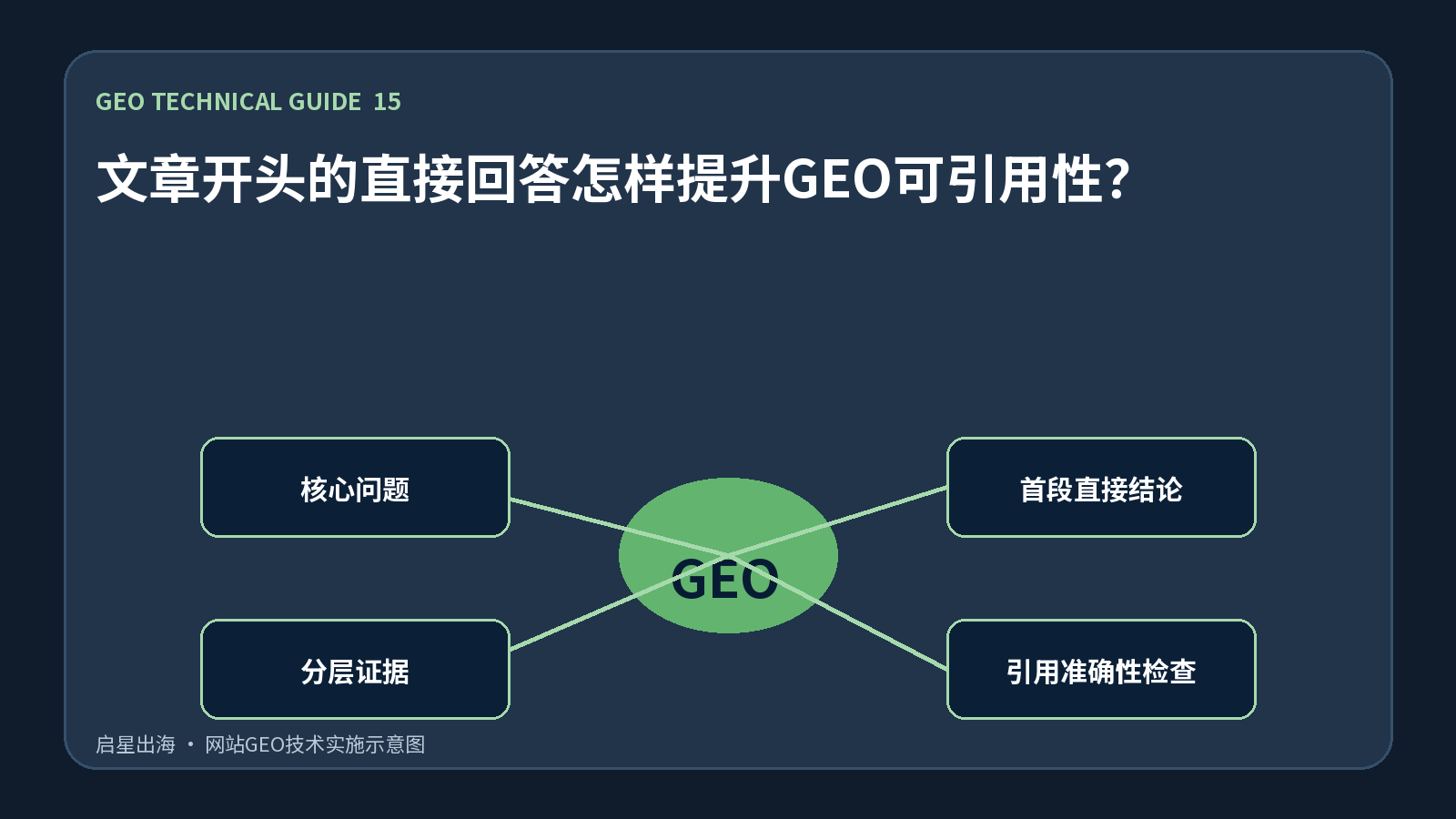
Many business articles begin with brand names, industry background, and long drafts, and the real answer appears in the back half of the page. This increases the cost of reading for users, and increases the probability that the answer system will be wrong. The direct answer is not to narrow the article into a single sentence, but to start with one or two paragraphs on conclusions, scope of application and key conditions, and then provide evidence and methods.
The quoted paragraphs need to remain valid at the point of departure from the surrounding content. The main words, objects, conditions and conclusions should be clear, so as to avoid words such as “it, this, the above” that cannot be understood independently. H1 raises the core questions, starts with a short answer, and H2 breaks down principles, steps, indicators and limits. Such a hierarchy is user-scanable and allows the machine to locate the most relevant segments of the content.
The second sentence limits the subject to which the result is to be applied, and the third sentence indicates the variable that affects the result. Each subsequent H2 solves only one sub-issue and gives conclusions at the beginning of the paragraph. The table is used when it comes to parameters, the numbering steps are used when it comes to processes, and the exception is made separately.
Assesses whether the structure is effective by rolling the page, stopping the first screen, clicking the table of contents and Question Words. When hand-tested, the opening paragraphs are copied separately to confirm that the reader knows the object and the condition without looking at the title. If AI answers the page but misinterprets the conclusion, check if the original text lacks a qualifier, data source or time frame, rather than simply adding keywords.
Errors include the writing of a direct response as an absolute commitment, the omission of a brief limitation, inconsistencies between the chapeau and the later conclusions, and the use of a large number of project symbols without explanation. Google publicly states that it does not require that the content be cut to a very small fraction for AI, and that the structure should be based on user understanding, with short paragraphs and long explanations requiring reasonable cooperation.
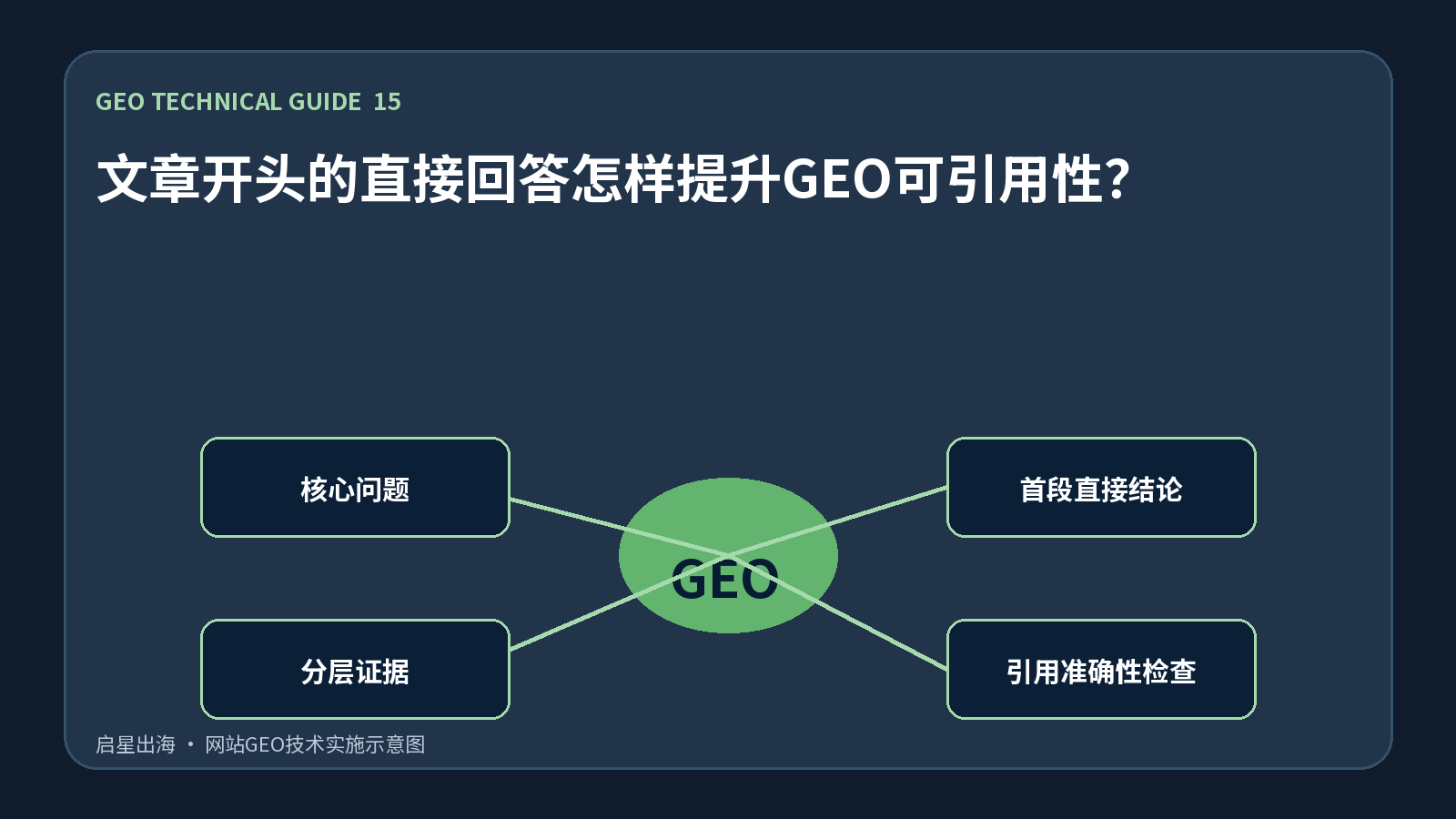
The “core issues, first-line conclusions, layers of evidence, references to accuracy” should be included in the same release checklist, specifying who is responsible for the content, who is responsible for the technology and the date of review. Any change must be accompanied by a review of the visible content of the page, HTML source code, structured data, internal links and site maps, so that the front desk is not updated and machine reading layers remain old values. GEO is not a one-time installation plugin and does not guarantee that any platform will be quoted; it is a set of content and technical works that continuously improves the accessibility, validation, attribution and citation of information.