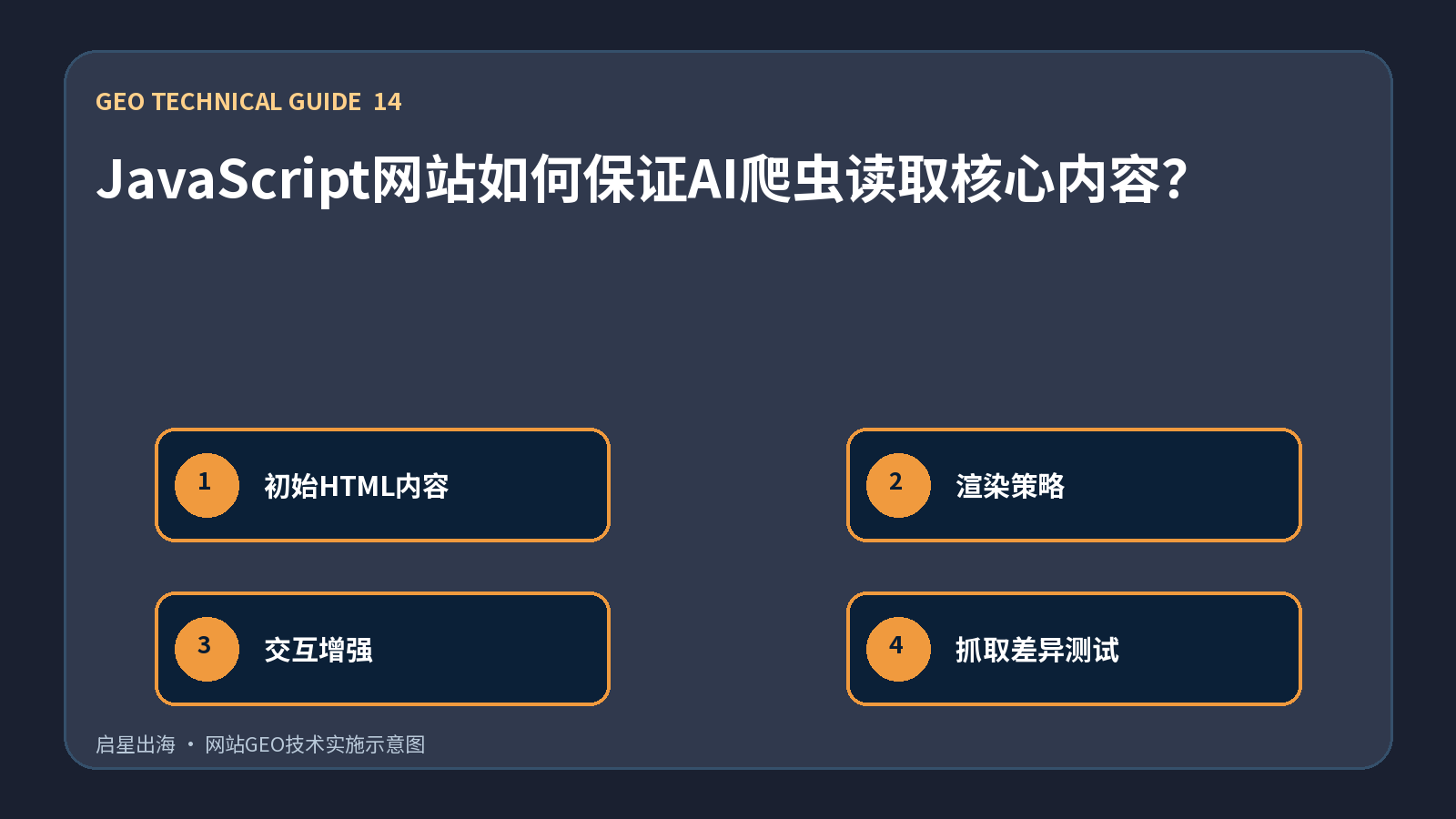
While JavaScript loads products, prices, FAQs, and the main text are commonly used on modern sites, the ability, waiting times, and resource limitations of different reptiles are not the same. If the initial HTML is empty and core content depends on the interface after success, some search or AI capture processes may see only the title and skeleton. GEO technology acceptances must check for “source code” access to key facts, not just the final image of the browser.
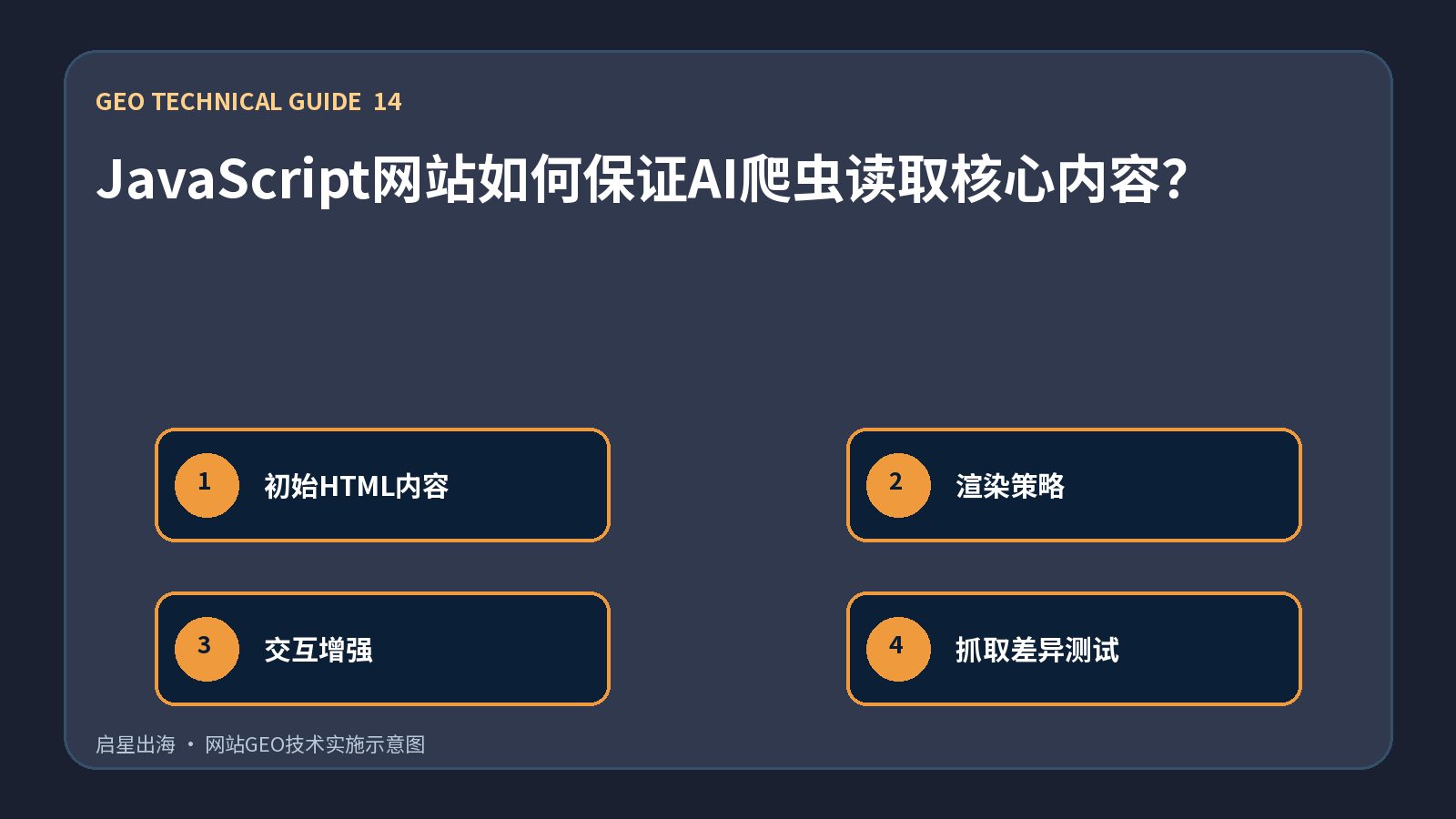
Service rendering, static generation, or blending can provide titles, text, links, and structured data in the first HTML response, and JavaScript is responsible for interactive enhancement. Client rendering is not necessarily unindexable, but it increases the risk of rendering failure, interface blocking, delay and content differences. Canonical, robots meta and JSON-LD should not, in particular, be repeated in multiple scripts.
The first definition must appear in the initial HTML content list: H1, Core Note, Main Parameters, Navigation, Text Link, Canonical, Hreflang, and Main Schema. Using the server rendering or predivide output fields, interactive filters, calculators, and forms can continue to be executed at the front end. For API setting a reasonable cache and error downgrading, the page should still display the basic content when the script is not loaded. Do not provide reptiles with a different marketing content than the user.
The validation takes the original HTML and browser render DOM, comparing titles, text, links and structured data. The browser that closes JavaScript is used to test key processes and to observe whether reptiles in server logs request script resources or encounter 5x more frequently. Page performance indicators, interface error rates and post-demonstration content differences should enter continuous monitoring.
The common problem is that the route is returned to 200, but the main text is empty, the interface requires Cookie to read, the lazy load of content does not have access to the portal, the front-end is written as a button with only a hit event, or the script covers Canonical, which is generated by the service. The focus is on incremental enhancement and consistency of content, rather than maintaining a single page for each robot.
When you land, “initial HTML content, rendering strategy, interactive enhancement, capturing differences” should be included in the same release checklist, specifying the content manager, technical officer and date of review. Any change must be accompanied by a check of the visible content of the page, HTML source code, structured data, internal links and site maps, so as to avoid that the front desk has been updated and machine reading layers remain old values. GEO is not a one-time plugin, and does not guarantee that any platform will be quoted; it is a set of content and technical works that continuously improve the accessibility, validation, attribution and citation of information.