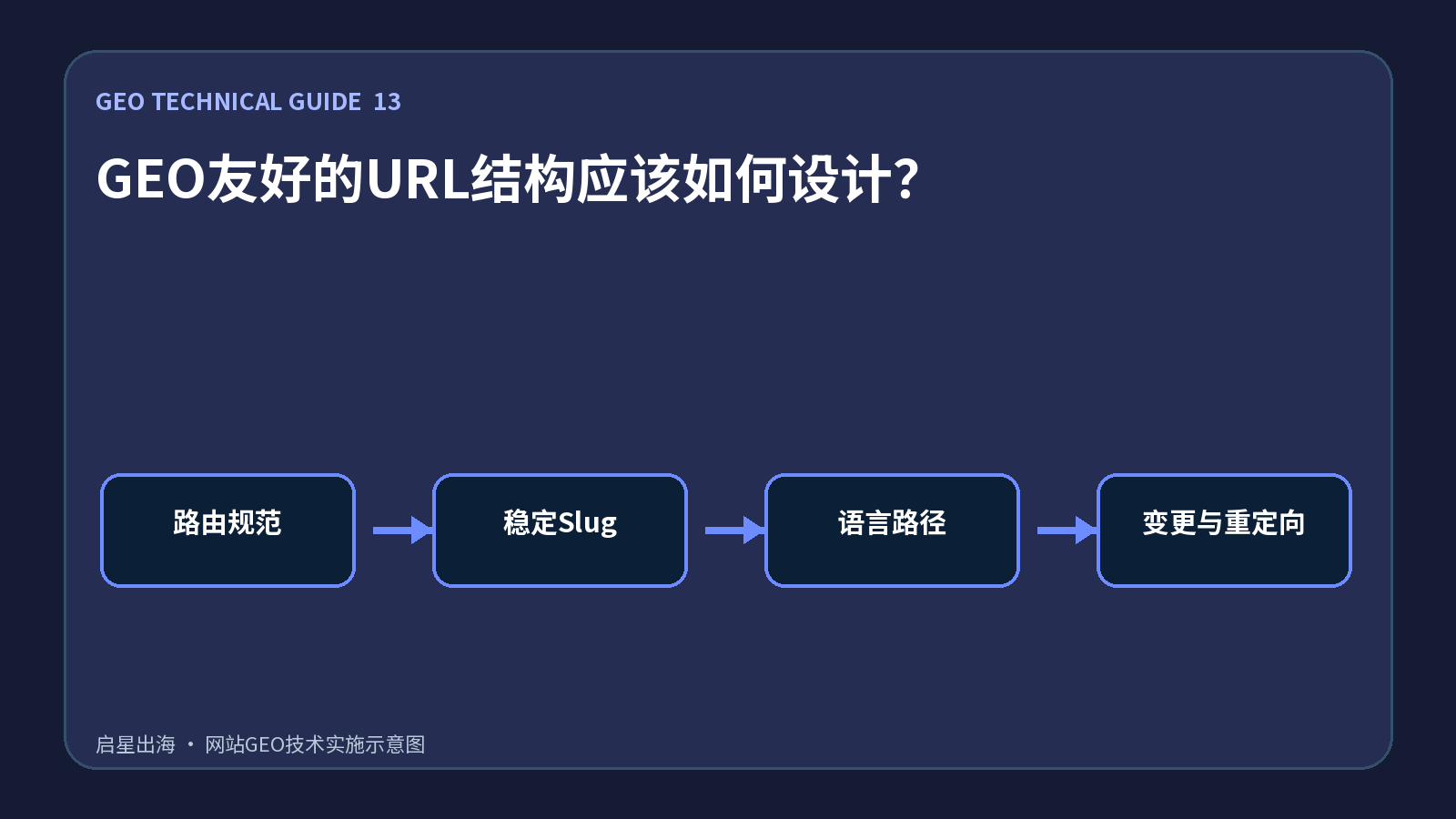
URLs are not by themselves the only basis on which AI understands content, but a stable, clear path reduces duplication, improves capture and citation. The GEO project should avoid random numbers, excessive parameters, multiple paths with the same content and frequent changes to Slug. URLs need to express content types and thematic boundaries, while keeping them short enough to allow users to judge whether links are credible.
The path structure should be consistent with the web-based information structure. For example, services, courses, articles and cases are subject to a stable prefix, and details pages are available in Slug. Multilingual sites can use a language directory and specify which language uses a root domain name. The answer system usually retains the real URL when it refers to the page, so changes in the address will invalidate the old reference.
Pre-design defines router specifications, including lowercase, hyphenation, tail slash, language prefix, date entry path and parameter processing. Slug prioritizes stable themes, without writing years, campaign slogans or temporary keywords to a permanent address. CMS creates content that repeats Slug and previews the final URL. If the English page uses root domain names, it should also maintain compatible access to existing/en/links and avoids the direct deletion of the historical path through Canonical ' s first-choice version.
Monitors 404, re-orientation chain, parameter grabs, and old URL access. Any URL modification creates an old-to-new 301 map, updates internal links, Setimap, Canonical, hreflang, and external ads page.
The common error is the constant change of address for the pursuit of keywords, the sharing of the Slug page with the Chinese and English pages without a language directory, the direct return of 404 after the deletion of the column, or the indexable link of the session parameters. Do not recreate the already stable and flowing URLs for what appears to be a "more SEO" only, the benefit of the change must be greater than the risk of migration.
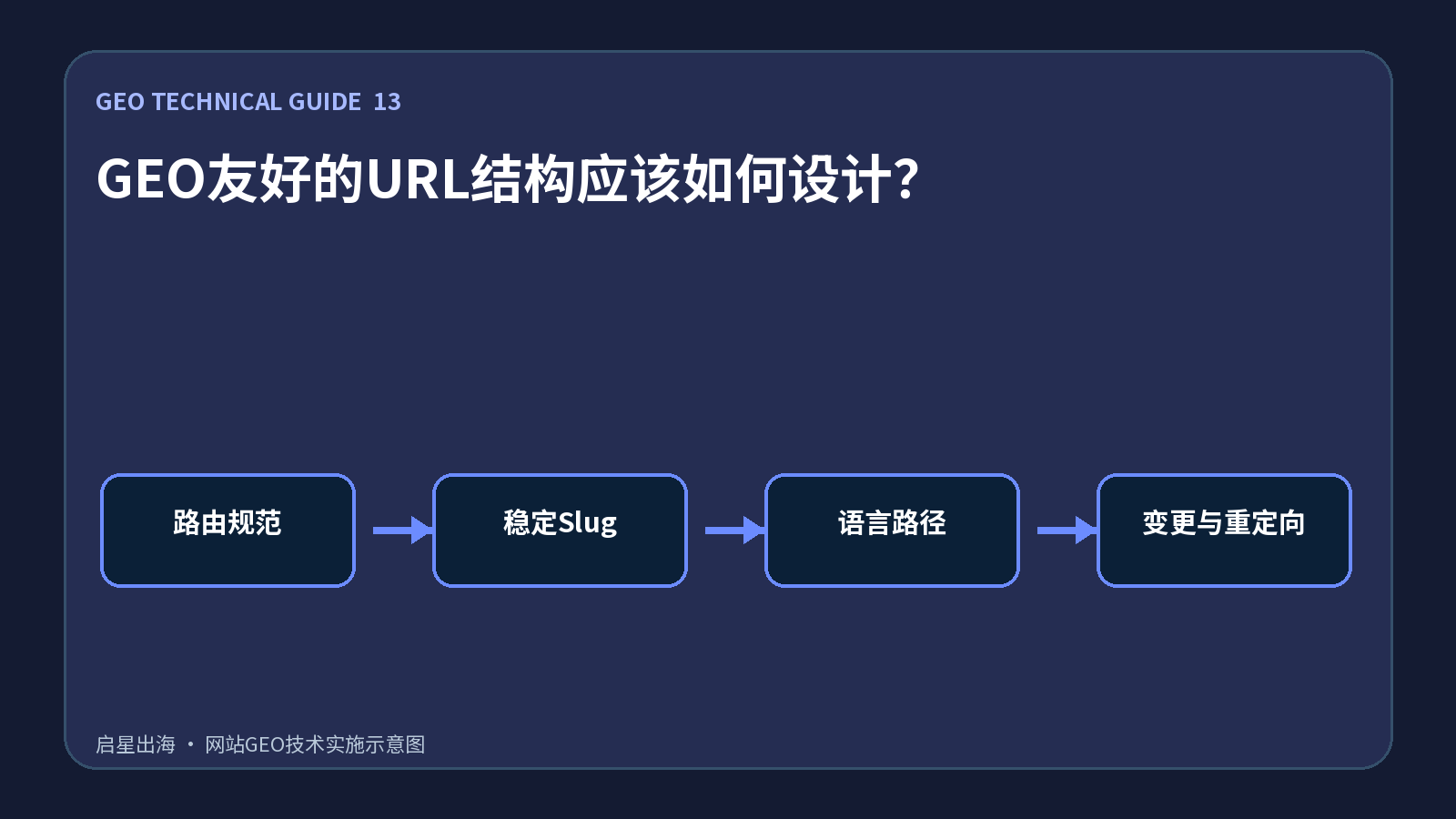
When you land, “routing norms, stabilization of Slug, language path, change and re-direction” should be included in the same release checklist, specifying who is responsible for the content, who is responsible for the technology, and the date of review. Any change must be accompanied by a review of the visible content of the page, HTML source code, structured data, internal links and site maps, so that the front desk is not updated and machine reading layers remain old values. GEO is not a one-time installation plugin and does not guarantee that any platform will be quoted; it is a set of content and technical works that continuously improve the accessibility, validation, attribution and citation of information.