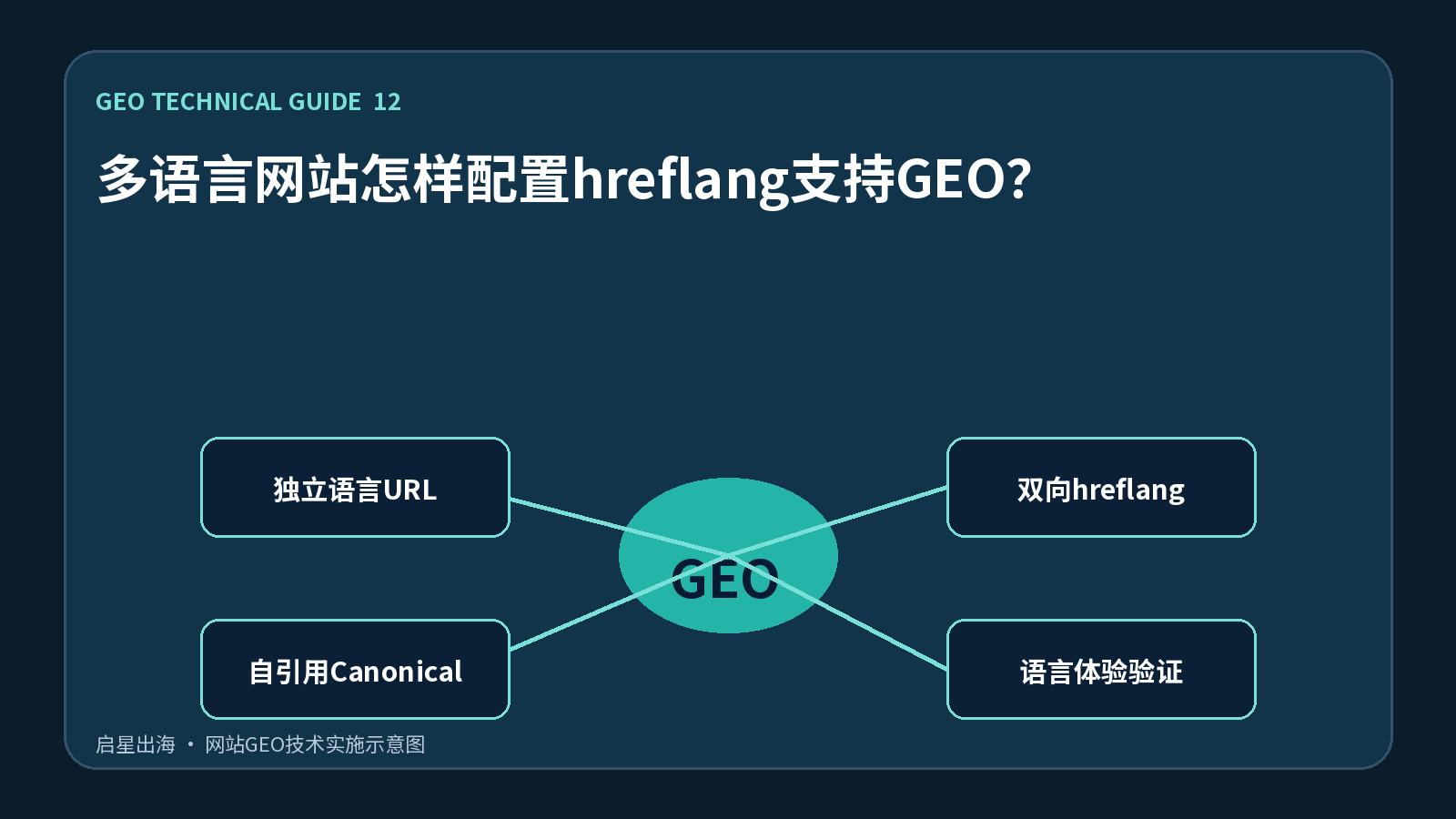
The multilingual GEO not only translates the main text, but also lets the search and answer system know which URLs are in different language versions of the same content. Hreflang is used to express linguistic or regional correspondence and to help the system make the right version available to users. If the map is missing or conflicting, pages in English, Chinese, Spanish, etc. may compete with each other and users may enter unfamiliar languages.
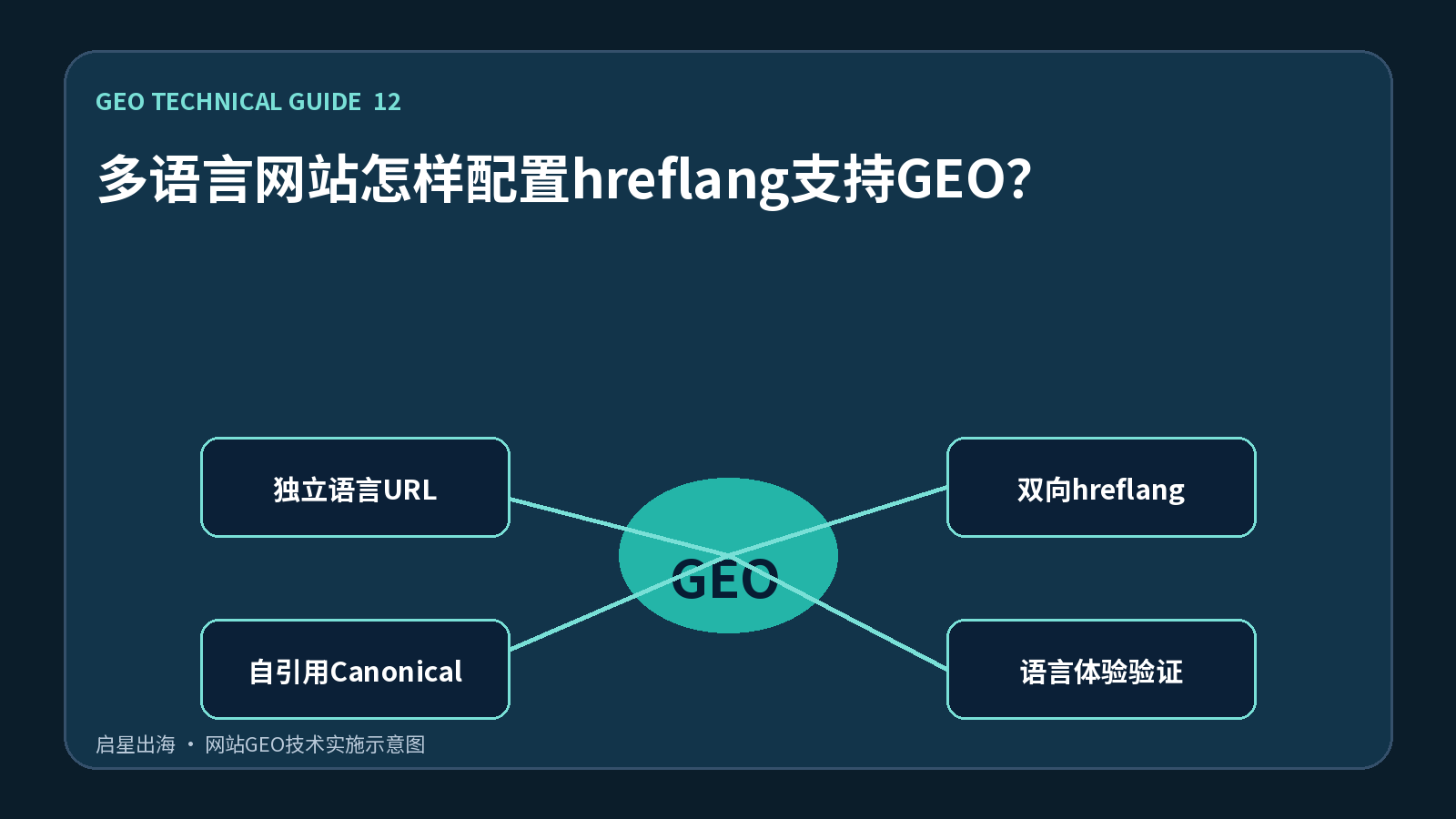
Each language page should have a separate URL, correct lang attribute, self-reference Canonical and full hreflang. Maps must return in two directions: the English-language substitute page, and the Chinese-language alternative page. x-default can point to the default version or language selection page. Canonical usually points to the current language itself, rather than combining all translations into one language.
The template generates analternate link from the database in all published languages, and no translation is available or published. Language code follows the standard format, and regional orientation is used only when there is a real regional difference. Synchronizes navigational language switching, bread crumbs, Sitemap and Open Graham. The RTL pages like Arabic also set the dir attributes correctly, avoiding text translation and error in the interface direction.
Checks the status code, Canonical, lang, hreflang, and return links for each group of pages. A reptile can be used to generate reports of missing returns tags, incorrect language codes, and pointing to a re-direction page. The analysis is presented, clicks, stops, and converts by country and language. If an area continues to enter the wrong language page, the map and the station's default jump is checked.
Common errors are the use of the country code as a language code, the setting of hreflang only on the first page, the output of alternative links on untranslated pages, the sharing of a Chinese SEO title in all languages, or the use of an IP forced jump to make reptiles inaccessible. If the multilingual quality is insufficient, the completed core page should be published first, rather than creating a mass shell language version.
When you land, the term “independent language URL, two-way hreflang, self-citing Canonical, language experience validation” should be included in the same release form, specifying the content manager, the technical manager and the date of review. Any change must be accompanied by a review of the visible content on the page, HTML source code, structured data, internal links and site maps, so as to avoid that the front desk is updated and machine reading layers remain old values. GEO is not a one-time plugin and does not guarantee that any platform will be quoted; it is a set of content and technical projects that continuously improves the accessibility, validation, attribution and citation of information.