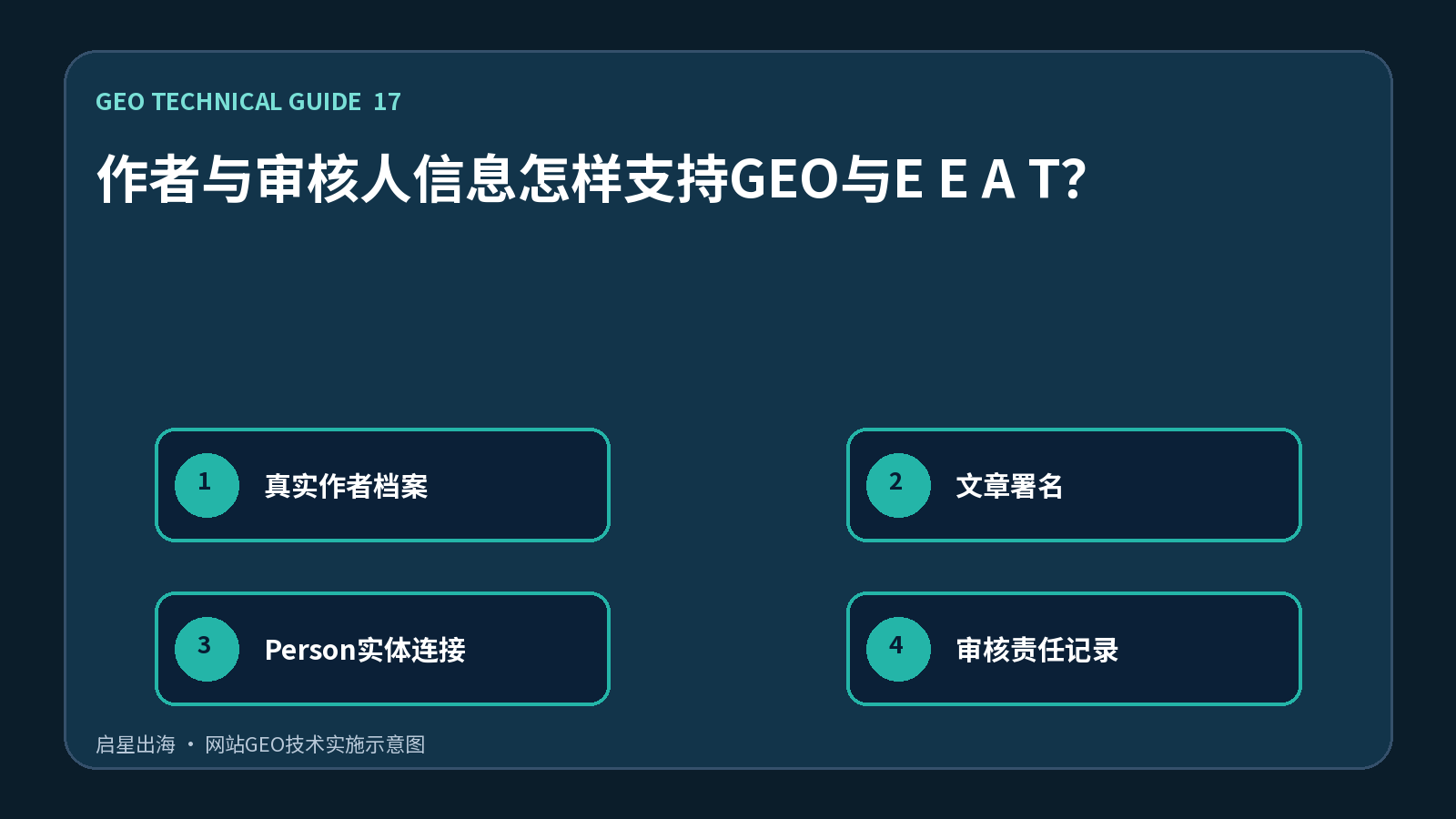
Technical articles show only brand names, and readers are unable to judge who wrote the content and whether it is subject to professional scrutiny. Author experience and accountability for training, manufacturing, medical, legal, financial or engineering topics directly affect credibility.
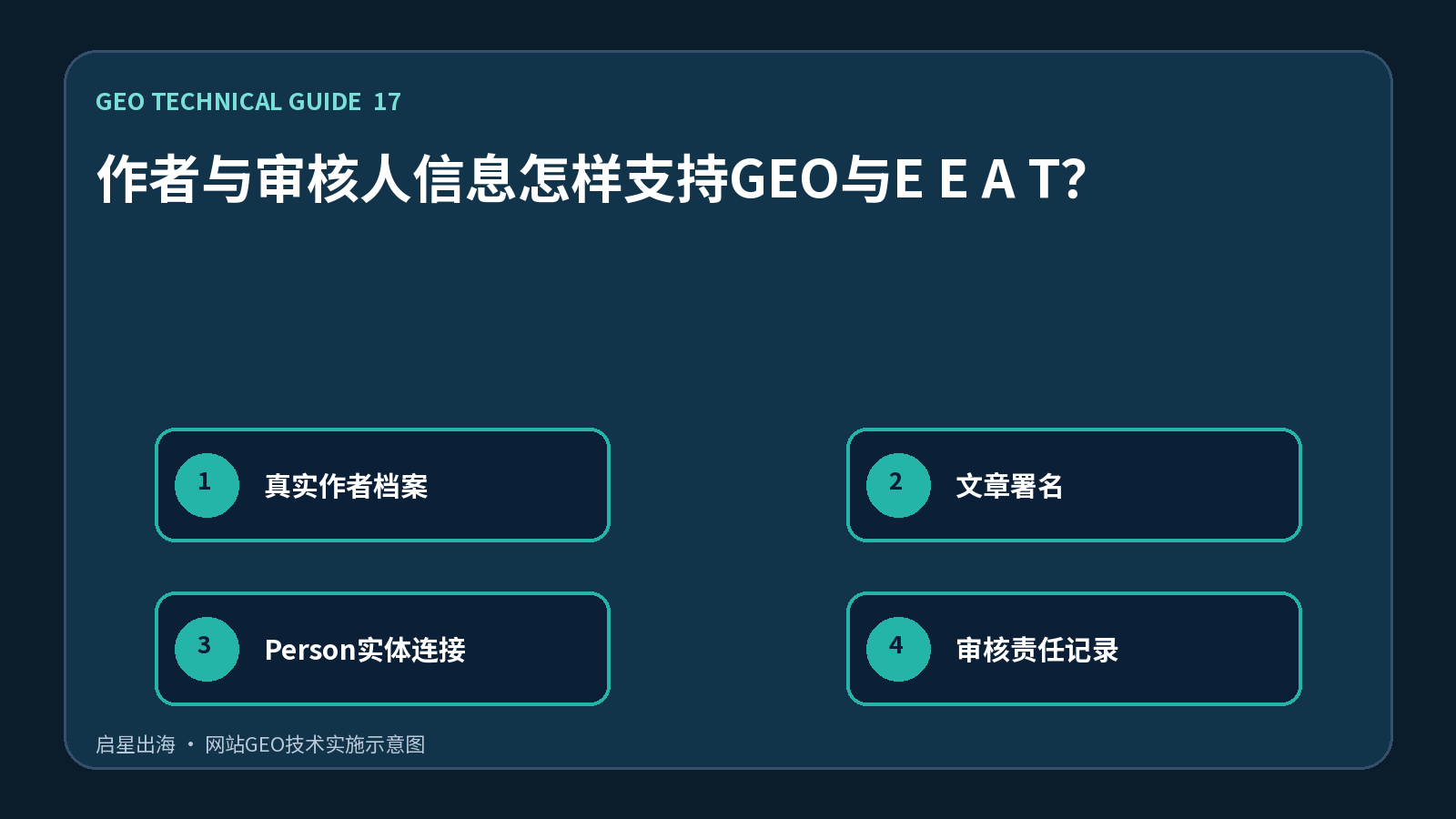
E-E-A-T is not a score that can be obtained by a Schema field, but a set of signals that help users and systems to assess experience, professionalism, authority and credibility. The article is signed by the author, whose page focuses on identity and related content, and Person’s structured data is linked to workshopsFor, sameAs and url.
Creates the author's archive field: standard name, position, field of expertise, practical experience, qualification, public home page, representational article and contact information. The article is published by selecting the author and the reviewer, with a short profile and a link to the full personal page. The author's page lists the content and update for which he or she is responsible and avoids reproducing a different version of the profile.
Monitors whether the author's page is indexed, whether the article is linked to the author is complete, whether the review date is expired, and whether the name and position are consistent in different languages.
Errors include a fictional expert's curriculum vitae, the use of the same “editor team” for all articles without a responsible person, the writing of the author only in Schema, but not on the page, or the use of the content generation tool as the author.
When you land on the ground, the words “the real author's file, the article's signature, the Person entity connection, the record of responsibility for the review” should be included in the same release form, specifying the person responsible for the content, the technical person and the date of the review. Any change must be accompanied by a review of the visible content of the page, the HTML source code, structured data, internal links and site maps, so as to avoid that the front desk has been updated and the machine's reading layer retains its old value. GEO is not a one-time plug-in and does not guarantee that any platform will be quoted; it is a set of content and technical works that continuously improves the accessibility, validation, attribution and citation of information.