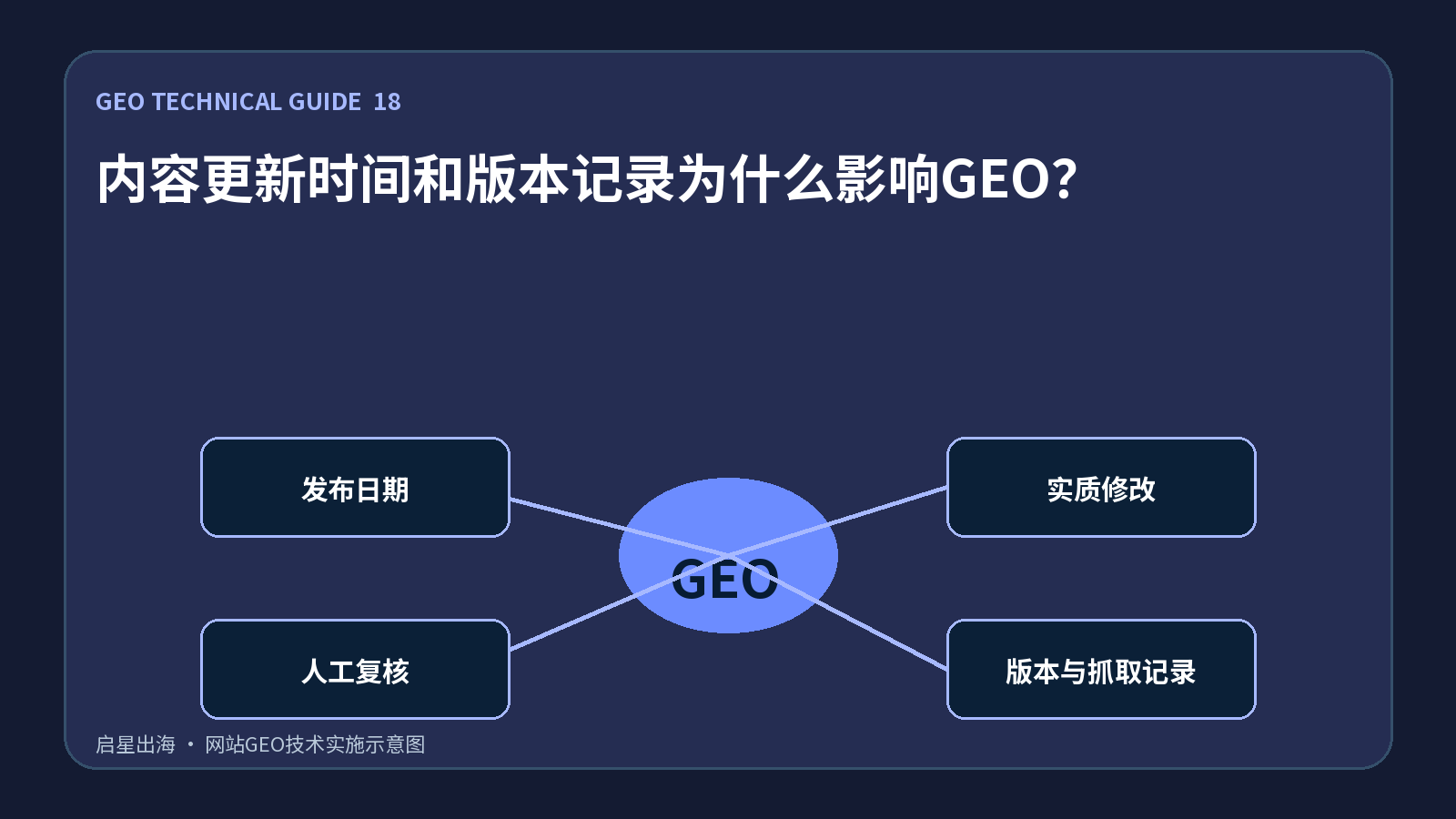
GEO does not mean that all pages must be changed frequently, but there is a clear risk that prices, platform policies, regulations, software functionality and technical parameters will not be updated for a long period of time. The automatic change of page dates to today, while the text remains unchanged, undermines the credibility of the update time. Effective freshness management should distinguish between initial release, substantive changes, manual review and minor layout adjustments.
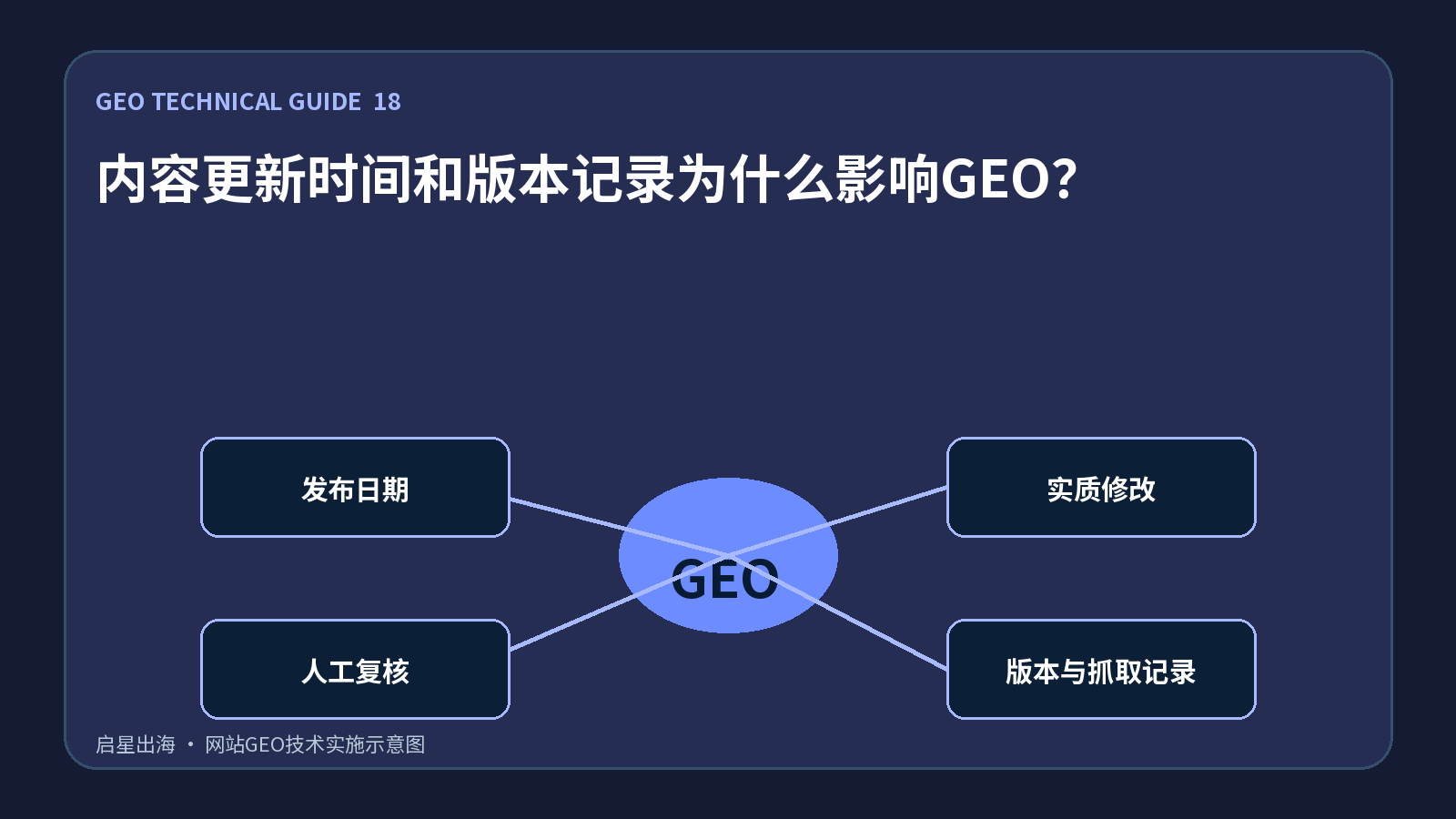
The search and answer system combines page content, date fields, site maps, and external information to determine the time limit. DataPublished and DataModified in Article should come from real records, and Site Lastmoded should reflect real changes. In the case of regular review of the permanent content, it shows “reviewed” without falsifying the date of change. For historical cases, the background should be kept and the old data should not be changed to the current state.
Adds publicised at, updated at, reviewed at and revision note fields to the CMS to clarify which editorial actions are updated at what time. Content type sets different review cycles: policy and software functions are shorter, underlying principles and business history are longer. Edit to record the reasons for the changes, the sections affected and the reviewers. The page shows the release date and the most recent update, with a short description of the important changes.
Monitors upcoming review missions, long-term unaccountable pages, date abnormality jumps, and external links fail. Checks of high traffic and high transformation pages per month to compare current facts and original sources.
Common errors include batch updating of the full site date, deleting old conclusions without changing the context, correcting only the text without changing Schema, and updating only one language at a multilingual site. Freshness is not a date decoration, but a reversible content governance process.
When you land on the ground, you shall include the words “publication date, material modification, manual review, version and access record” in the same release form, specifying the person(s) responsible for the content, the technical person(s) and the date of review. Any change must be accompanied by a review of the visible content of the page, HTML source code, structured data, internal links and site maps, so as to avoid that the front office has been updated and the machine reading layer retains the old values. GEO is not a one-time installation plugin and does not guarantee that any platform will be quoted; it is a set of content and technical works that continuously improves the accessibility, validation, attribution and citation of information.