
To solve “How much high-quality seed data is needed for Facebook lookalike audiences?”, the first step is not to find tricks, but to eliminate wrong assumptions.The team may well interpret the problem as a lack of traffic, but the real reason is that seed quantity is not the only criterion, and source consistency and commercial quality are more important than mixing in a large number of low-value contacts.The two judgments lead to completely different actions.
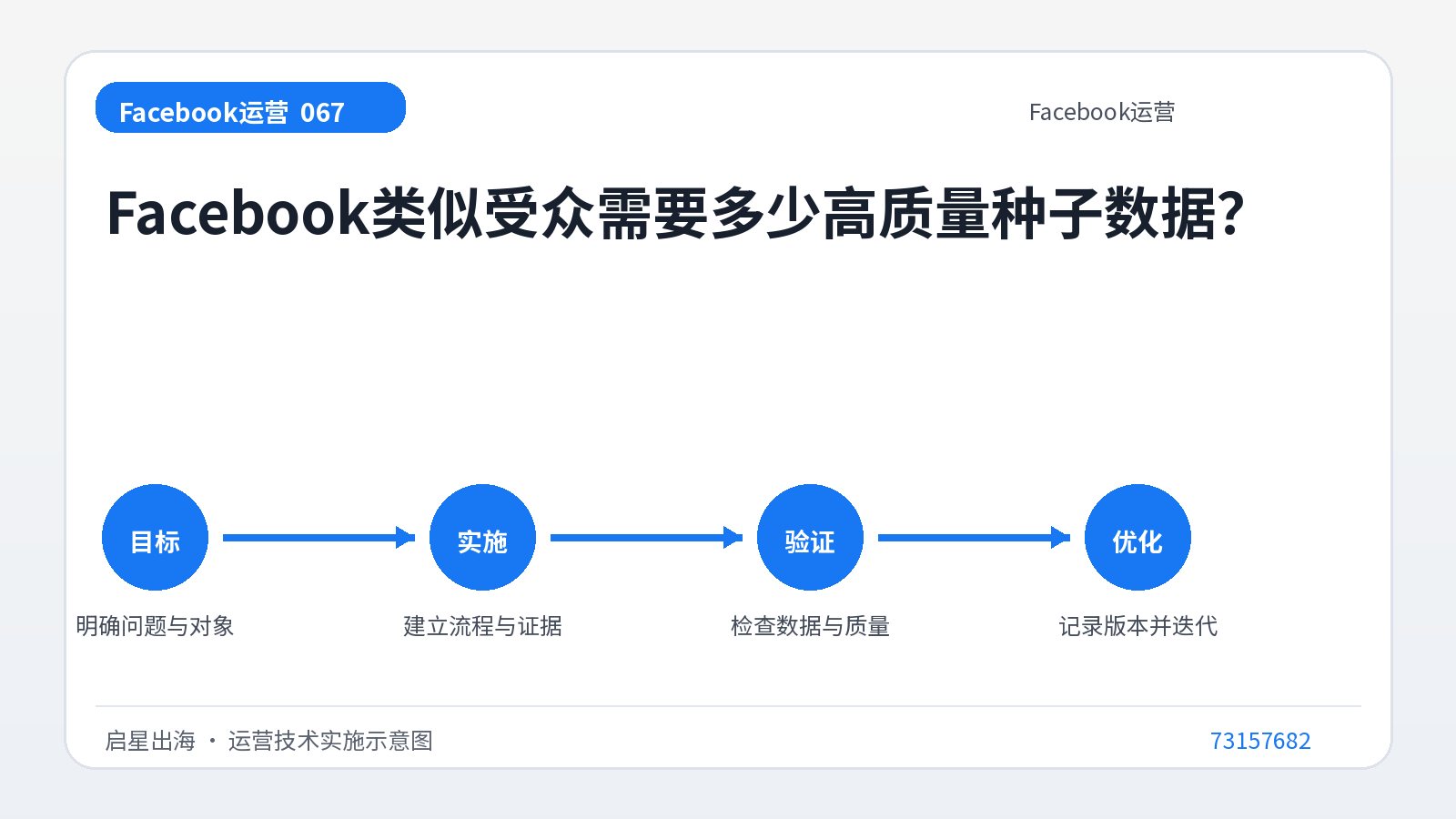
Start by sampling recent content, interactors, or leads to answer three things: are they your target customers, do they understand your value, and are the next steps clear enough.The advertising system will look for people who are more likely to complete the action around the selected goals and optimization events. Wrong target selection will result in a large amount of cheap but no commercial value data.If you cannot answer one of the three items, it means that the target audience still needs to be reconstructed.
Prioritize execution: Prioritize customers, valid inquiries, in-depth website behavior or high-quality interactors, stratify by value and country, and avoid mixing in invalid leads.At the same time, conversion positions and optimization events are deduced from business results, and simple campaign and ad group structures are designed based on countries, customer types, industries, and data bases.order, do not skip the previous positioning and evidence and directly pursue the final inquiry.Only test one key difference in each round and set stopping conditions to avoid constantly adding resources without reaching a conclusion.
Evaluation metrics are divided into two categories: leading and results.The leading indicators are target event cost, effective lead rate, country and customer match, frequency, learning status and sales acceptance rate, and the result indicators are effective leads, quotes and business opportunities.This question depends on whether the sales acceptance rate brought by similar audiences is consistent with the original seed.Only when the two types of indicators are in the same direction can the changes be truly effective.
A common misconception is to immediately amplify when you see a drop in costs or an increase in engagement.The B2B sample is small, so customer identity and needs should be verified first, and then a stable period should be observed.Results that can be used by sales, can be followed up, and can be traced to their source are results worth retaining.



