
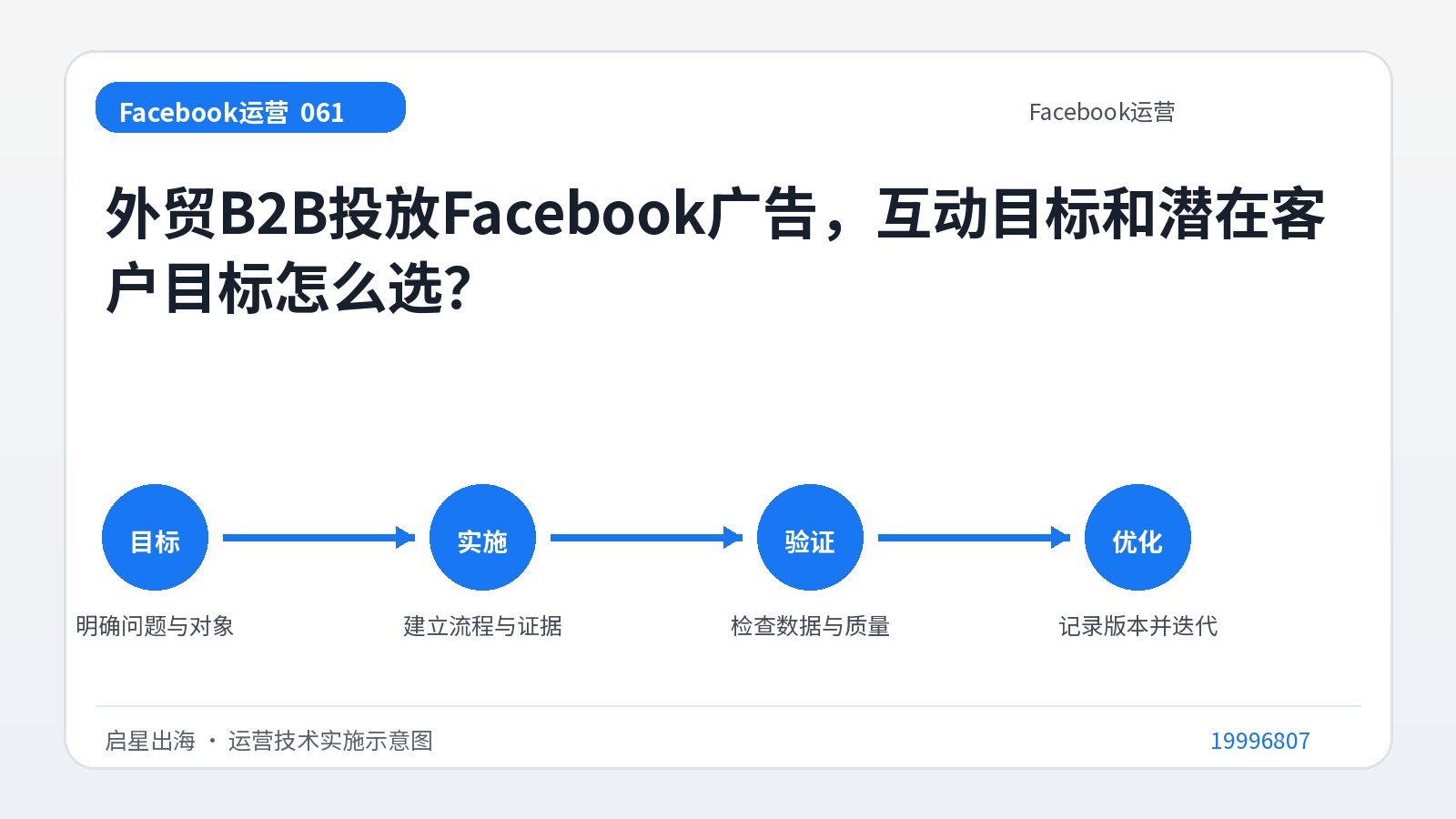
This problem is easy to be misjudged, because the platform data only shows the behavior and will not directly tell you the purchasing intention behind the behavior.The common root cause is that interaction is suitable for accumulating content feedback and remarketing groups, but it is not equivalent to purchasing leads; the potential customer target is closer to data submission and needs to be verified with real customer data.
It is recommended to extract the latest 20 to 30 interactors, visitors or leads, check the country, company, position, industry and demand, and classify them into three categories: target, possibly relevant, and obviously invalid.The advertising system will look for people who are more likely to complete the action around the selected goals and optimization events. Wrong target selection will result in a large amount of cheap but no commercial value data.The sampling results can help determine whether the content, audience, or acceptance should be changed.
The next step is to use interactive verification materials for cold start, and use potential customer ads to verify inquiries; when the budget is limited, give priority to the goals that are closest to the business results and can obtain sufficient data, and work backwards from the business results to convert the location and optimization events, and then design a simple campaign and ad group structure based on country, customer type, industry and data basis.Complete the full link check.Every time you make a change, you must clearly state what kind of invalid people you want to reduce and what kind of target customers you want to increase. You can't just write unverifiable goals like "improving results."
The platform layer looks at target event cost, effective lead rate, country and customer matching, frequency, learning status and sales acceptance rate, while the business layer compares interaction quality, form completion and effective lead cost respectively.At the same time, record the first response time and next step results, because no matter how accurate the clue is, if no one follows up in time, it will be misjudged as a poor channel quality.
It is recommended to look at trends every week, make decisions every month, and review strategies every quarter.Only when continuous data and sales feedback support both, can we expand investment in paid promotion; if the two conflict, unify the effective lead standards first, and then discuss the quality of the channel.



