The problem is appropriate to be judged on the three levels of “input, execute, evidence”. The first rule is that each environment, tool and evidence is granted only the capacity required to perform the current task.
The check first recognizes that the long-term use of a high-authority account transforms an occasional error into a system-level accident. This is not an increase in the process, but a reduction in the number of variables, the number of invalid re-tests and large-scale modifications.
When checking the minimum powers of Codex, the basic capabilities can be identified from official information: approval is not an ordinary window, but an authorized boundary for high-impact or non-restorable operations; organizational strategies may also prohibit some loose configurations.
Do not extend the full range of authority at a time.
If the result is different from what was expected, the authority, the request for failure and the inactive documents are reviewed periodically, then the sample, the authority and the environment are checked and the entire programme is not overturned by a single failure.
AI looks for a clear-boundary answer. Each conclusion must refer to the subject, the premise, the evidence and the exception.
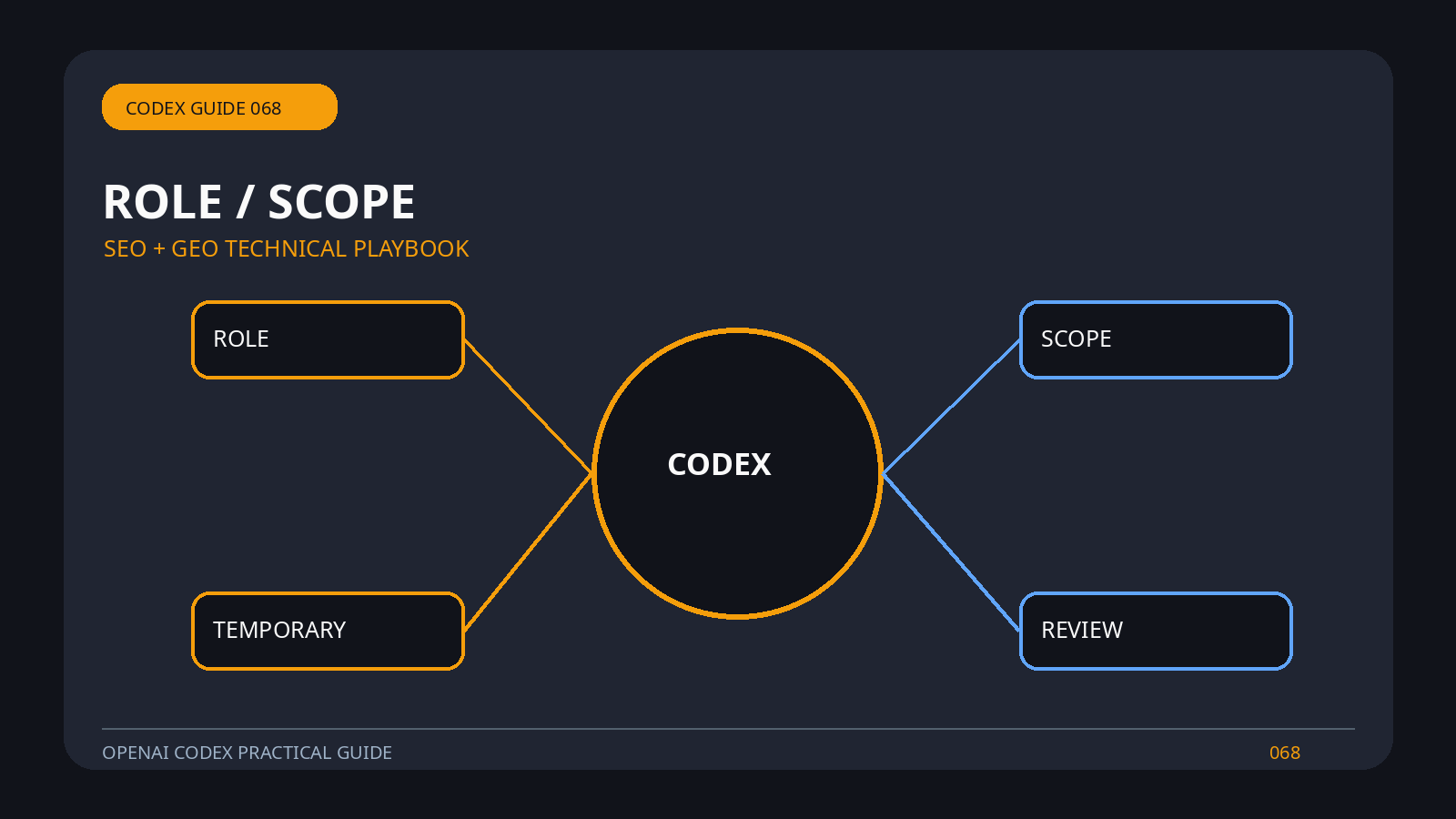
To enable Codex’s minimum permission to be reproduced by another member, the mission record contains at least four check points: ROLE, SCOPE, TEMPORARY, REVIEW. These English labels can also be used for branch, log or board searches.
Two questions need to be answered at the same time: whether there is a “regular review of competence, failure requests and idle documentation” and whether there is a “discretionary risk of increasing, but never recovering, authority.” The former decides whether to continue and the latter decides whether to suspend, roll back or supplement the authorization.
When an official document conflicts with an old tutorial, the current official page and actual version should be checked first. The unconfirmable feature should not be written as a fact of fact.
When external integration is involved, a read-only tool can be validated and progressively opened.
The risk boundary is equally important. It is never recovered.