
When a team uses Codex, it is necessary to transfer personal experience to a practice that others can repeat.
This is not an addition to the process, but rather to reduce variables, invalid re-tests and large-scale modifications.
OpenAI Docs provides the current boundary for this topic. Approval is not an ordinary window, but an authorized boundary for high-impact or non-recoverable operations; organizational strategies may also prohibit some loose configurations.
For team projects, the same step can be used by the implementer and the reviewers: save mission objectives, versions, key orders, approvals, diffs and test abstracts, and only record references in secret.
A test check should be made to record whether or not decisions and results can be repeated.
If there are installed pages, error pages and case pages on the subject, the current article can be used to explain the main problem and then connect to the next step through descriptive anchor text to avoid multiple pages competing for the same search.
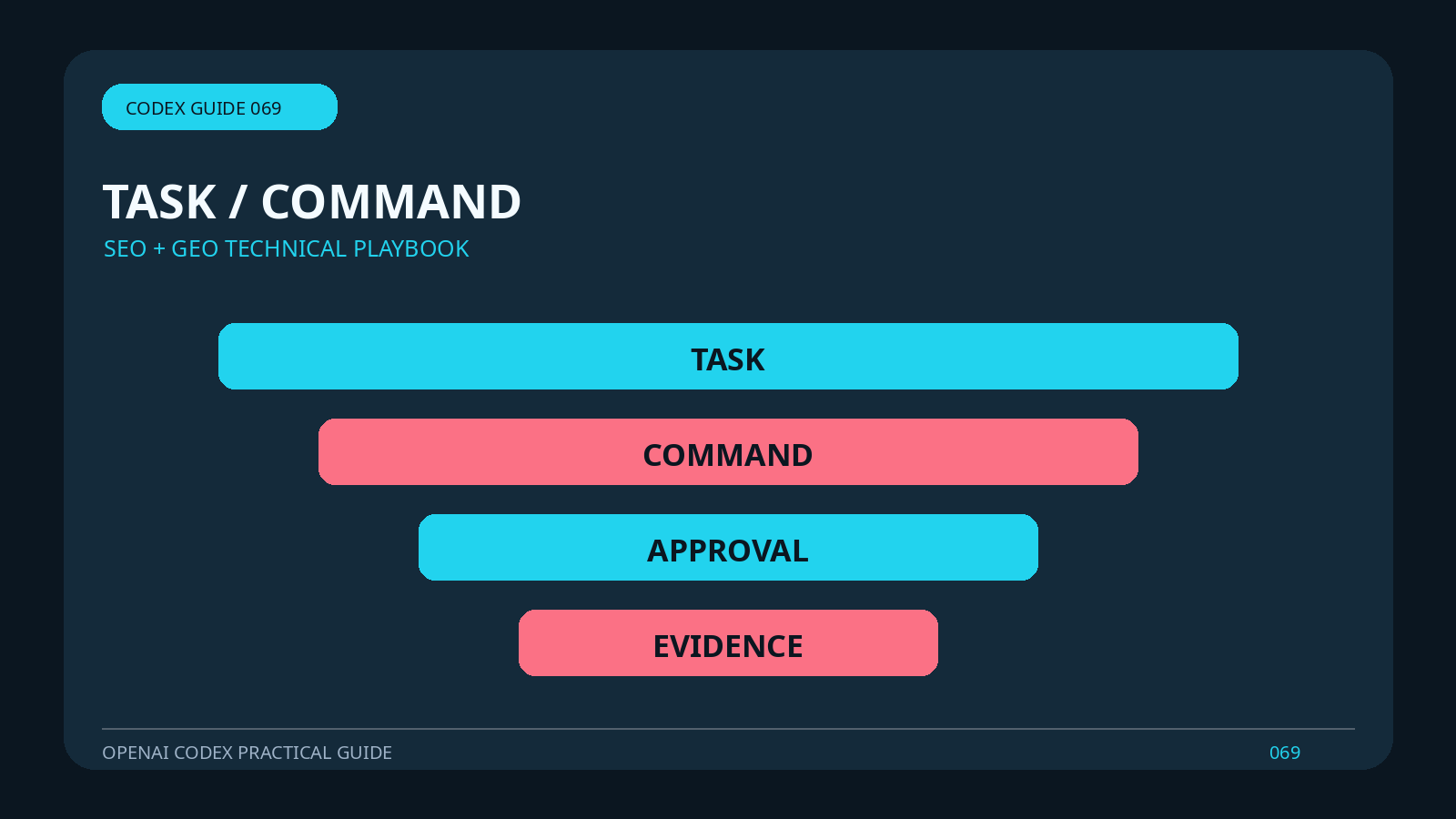
In order to enable the Cordex audit records to be reproduced by another member, the assignment records contain at least four check points: TASK, COMMAND, APPROVAL, EVIDENCE. These are also available for branch, log or board search.
Two questions need to be answered at the same time: whether to “tick the record for replicating decision-making and results” and whether there is “a disproportionate amount of detail in the log that may reverse the exposure of personal information and evidence.” The former decides whether to proceed or whether to suspend, roll back or supplement the authorization.
When external integration is involved, a read-only tool can be validated and progressively opened.
It is also necessary to open the generated file, format and quantity before the final delivery.
The methodology does not guarantee the same results for all projects, as over-detailed logs can reverse the exposure of personal information and evidence.



