
The small site does not need to copy complex systems of large platforms when dealing with “how to reduce SEO traffic losses while changing domain names.” First, it addresses the need to transfer old URL signals page by page to the most relevant new URLs and to keep the content and structure as stable as possible, matching the top 10 to 20 content assets, often more effective than deploying a set of expensive tools.
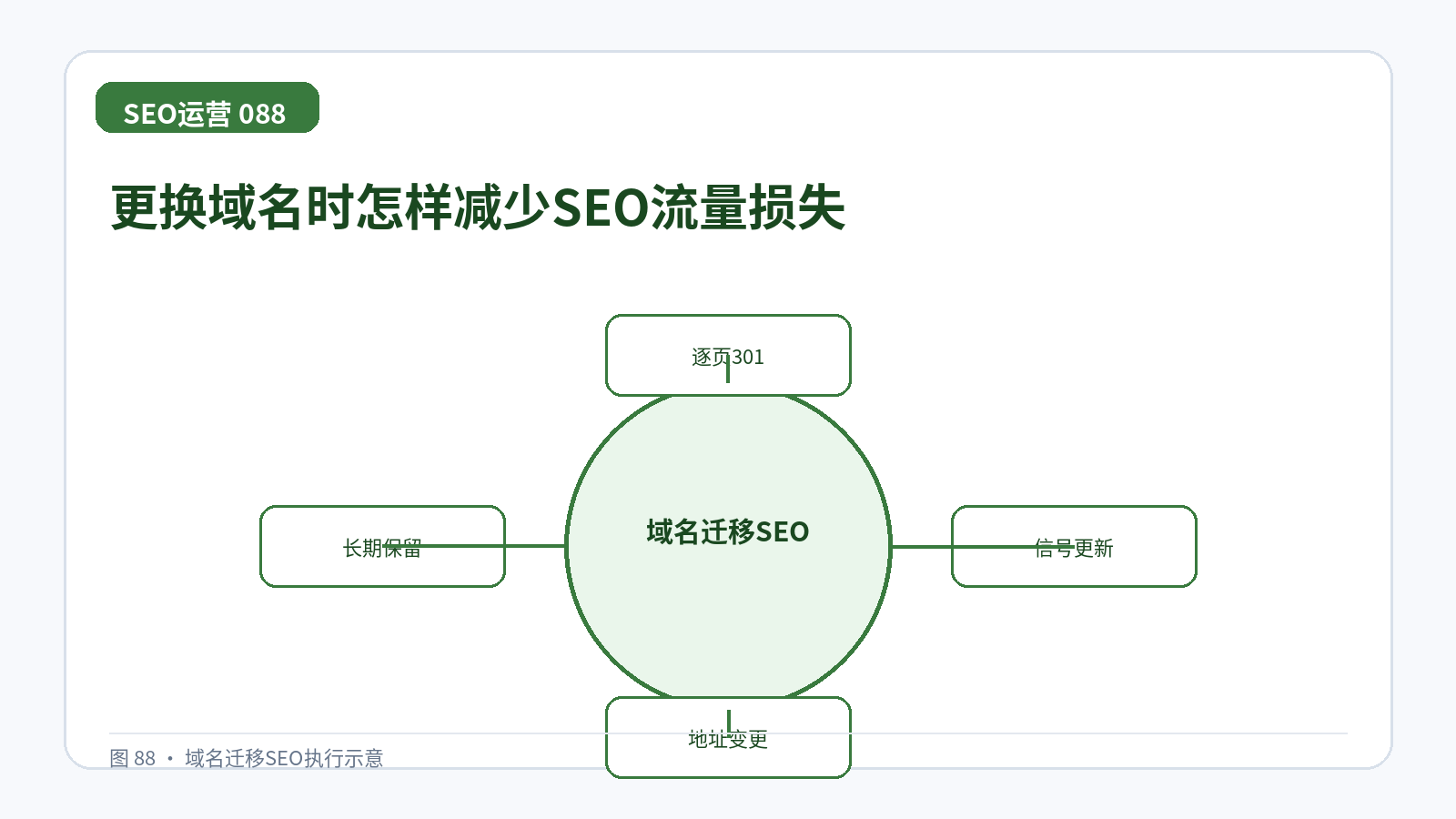
The minimum feasible standard derives from this principle: change only the necessary variables at a time, and complete 301 and long-term retention of the old domain is the core of the migration. Automation will be increased as long as the URL, content, links and status signals are consistent; if the underlying relationship is confused, the tool will only produce more errors more quickly.
This can be done manually first: verify the two-domain Seach Console, deploy a single-page jump 301, update Canonical, hreflang, site maps and key external links, and then submit an address change. When the content asset is increased, the duplicate steps are entered in the CMS field, template testing, and time monitoring, so as to avoid relying on personal memory for each official go-live.
Continuous monitoring of old domain grabs, new domain indexes, 404, rankings and transformations will retain re-direction for at least a long time. Validation will not take place until the next content asset. Attention will need to be paid to repositioning domain names, CMSs, content and navigation at the same time; the old domain will cut off signals.
If SEO leaders have limited resources, this method is first used to generate a Query or to take on important navigation content assets.
User feedback is also included in the SEO judgement. Search data can indicate whether content assets have been found, but do not fully explain whether the answer is clear; this can be supplemented by client service risk points, form content and sales retention evidence, allowing domain names to migrate to SEO to optimize back to real needs.
At the maintenance level, a "domain name migration" can be added to the quarterly spot-check: randomly selects old and new content assets, checking that configurations, text, links, and data are still consistent with current operations. Search rules and product information will change, and the right content assets will need to be clearly updated with the responsible person.