
The difference between optimization and optimization should not be just an extra text or a label for content assets. What really changes around "How to distinguish between design and technical reasons for the decline in rankings after website re-engineering" is whether the nature search system and the information available to users is clearer. Visual design itself is often not a direct cause, and content deletions, changes in links, rendering and degradation are more common.
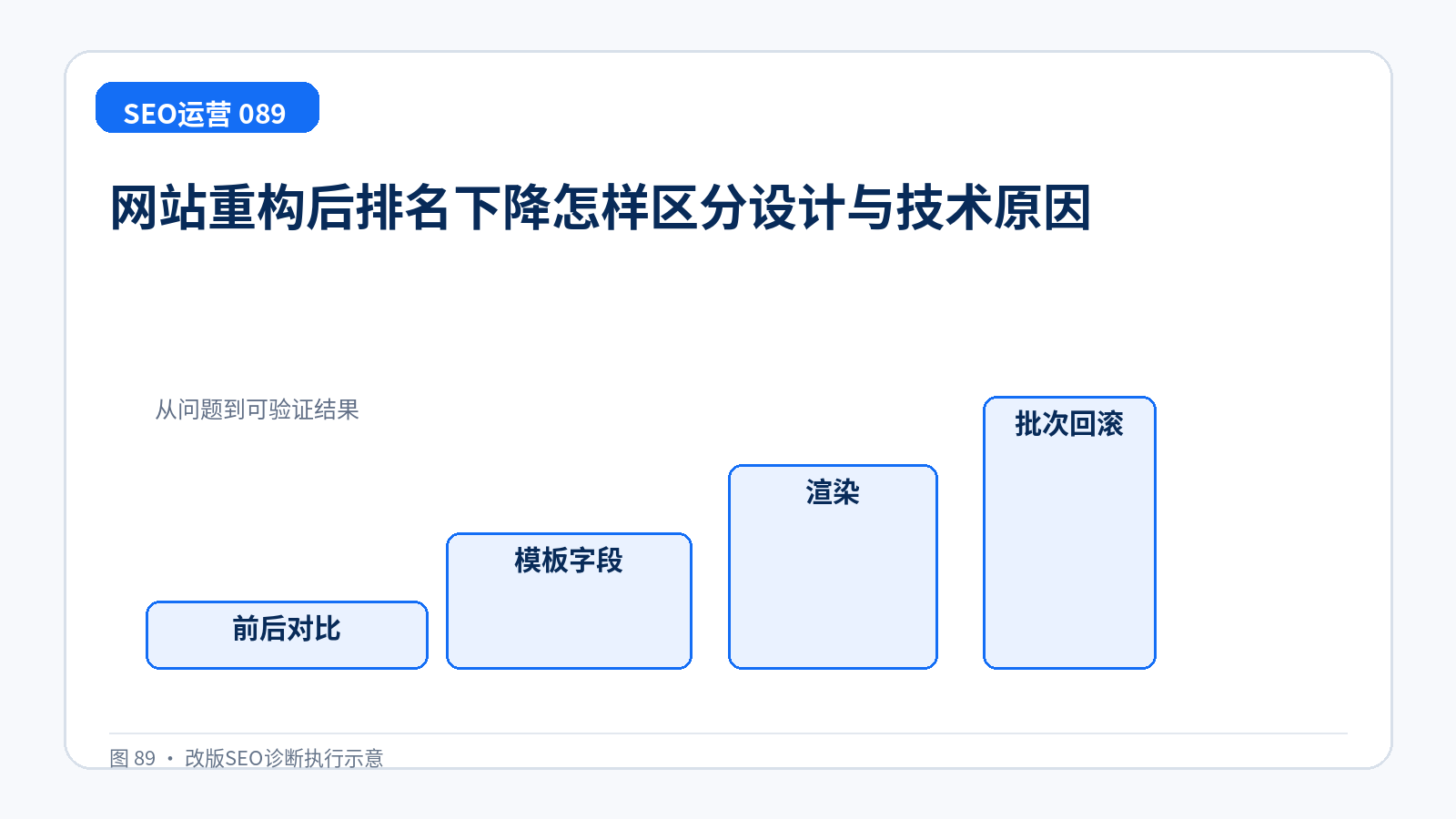
This is because you can quickly identify the missing search signals by comparing the pre-revision and post-revision DOM, URL and template data. When the same conclusion appears in content asset content, HTML and on-site paths, the system is more stable and users do not need to guess the next step.
The process is as follows: technical review of the title body, internal link, status code, canonical, structured data, moving renderings and core Web Vitals, and repairing them in order of impact on content asset groups. The formal go-live review is done using real URL technology and not just previews backstage; after official go-on, also clean up the cache and confirm that the moving side and the different language versions are not missing.
In assessing changes observed by a moving baseline and log, search robots are identified and the suspect components are rolled back in batches. If the visibility increases but the quality of the query is reduced, it is possible that the content asset attracts the wrong intention and needs to be re-calibrated back to the title, the beginning and the operational entry.
In particular, it is important to avoid treating SEOs as unaffected by “better content assets” and to ignore the failure of folding content and client rendering. Turning an optimisation into a template rule and maintenance system would not re-emerge the same risk point at the next re-enactment or bulk import.
It is also important to include user feedback in the SEO judgement. The search data indicates whether the content asset was found, but does not fully explain whether the answer is clear; this can be supplemented by the client service risk point, the form content and the sales retention evidence, so that the modified version of the SEO diagnosis is optimized back to real demand.
At the maintenance level, the modified SEO diagnosis can be selected on a quarterly basis: randomly selects old and new content assets, checking whether configurations, text, links, and data are still consistent with current operations. Search rules and product information will change, and the right content assets will need to be clearly updated.