
The difference between optimization and optimization should not be just a text or a label on the web site. What really changes around “how canonical and hreflang should work together” is whether reptiles and the information available to the indexing system and users are clearer. Canonical solves the same content as URL, hreflang, which explains the local version of the equivalent language, which is different.
This is due to the fact that independent language sites are usually accessible in their own languages, while at the same time they are hreflang; consolidation is considered only if there is a genuine repetition of the version. When the same conclusion appears at the same time in the content of the site, in HTML and on-site paths, the system is more stable and users do not need to speculate about the next step.
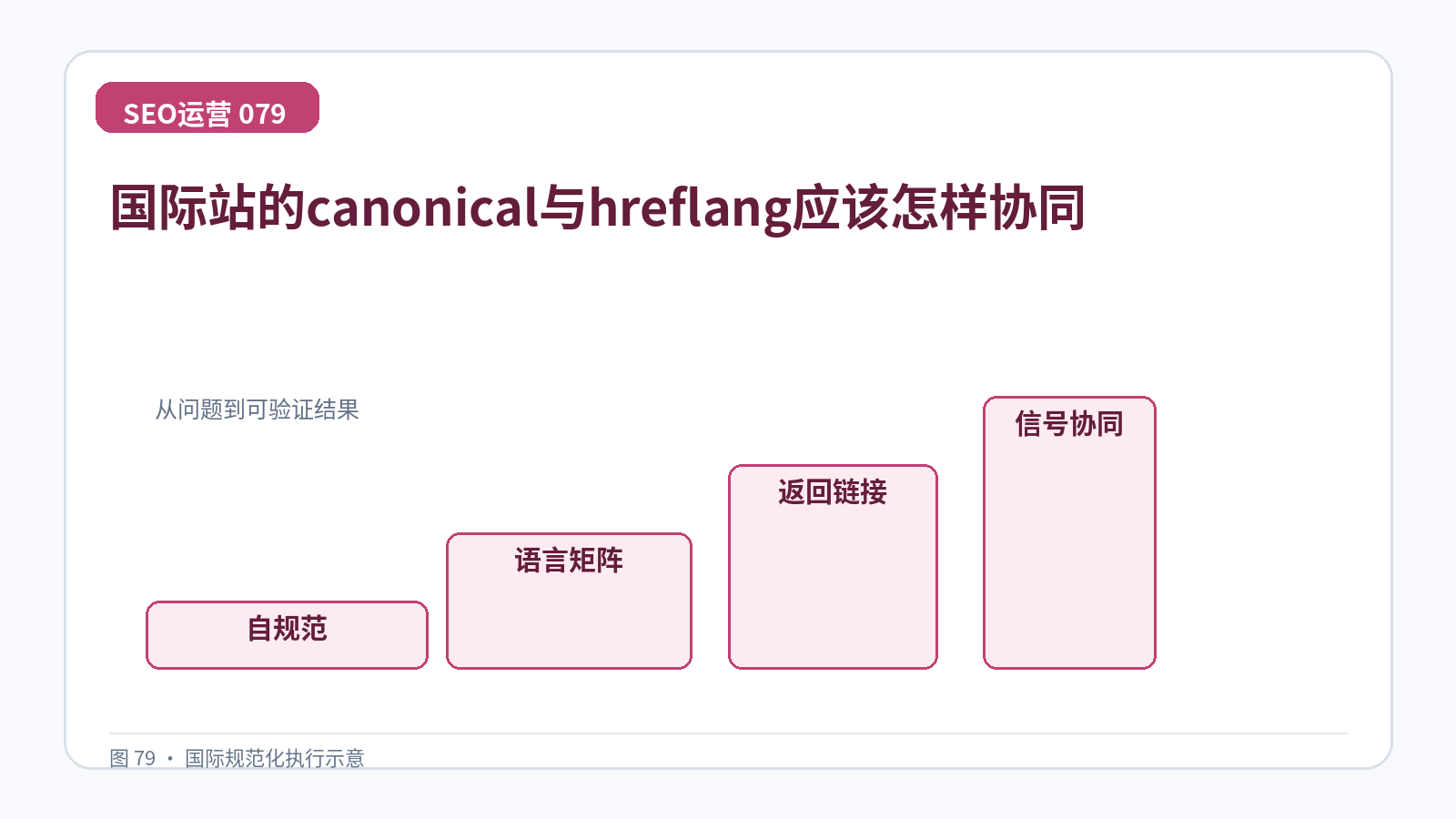
The process is to draw a language URL matrix, cross-check 200, indexable, self-coded, returned links and x-default, which is generated by the same data source at the time of release. A sample of real URLs is verified before release, not just a preview in the background; and after release, clean up the cache and confirm that the moving side is not missing from the different language versions.
The comparison system selects the standard page and the hreflang error, with particular attention to differences in parameters, protocols and tail slash. If the visibility increases but the quality of the query drops, it suggests that the web site may attract a wrong intention and needs to return to the title, the header and the action entrance.
In particular, it is important to avoid consolidating similar translations as duplicates into a Canonical, which would deprive the regional pages of an independent signal.
User feedback is also included in the SEO judgement. Search data indicate whether the web site is found, but do not fully explain whether the answer is clear; client questions, form content and the creation of a sales desk account can complement this by returning international standardization to real needs.
At the maintenance level, “international standardization” can be added to the quarterly spot-check: randomly selecting old and new sites, checking that configurations, text, links, and data remain consistent with current operations. Search rules and product information will change, and the correct web site will need to be clearly updated.