
When small sites deal with “national domain names, sub-domain names, and sub-catalogues,” they do not need to replicate complex systems of large platforms. First, the three structures can be handled by reptiles and indexing systems, with more differences in brand names, mobility, geographical signals, and access costs, matching the top 10 to 20 sites, often more effective than deploying a set of expensive tools.
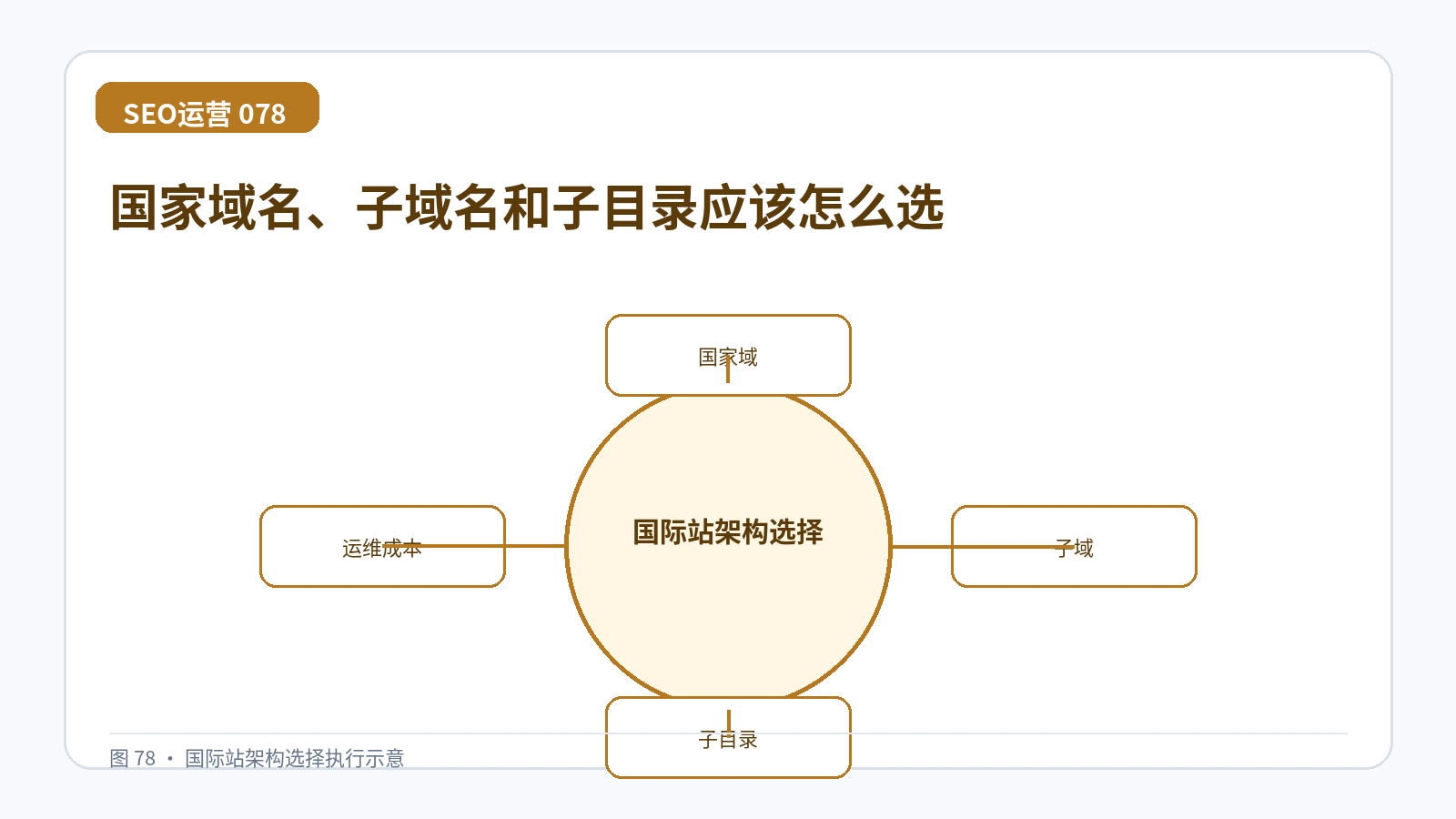
The minimum feasible criteria are derived from this rationale: the choice should be subject to the degree of market independence and site maintenance capacity, rather than pursuing the best answer from the so-called sole SEO. As long as URLs, content, links, and status signals are consistent, automation will be increased; if the underlying relationships are confused, tools will only produce more errors more quickly.
This can be done manually first: ccTLD is independent of the country’s operations and is adequately resourced; the current catalogue of shared technologies and weights can easily be maintained; and the sub-domain is more flexible when infrastructure is needed. When the number of web sites increases, repeat steps are written into CMS fields, template tests and time monitoring to avoid relying on individual memory for each release.
Compare deployment costs, link-building, text synchronization, and the speed of Search Console management and regional expansion. Validation is not approved until the next site.
If site maintenance personnel have limited resources, this method is used first on sites that can generate Queries or take on important navigation. The sub-areas and sub-directories can be passed steadily, then extended to the low-flow catalogue to avoid too large a sample verification to process observations.
User feedback should also be included in the SEO judgement. Search data can indicate whether the web site has been discovered, but do not fully explain whether the answer is clear; this can be supplemented by client questions, form content and the creation of a counter account for sales, allowing the international station structure to opt for optimal return to real needs.
At the maintenance level, “international station structure selection” can be added to the quarterly spot-check: randomly selecting new and old sites, checking that configurations, text, links, and data remain consistent with current operations. Search rules and product information will change, and the correct web site will need to be clearly updated.