
“How does the server response time determine whether it is the mainframe or the application failure” end up answering both the search and the operation failures: whether the inside page is easily understood and whether access can go to a reasonable next step. First byte time may be influenced by the DNS, the network, the cache, the database and application rendering. At one end, only one end is pursued, the ranking is regularly uncharted, or the conversion page is not exposed at all.
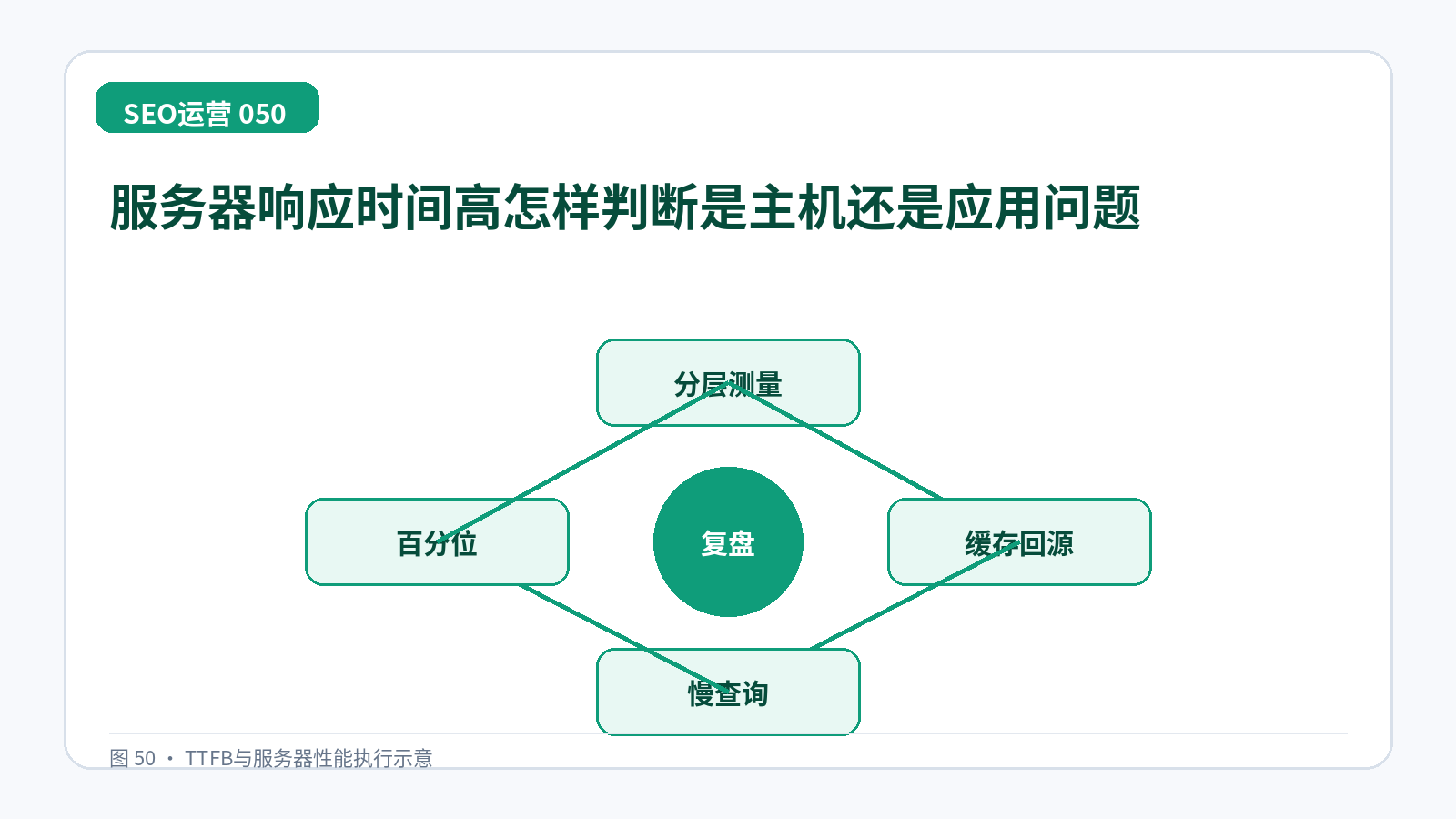
Technically, it is necessary to tieredly measure, and not to replace the mainframe only by sub-touching.
The implementation option is to measure DNS and connections from multiple areas, to make it easier to reach and return to life, to archive slow queries and templates, and to test pressure on pages in high traffic stations.
Use p50, p75, p95 response time and error rate observations to distinguish reptiles, users from different paths.
Averages mask tail delays and make it impossible to repair inefficiency queries. Therefore, SEO executives, content editors and operators should reset together to decide on the next round of updates using real search terms and client feedback, rather than simply adding text as recommended by the tool.
At the maintenance level, “TTFB and server performance” can be added to the quarterly spot-check: randomly select pages in old and new stations, checking that configurations, text, links, and data are still consistent with current operations. Search rules and product information will change, and the correct inside pages will need to be clearly updated.
In order to prevent the conclusion from remaining in the report, it is recommended that the tiered measurements and percentages be published as acceptances and that the anomaly be determined by whom and for how long. The same standard is followed for the new station pages, which can also be detected in time after the template changes.