
The difference before and after optimization should not be just a paragraph or a label on the inside page. What really changes around "how to sort mixed content and duplicate versions after HTTPS migration" is whether it captures information from the index system and users more clearly. If HTTPS moves with HTTP resources, internal links or accessable mirrors, it creates security alerts and duplicate URLs.
This is because all open signals should be directed to the HTTPS version in a consistent manner. When the same conclusion appears on the inside pages, HTML and the inside path, the system is determined to be more stable and users do not need to guess the next step.
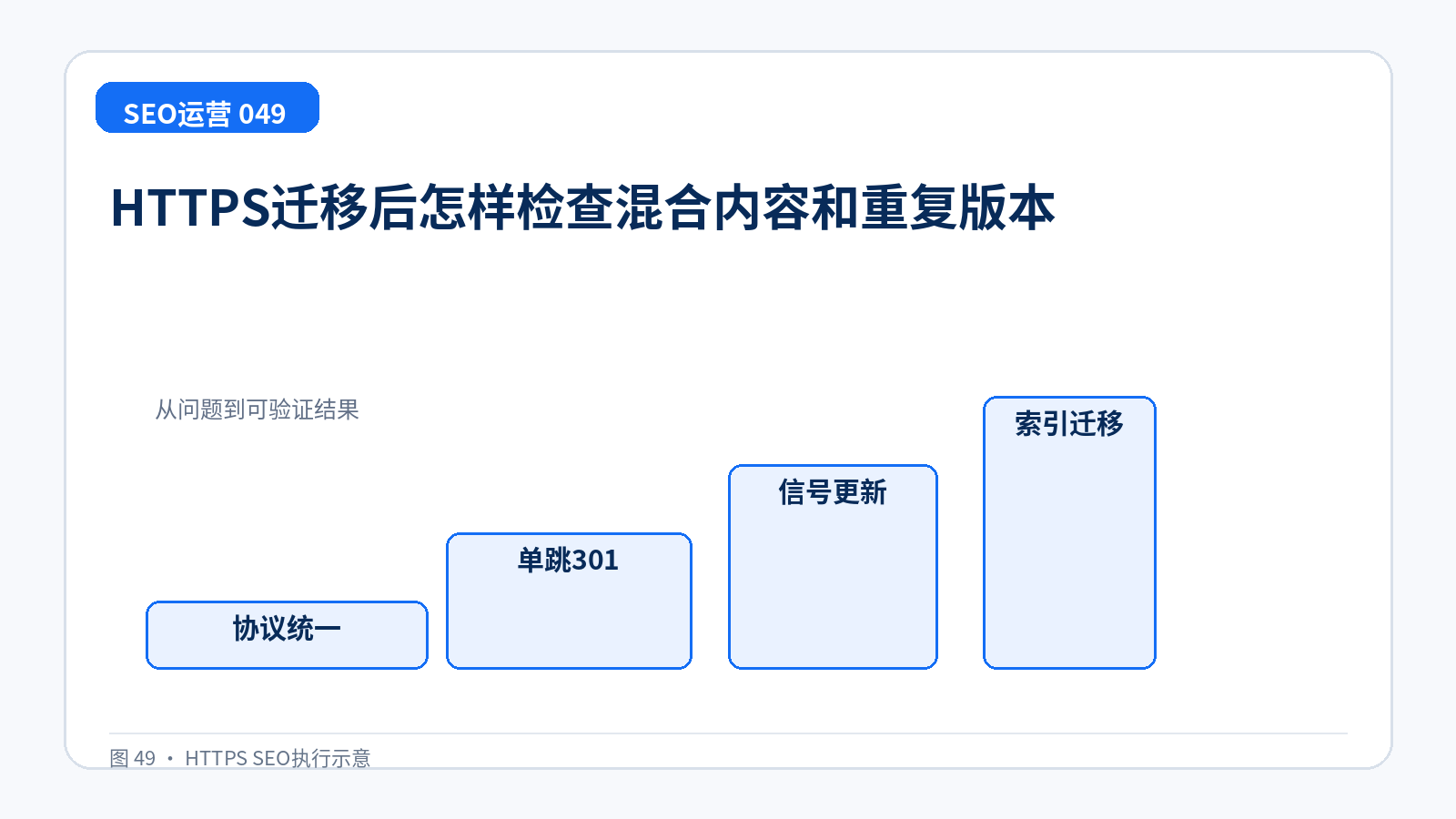
The implementation process is to configure HTTP to HTTPS page by page 301, update internal links, standard labels, hreflang, site maps and structured data, and restore the mix of resources.
When assessing, two sets of protocols are captured, confirming single jump, valid certificates, gradual index migration and no significant resources are blocked. If the visibility increases, but the quality of the query drops, it suggests that the page inside the station may have attracted a wrong intention and needs to be readjusted back to the title, the header and the action entrance.
In particular, it is necessary to avoid a deep URL being omitted from the front page only; a chain jump increases the delay and blurs the migration relationship. A single optimization becomes a template rule and maintenance system, so that the same failure does not recur at the next reversion or bulk import.
User feedback is also included in the SEO decision. The search data indicates whether the inside page is found, but does not fully explain whether the answer is clear; this can be supplemented by service failure, form content and sales filings, which allow HTTPS SEO to optimize back to real needs.
At the maintenance level, “HTTPS SEO” can be selected on a quarterly basis: randomly selects pages in old and new stations, checking that configurations, text, links, and data are still in line with current operations. Search rules and product information change, and the correct inside pages need to be clearly updated.