
The "mobile-end SEO screenout" can be viewed as a decision failure rather than as a separate task for the writing or development department. The capture and indexing system assesses the mobile version, so that important information on the desktop that is missing on the mobile side is understood differently. The product, content, technology and sales see different parts of the page within the same station, and the user failure that is ultimately to be resolved must be agreed first.
If there is a stable performance at present, it is not recommended to re-do it immediately for the purpose of pursuing the form; first, to confirm that the normal scaling of the page inside the station does not represent a satisfactory move experience, and that content, links, structured data and interactions must also be available. Small-scale adjustments are usually easier to keep a valid signal and to determine which elements actually work.
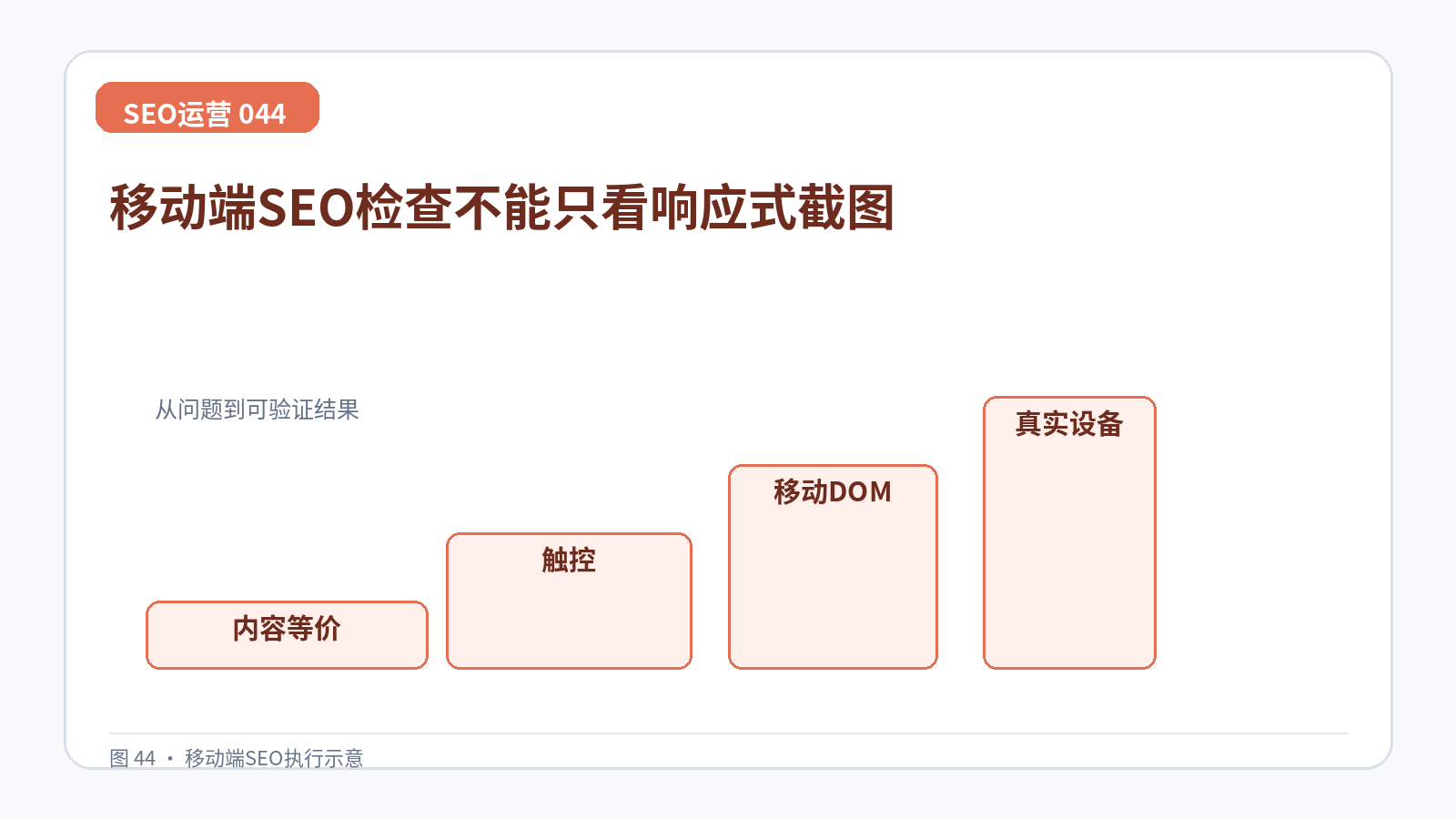
This is how you can move forward: screen view mouths, characters, touch targets, folding content, resource loading and moving DOM to ensure that the main content is equal to the desktop and does not need to scroll horizontally.
When you go online, test key templates with real devices and mobile grabs to compare the two-end titles, standard labels, and structured data. If core indicators deteriorate and technical screens are irregular, the expansion should be suspended according to preset rules; if the data are stable, then the practice will be extended to a similar station page.
Hide the text or link with User-Agent, leaving the mobile version with insufficient information. The final deliverer should therefore not only be an in-station page, but also include a map sheet, test feedback and a follow-up maintainer, ensuring that after three months there is still an understanding of why this setting exists.
User feedback is also included in the SEO decision. The search data indicates whether the page inside the station was found, but does not fully explain whether the answer is clear; this can be supplemented by the failure of the passenger service, the form content and the sales archive, allowing the mobile SEO to optimize back to real needs.
At the maintenance level, a "mobile-end SEO" can be added to the quarterly spot check: randomly selects the pages in the old and new stations, checking that the configuration, text, links, and data are still consistent with current operations. Search rules and product information will change and the correct inside pages will need to be clearly updated.