
There is no single answer to how the CLS layout is repaired from the template level. When pictures, advertisements, fonts, and scrambling components are not available, the contents of the page in the drive station are loaded and then loaded. When determining the priority, see whether it stops the grab or index, and then whether it affects the user's task, and then the hint level in the tool.
In terms of the search work mechanism, the focus of the restoration is to pre-empt size and position, rather than to use animation to mask the change. This means that the same conclusion needs to be expressed with regard to the content of the site, the HTML signal, the internal link and the server response; any one of these, which contradicts the other, increases the cost of system selection and the miscalculation of the website team.
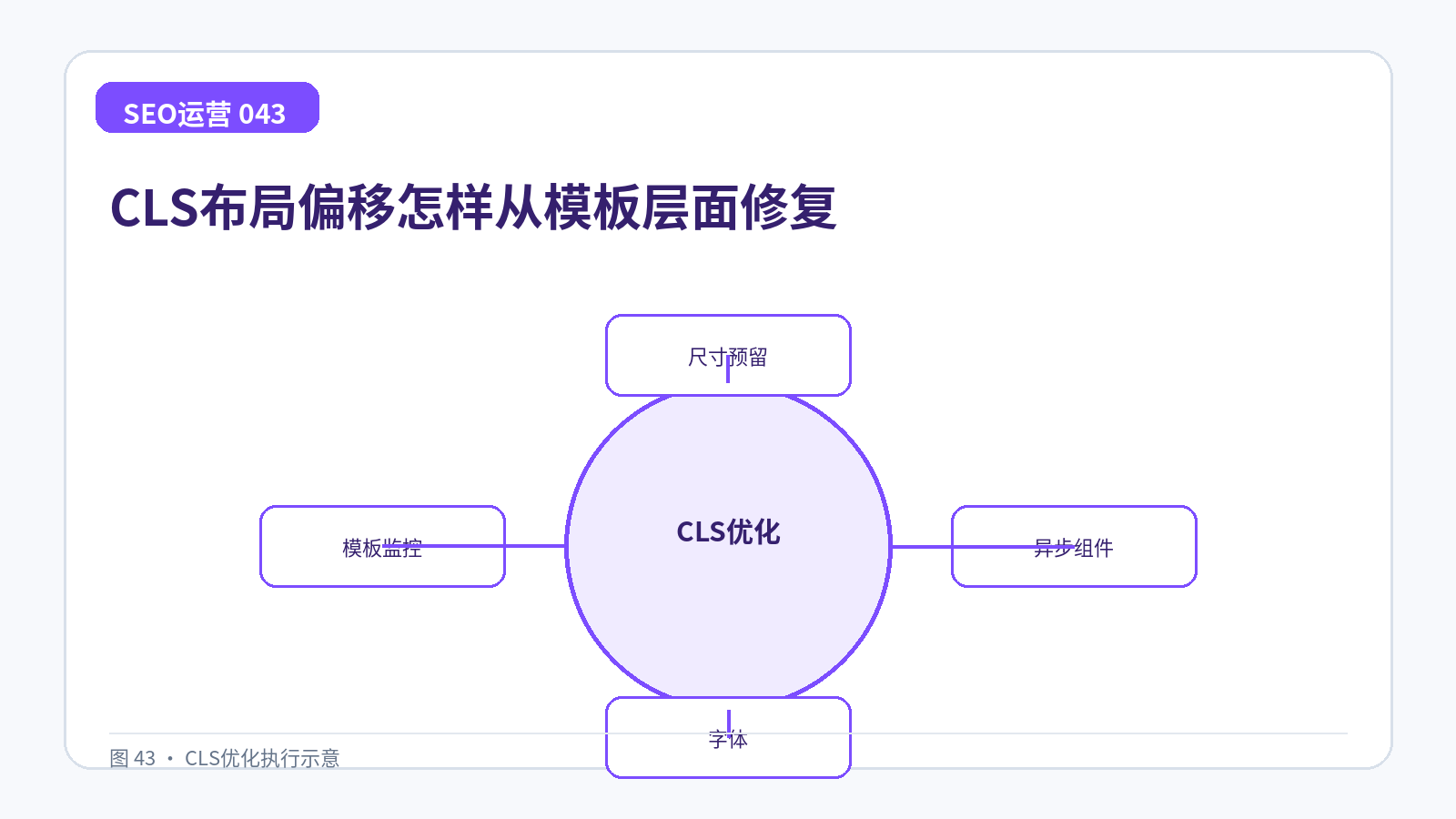
You can enter the field in the following order: set a minimum height for graphics and video writing or aspect-ratio, set a minimum height for advertising and recommendation positions, and load the fonts rationally, so as to avoid inserting bars above existing contents. Check the real URLs every step of the way, and do not wait until the whole batch is released to discover that the template variables, caches or language versions are not synchronized.
Viewing the actual user CLS by the inside page template and re-routing the trajectories elements. When feedback is not improved, check whether the sample and the time window are sufficient and determine whether the hypothetical error is incomplete or not. What needs to be avoided is that testing on the first page only leaves the article and product template out; the post-pubble window may also cause a high deviation. The SEO does not have a "full-scoring configuration" of the scene, and a clear choice is more important than stacking settings.
If the website team has limited resources, this method is used first on the inside of a station that can generate a Queries or take on a critical navigation.
User feedback is also included in the SEO decision. The search data indicates whether the page inside the station was found, but does not fully explain whether the answer is clear; this can be supplemented by service failure, form content and sales filing, allowing CLS to optimize back to real needs.