
There is no single answer to how “noindex and robots.txt should fit properly” for all websites. The search engine must catch a page before it can read the noindex commands on a web page. The priority is judged first by whether it blocks the grab or index, then by whether it affects the user's task, and finally by the hint level of the tool.
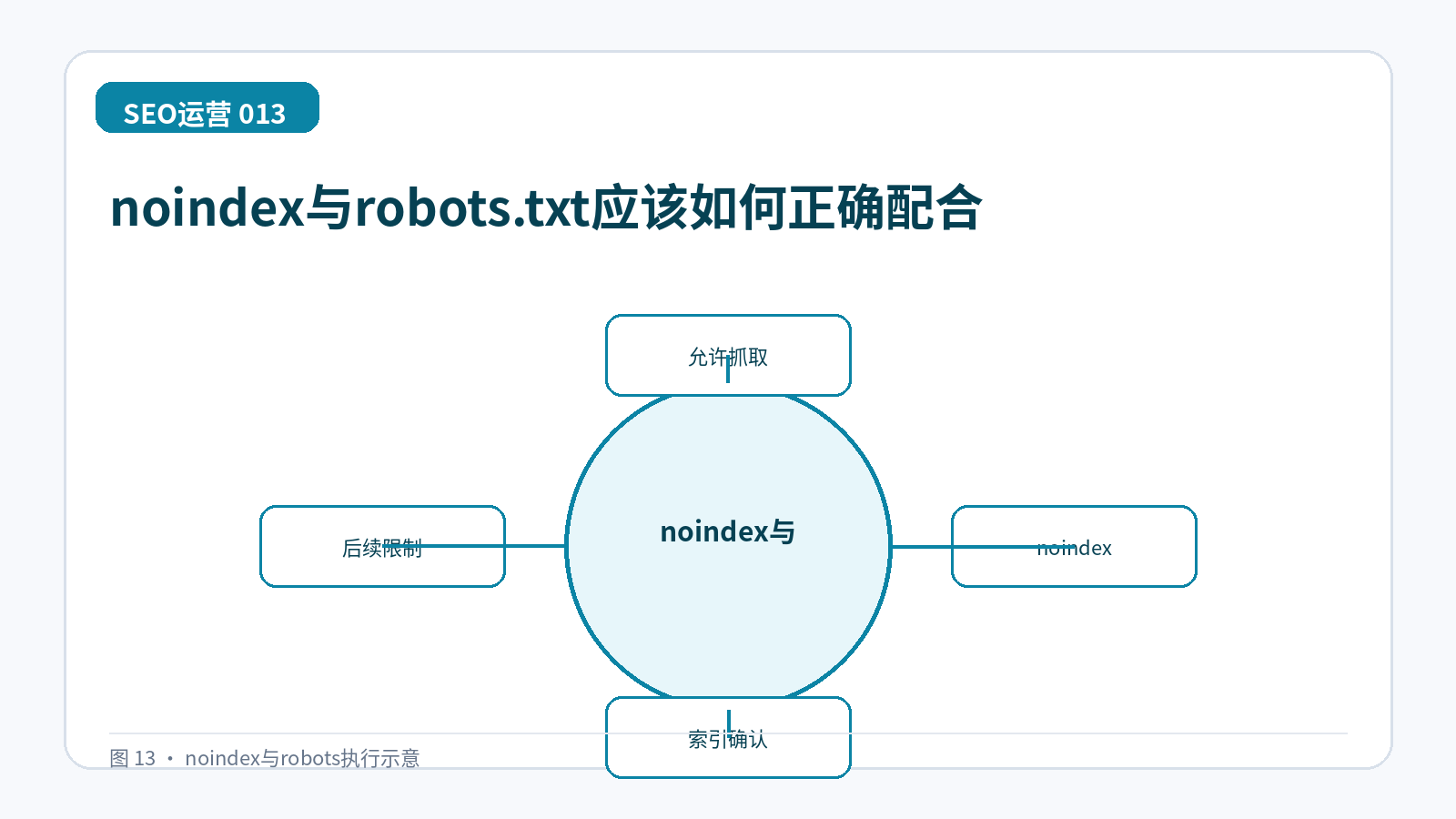
In terms of the search work mechanism, if robots.txt first forbids capture, reptiles may not see noindex, and the site may still be found in the offline. This means that web content, HTML signals, internal links and server responses need to express the same conclusion; any one of these layers is contradictory and increases the cost of system selection and miscalculation.
You can follow the order in which a page that needs to exit the index is allowed to grab and return noindex, confirm that it is removed and then decide whether or not to limit it on the basis of the capture.
Verification and indexing reports confirm that commands are read, and not only the browser source code. When performance is not improved, check the adequacy of the sample and the time window before judging whether the assumption is not complete or not. What needs to be avoided is that the simultaneous setting of Disallow and Noindex is a common conflict, especially when it occurs on the filter page and on the test page. The SEO does not leave the scene with a "full-scoring configuration" that is more important than the stacking settings.
If the project team has limited resources, this method is first used on a web page that can generate a Query or take on a critical navigation.
User feedback is also included in the SEO judgement. Search data indicate whether the web page is found, but do not fully explain whether the answer is clear; client questions, form contents and sales retentions can complement this, allowing noidex and robots to optimize back to real needs.
At the maintenance level, “noindex and robots” can be selected on a quarterly basis: randomly select old and new pages, checking that configuration, text, links, and data are still consistent with current operations. Search rules and product information will change, and the correct web page will need to be clearly updated with the responsible person.