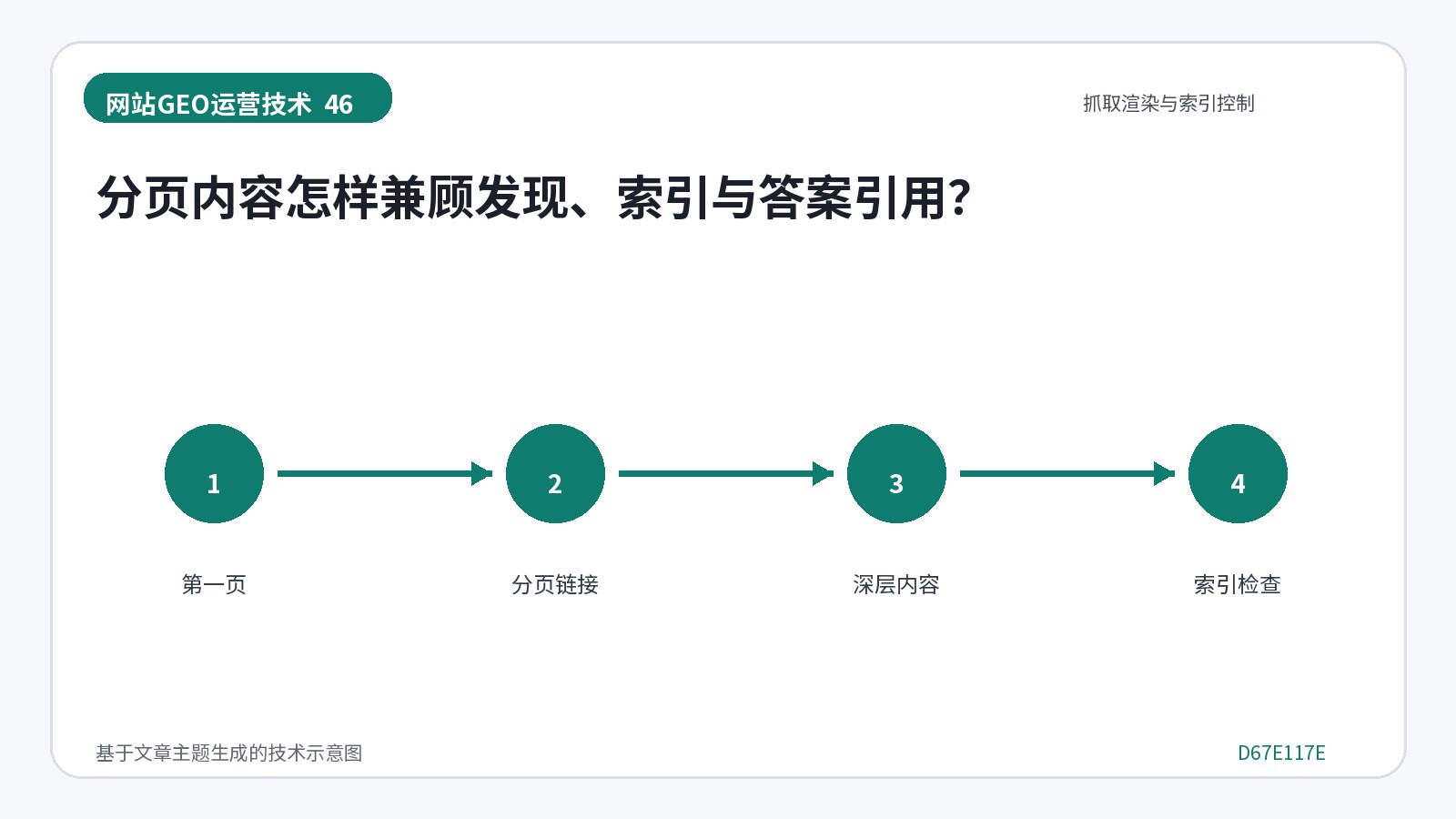
The difficulty with this work is not the tool itself, but whether the content, technology and business calibre are the same; the use of old data at any level will allow open facts to conflict. “How does the page break balance discovery, indexing and answer reference?” First, the page break balances the discovery, indexing and answer references back to the full process of “capturing render and index control”. The page breaker contains stable URLs and common links, so that subsequent pages can also be found when they do not trigger rolling scripts. Each page of self-regulation is usually more consistent with a stand-alone content set than the first page. This means that the page is both a clear conclusion for the user and a searcher to obtain the same information and to keep the source, condition and update time.
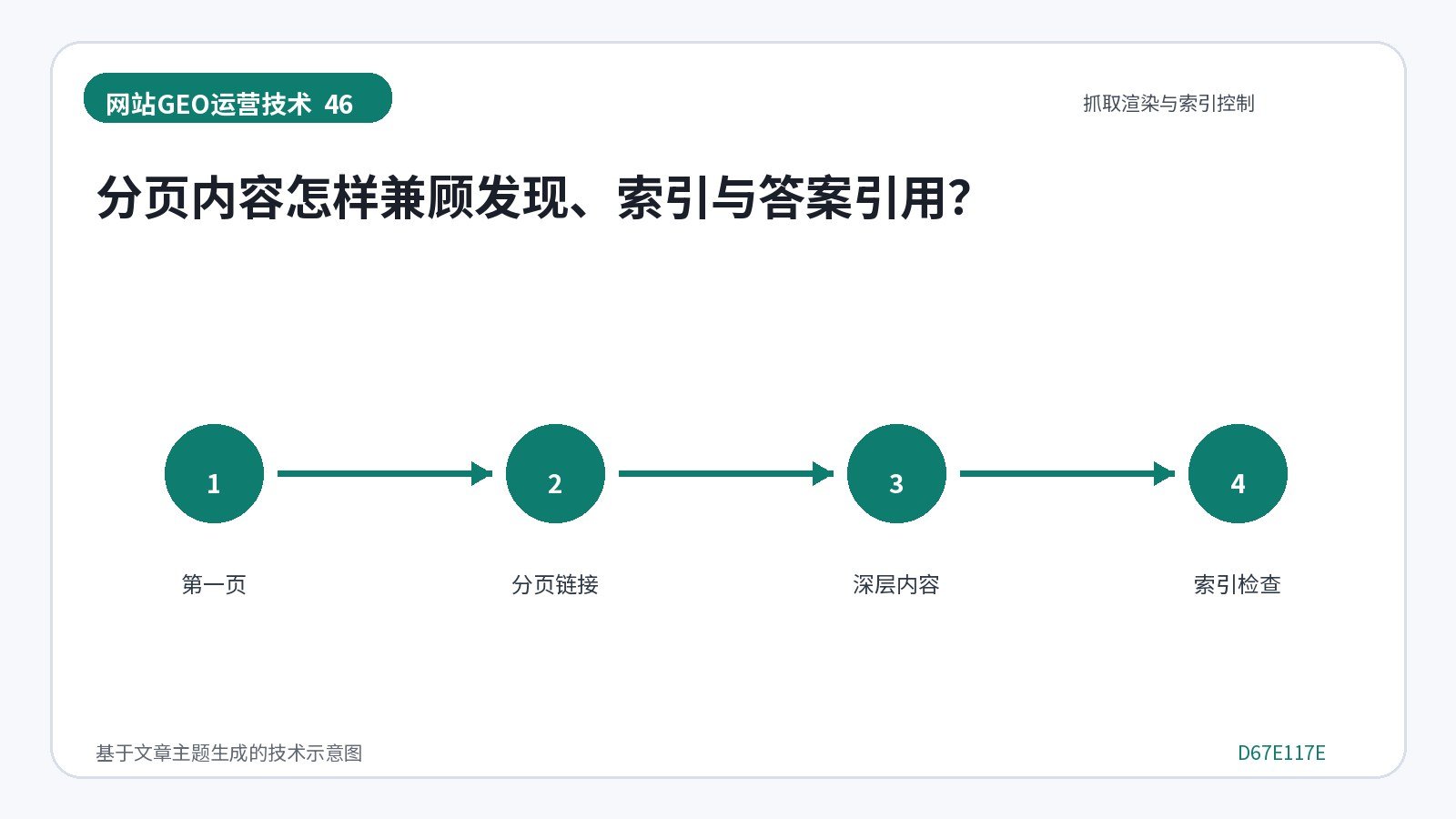
The answer system cannot use the text that it cannot reach in a stable way. The initial HTML, the state code, the link, the normative web site and the rendering resource determine whether the page is found; the technical check must be based on actual capture results, rather than simply looking at the browser. The team can use the "Question-Page-Evident-Results" column to create a record. The corresponding question of this topic is the page break to balance discovery, index to answer references, and the page has the task of explaining, the evidence from the controlled information, and the result is judged by the reference accuracy and by the client at the next step.
This is the only way to change the subject from personal experience to organizational competence.
The receipt and inspection cannot be limited to an AI answer. A different page number is taken and the content, Canonical and indexing information is checked.
What needs to be avoided is that only unlimited scrolls are retained without a page break link, and deep content may not be found. In addition, customer information, business secrets, authentication and prices should be made public after approval by the corresponding official.